For some residents it started with a letter in the mailbox. It was a “friendly introduction from the team behind the Victorian AI hub”.
“I am knocking on doors to explain what we have in mind and, most importantly, to listen,” the letter from Syncline Energy stated.
“Construction won’t start for at least two-years while we complete the planning and environmental approvals.”
For others, news of the project had already spread through social media and news reports, which sounded the alarm before the company had begun its communication efforts.
The Victorian AI Centre is a proposed mega data centre development located in Plumpton, roughly 30 kilometers northwest of Melbourne’s central business district. The project spans about 350 hectares, with a core footprint of approximately 140 hectares designated for four data centre facilities destined to support a maximum capacity of up to 2.4 gigawatts, while the remaining land is envisioned as open space to balance environmental and community considerations.
The initiative seeks to establish Victoria as a premier hub for large-scale data processing and AI development, aiming to strengthen the state’s digital economy, attract investment, and create employment opportunities across construction, operations, and maintenance.
Progress hinges on comprehensive planning and environmental assessments, community consultation, and regulatory approvals, with construction anticipated to commence only after these processes are satisfactorily completed.
The project also raises important considerations regarding energy demand, grid integration, and local land use, which are central to ongoing planning discussions.
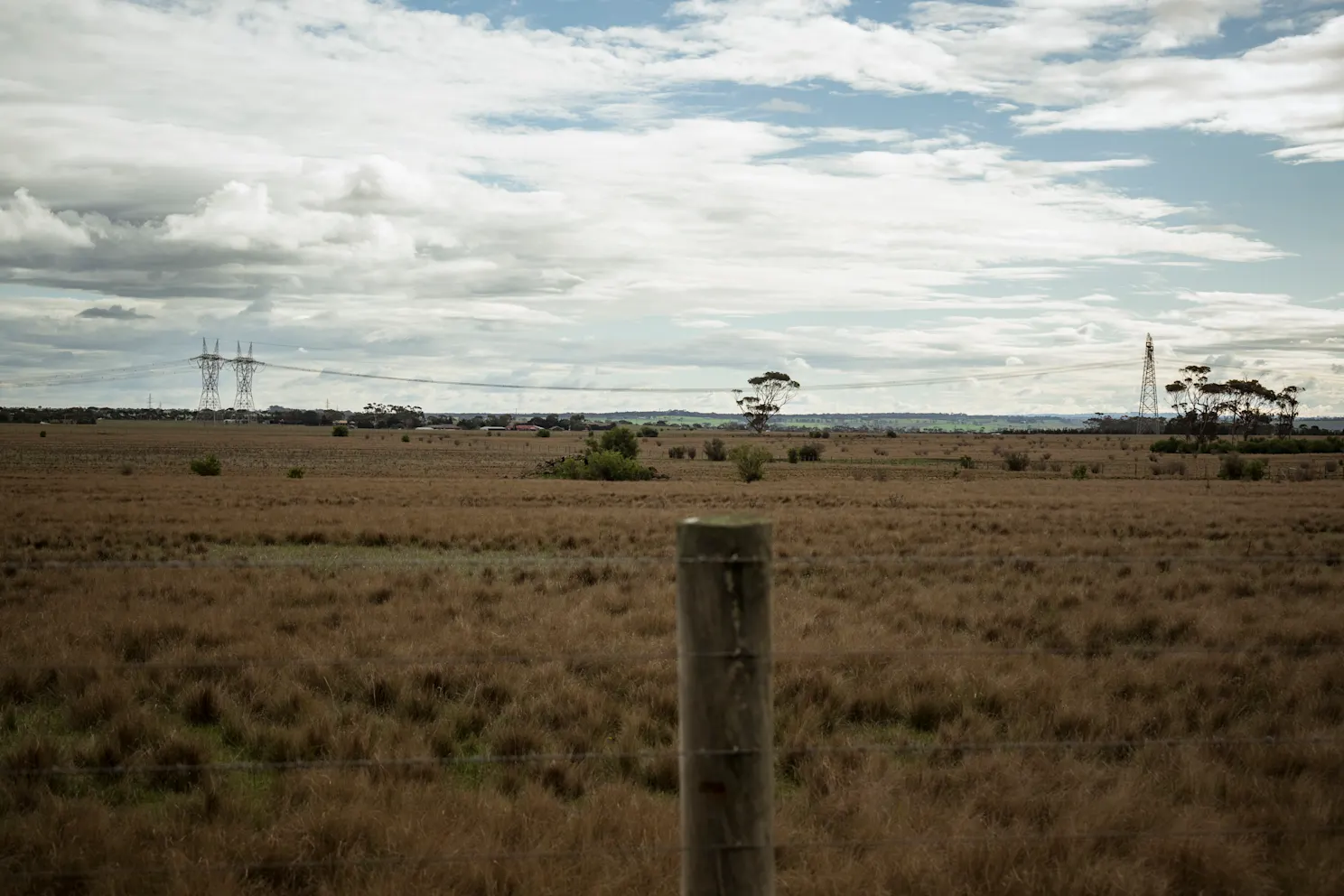
The site for what has been dubbed a mega datacentre in Plumpton, about 30km north-west of the Melbourne CBD, is now an empty paddock next to Melbourne’s renewable energy hub, just off the Calder Freeway. It’s near a fast-growing suburb, transmission lines, and a stone’s throw from where Harry Houdini made what was claimed to be Australia’s first controlled powered flight in 1910. Planes from nearby Tullamarine airport fly low overhead, and on weekends the sky is punctured by the lights and sounds of the Calder speedway.
The proposed site is 350 hectares, of which Syncline says 40% – 140ha, or just under six times the size of Chadstone shopping centre – will be used to house four datacentre buildings with maximum capacity of 2.4GW, with the remaining 60% to be open land. The proposed centre is larger than any currently operating in Australia and would consume more electricity than is generated by Victoria’s largest power station, Loy Yang A.
Summary of recent news items on the Plumpton AI centre development and its perceived benefits to Australia
- Project outline and scale
- A proposed mega datacentre complex in Plumpton, Western Melbourne, covering about 350 hectares.
- Syncline Energy states that 140 hectares (40%) would host four datacentre buildings with a maximum capacity of 2.4 GW, while the remaining 60% would be open land.
- The development would be larger than any current datacentre in Australia and is projected to consume more electricity than Victoria’s Loy Yang A power station currently generates.
- Timeline and approval process
- Construction is not expected to commence for at least two years as planning and environmental approvals are pursued.
- Local authorities and residents have engaged in communication efforts, with some residents receiving introductory letters and others reacting via social media and news reports.
- Community response and local context
- The paddock site is described as rapidly becoming a focal point for broader concerns about datacentres in Australia.
- Public sentiment includes a mix of curiosity about economic and technological benefits and concerns about infrastructure demands and local impacts.
- Location and regional considerations
- The site lies near Melbourne’s renewable energy hub, alongside major transmission lines, and is adjacent to transport links such as the Calder Freeway.
- Proximity to the Melbourne CBD and nearby amenities has amplified interest in the project’s potential regional effects.
- Perceived benefits to Australia (as reported by proponents)
- Enhanced national data processing capacity and support for a growing digital economy and AI initiatives.
- Potential boosts to regional economic activity and employment opportunities associated with construction, operation, and maintenance.
- Strengthening Australia’s technology infrastructure to attract investment and enable AI development and deployment at scale.
- Contribution to national energy market dynamics by integrating large-scale data-processing demands with the energy grid (subject to approvals and grid capacity).
- Considerations and discussions
- The debate includes balancing substantial electricity consumption and land use against anticipated economic and technological gains.
- Ongoing planning, environmental assessments, and community consultations are expected to shape final outcomes and benefits realisation.
Will be the biggest data centres now arriving campus in Australia and one of the largest in the region. Melbourne has always done technology and telecoms well.
This will create jobs in the west for one of the fastest if not the gayest growth area in Australia.