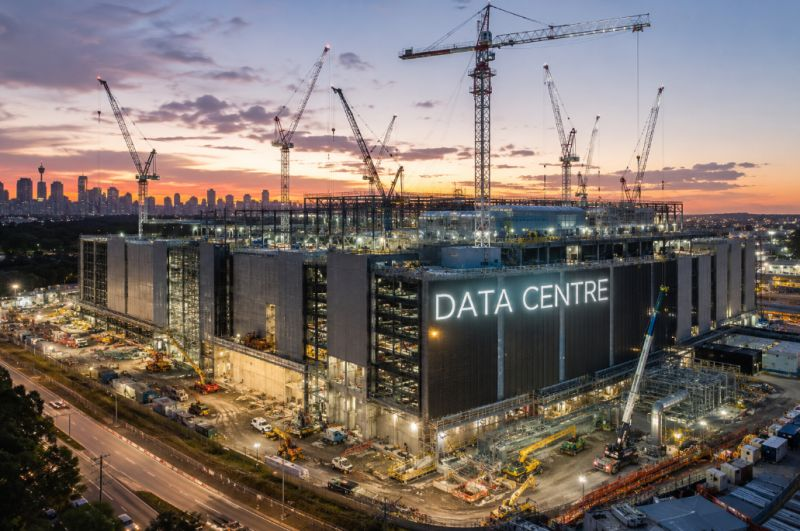
The Australian data centre sector stands at a pivotal crossroads as energy security and reliability become increasingly decisive for investors, operators, and end users. A recent announcement by TransGrid indicating that no further power capacity is available in Sydney reinforces a broader regional transition away from overloaded metropolitan grids toward diversified, resilient energy and infrastructure solutions. This development is likely to reshape the pace and geography of Australian data centres, influencing design, pricing, performance, and sustainability targets going forward.
Several converging factors are shaping this trajectory. Chief among them is energy reliability and price volatility: with constrained capacity in major hubs, operators are increasingly attuned to the risks of outages and rising electricity costs, which is incentivising investment in smarter energy procurement, on-site generation, and robust power redundancy. At the same time, the industry is pursuing geographic diversification, distributing capacity beyond traditional coastal markets into regional cities and interstate corridors where grid access is improving and planning frameworks are more supportive. Sustainability imperatives compound these pressures, since data centres demand substantial power even as operators are pushed to reduce their carbon footprints through efficient cooling, advanced power management, and renewable energy procurement—driving closer collaboration with energy retailers, grid operators, and policymakers. Policy and regulatory evolution also plays a role, as government initiatives around energy reliability, critical infrastructure resilience, and data sovereignty shape site selection, permitting, and incentives, with streamlined approvals and predictable frameworks encouraging longer-term investment. Finally, the sector must continue to balance high upfront capital expenditure against long-term revenue certainty, favouring modular, scalable builds that allow faster time-to-market without sacrificing resilience.
The TransGrid announcement signals a tightening of the traditional growth runway for Sydney-based data centres, with several important implications. Developers will need to reassess site selection, prioritising regions with more reliable access to transmission capacity, including regional hubs, or states with dedicated transmission projects.
With power constrained, pricing dynamics will shift: the total cost of ownership will rise for Sydney facilities, potentially driving higher colocation rents or a move toward demand-based tenancy models.
Where the capital is actually flowing
The scale of investment now moving beyond Sydney is substantial and measurable. By mid-2026, Australia had become the world’s second-largest destination for data centre investment after the United States, with a total national investment pipeline exceeding A$155 billion, equivalent to roughly 5.6% of a year’s GDP, and Q1 2026 spending alone reaching A$8.7 billion, representing around 17% of all private investment that quarter—a record high.
Melbourne has emerged as the clearest beneficiary of diversification away from Sydney. AirTrunk’s MEL2 development in Melbourne’s north-west will deliver more than 354 MW of capacity, backed by an investment exceeding US$3.57 billion, and combined with the existing MEL1 facility, total capacity in Melbourne will exceed 630 MW, taking overall investment in Victoria past US$5 billion. Smaller regional projects around Melbourne are also emerging, including a roughly AU$1.1 billion data centre campus proposed for Clyde North in the City of Casey, in what the local council described as its first application of this kind.
NextDC has advanced its regional strategy with the development of a new Lovely Banks campus in Victoria, designed to deliver scalable, modular data halls that can be expanded in line with demand while leveraging enhanced interconnection to local grids. The project emphasizes high-efficiency cooling, on-site power resilience, and close integration with regional energy networks to optimise reliability and total cost of ownership. Complementing this, Syncline Energy’s Plumpton initiative provides dedicated renewable energy supply and firming capacity to the Lovily Banks campus, supporting sustainable power procurement, stabilised pricing, and reduced carbon intensity across the deployment. Together, these developments exemplify how regional hubs can attract hyperscale and colocation investment while reinforcing grid stability through diversified, cleaner energy sources.
Hyperscalers are similarly spreading their commitments across multiple states rather than concentrating solely on Sydney. Microsoft’s A$25 billion pledge, announced by CEO Satya Nadella in April 2026, funds a 140%-plus expansion of Azure’s existing 29-site footprint across Sydney, Melbourne, and Canberra, while Amazon’s parallel A$20 billion commitment through 2025–2029 likewise spans multiple regions. NEXTDC has also backed this expansion financially, disclosing an A$2.2 billion capital plan in April 2026 aimed at accelerating AI-ready infrastructure.
Western Australia has attracted its own steady stream of investment, driven partly by international connectivity. Equinix, for instance, has expanded its Perth facility partly to capitalise on sub-sea connectivity between Perth and South-East Asia. Collectively, these figures point to a sector whose growth is no longer contingent on Sydney’s grid capacity: Melbourne, Perth, Brisbane, Adelaide, Darwin, and the Pilbara are each absorbing a growing share of hyperscale and colocation investment, a trend the TransGrid announcement is likely to accelerate further.
This constraint also opens opportunities for regional development and new hubs more broadly. Australia’s geography offers locations with favourable, cooler climates that support more efficient cooling and reduce overall energy use, while TransGrid-led grid improvements and planned expansions support steadier power supply and lower cooling costs—dynamics that are attracting investment and enabling regional data hubs to serve growing demand. Inland and regional cities with reliable fibre connectivity and business-friendly conditions, such as adaptable planning regimes, skilled labour pools, and favourable land costs, are increasingly attracting hyperscale and colocation announcements. Interstate development can further benefit from energy interconnection projects that help balance load between states and improve overall grid stability, with data centre campuses sometimes integrated into regional industrial clusters to maximise utility.
Cooler climates offer a further advantage by reducing cooling energy requirements and improving PUE metrics, particularly when paired with efficient free-cooling strategies, while regional hubs frequently partner with local renewable energy projects or power purchase agreements to meet sustainability targets and stabilise electricity pricing over the long term.
In response to this energy environment, operators are adopting more advanced engineering practices. Modular and scalable architectures, built from prefabricated data halls, allow rapid deployment and easier capacity expansion in line with demand growth and grid conditions. High-efficiency power distribution systems, transformerless designs, and intelligent cooling are improving power-density management, enabling greater utilisation of available electricity while reducing losses. Many deployments now include on-site generation and storage—diesel or natural gas backup where appropriate, supplemented by solar arrays, battery storage, or hybrid solutions—to soften peak demand and improve resilience. Cooling strategies are also under scrutiny, with air-cooled and liquid-cooled approaches evaluated for water efficiency and a growing preference for systems that minimise freshwater consumption. Underpinning all of this is a greater reliance on digital infrastructure for reliability, including advanced monitoring, real-time energy analytics, and predictive maintenance to support uptime and optimise energy use.
Several archetypal project profiles illustrate how this market is evolving: hyperscale campuses situated in regional corridors near upgraded interconnections, combining modular construction with on-site generation and storage to host cloud, AI, and other data-intensive workloads; mid-sized regional colocation hubs serving local enterprise ecosystems with robust connectivity and energy agreements tailored to regional demand; and enterprise-driven campuses aligned with private networks and hybrid cloud strategies, prioritising high reliability, bespoke energy procurement, and proximity to end users.
This transition is not without its challenges. Volatility in electricity markets and shifting regulatory landscapes call for flexible procurement strategies and long-term hedging where feasible. Global and regional supply chain constraints can affect construction timelines, making contingency planning and local supplier diversification essential. Even where capacity exists, reliability depends on coordinated operations between data centre operators and grid utilities to prevent outages during peak demand, and local environmental sensitivities and community impact must be addressed through genuine engagement and sustainable design.
For developers and tenants navigating this landscape, several strategic priorities stand out: diversifying energy strategies by combining grid power with on-site generation, storage, and power purchase agreements; embracing modularity to scale capacity quickly in response to demand signals and grid constraints; investing in advanced cooling and efficiency measures to keep PUE low; maintaining ongoing dialogue with policymakers, transmission operators, and energy providers to align project timelines with grid improvement plans; and treating resilience as a core design feature, incorporating robust physical security, redundant power paths, and disaster recovery planning from the outset.
In summary, the Australian data centre landscape is undergoing a critical recalibration in response to energy constraints in Sydney, compelling developers to rethink site selection, design, and long-term energy strategy. The statistics bear this out: with tens of billions of dollars now flowing into Melbourne, Perth, Brisbane, Adelaide, and beyond, the industry’s centre of gravity is already shifting.


Surely it is better to build data centres at a latitude that is cooler to ensure lower operating costs. How would Queensland cost in as an environment with high humidity?