The Government in London has proposed to drop the minimum age for train drivers to 18. They want to encourage more young people to jump into the driver’s cab, to offset older drivers retiring. Young people will be able to take up new careers as train drivers three years earlier, with the change happening this year.
Thousands of jobs and apprenticeships will be made available to those between 18 and 20 years old as early as December 2025. A Government initiative, offering skilled roles, valuable experience and long-term career opportunities, could see drivers younger than their rolling stock in charge of mainline trains before Christmas. The politicians say it will help keep the country moving and drive economic growth. The old lags in the cabs, surprisingly, say “jump aboard, kids”.
Trading blazers for boiler suits
Just when you thought that every youngster wanted to be a train driver, it turns out they don’t. The average age of a UK train driver is 48. Furthermore, around 30% of these hardly out of school uniform fifty and sixty somethings are set to retire by 2029. Those of us hoping for an end to the announcements that their train has been cancelled due to staff shortages had better think again.
Luckily, the ever-resourceful UK Government has come to the rescue. They have a plan. They intend to realise all those childhood train-driving dreams by making it possible for children to be train drivers. Well, not quite, but they do intend to let those who can still fit into their school uniform swap their school-badge blazers for new ones with the logo of Great British Railways.
Pre-empts nationalisation programme
“We’re taking bold action to improve train services and unlock thousands of jobs,” said transport secretary Heidi Alexander (aged 50¼). “We’re committed to getting the economy moving and a big part of that is getting young people into the workforce, putting them on track for a skilled and fulfilling career, which will boost growth across the country and help deliver our Plan for Change.”
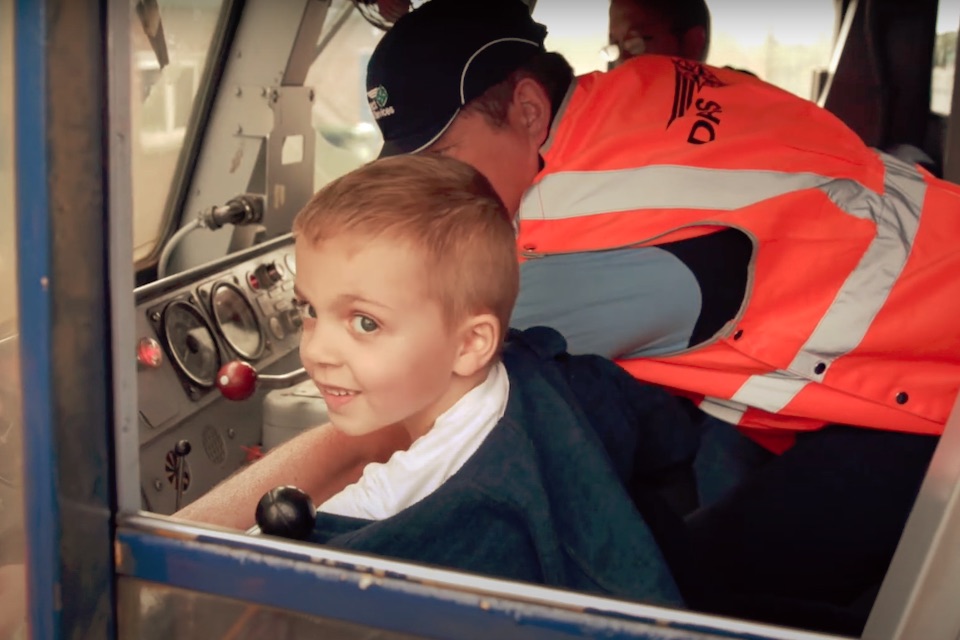
The Government says the move is part of a drive to future-proof the railways against delays and cancellations caused by a shortage of drivers. It also pre-empts the bulk of the nationalisation programme, which seeks to take the infrastructure and the passenger side of operations back into public hands, under the banner of Great British Railways.
Suffer little children unto us
The train drivers’ union has welcomed the move, which follows on from a consultation last year, and makes a valid point that two gap years between school and the cab is a major impediment to recruitment. “ASLEF has been campaigning for many years for the lowering of the age at which drivers can start training,” said master Mick Whelan, General Secretary (aged 65½). “Young people who want to become train drivers leave school or college at eighteen, get other jobs, and we miss out as an industry, as they don’t wait around until they turn twenty to find a career.”
Several other countries have already adopted a lower age limit, including the Netherlands, France, Germany and Switzerland, with other countries, including Japan, considering a change in law. Transport for London also successfully opened up its train driver apprenticeships to 18-year-olds to drive trains on the Underground network in 2007.
On track for a career … and tired, tortured puns
“Rail freight thrives when the whole network has the skilled people it needs, said Maggie Simpson OBE (aged: classified), the Director General of the Rail Freight Group, which represents the interests of the sector. “We welcome the decision to lower the minimum driver age to 18. Bringing talent into the cab straight from school can widen the recruitment pool, inspire more young people to choose rail careers and let them build experience earlier , but importantly, this is a permissive change. Each freight and passenger operator will decide for itself whether and how to recruit younger drivers.

Government communications may or may not represent the finest creative flush of youth. The Government press release trots out the tired old headline cliche of “full steam ahead”. That method of traction has not been policy since the grandparents of the proposed recruits were at the new eligibility age. The picture that accompanies the official press release is of a diesel high-speed train, introduced in the mid-seventies, and mostly retired already. Perhaps it’s there to represent the average age of most current train drivers.