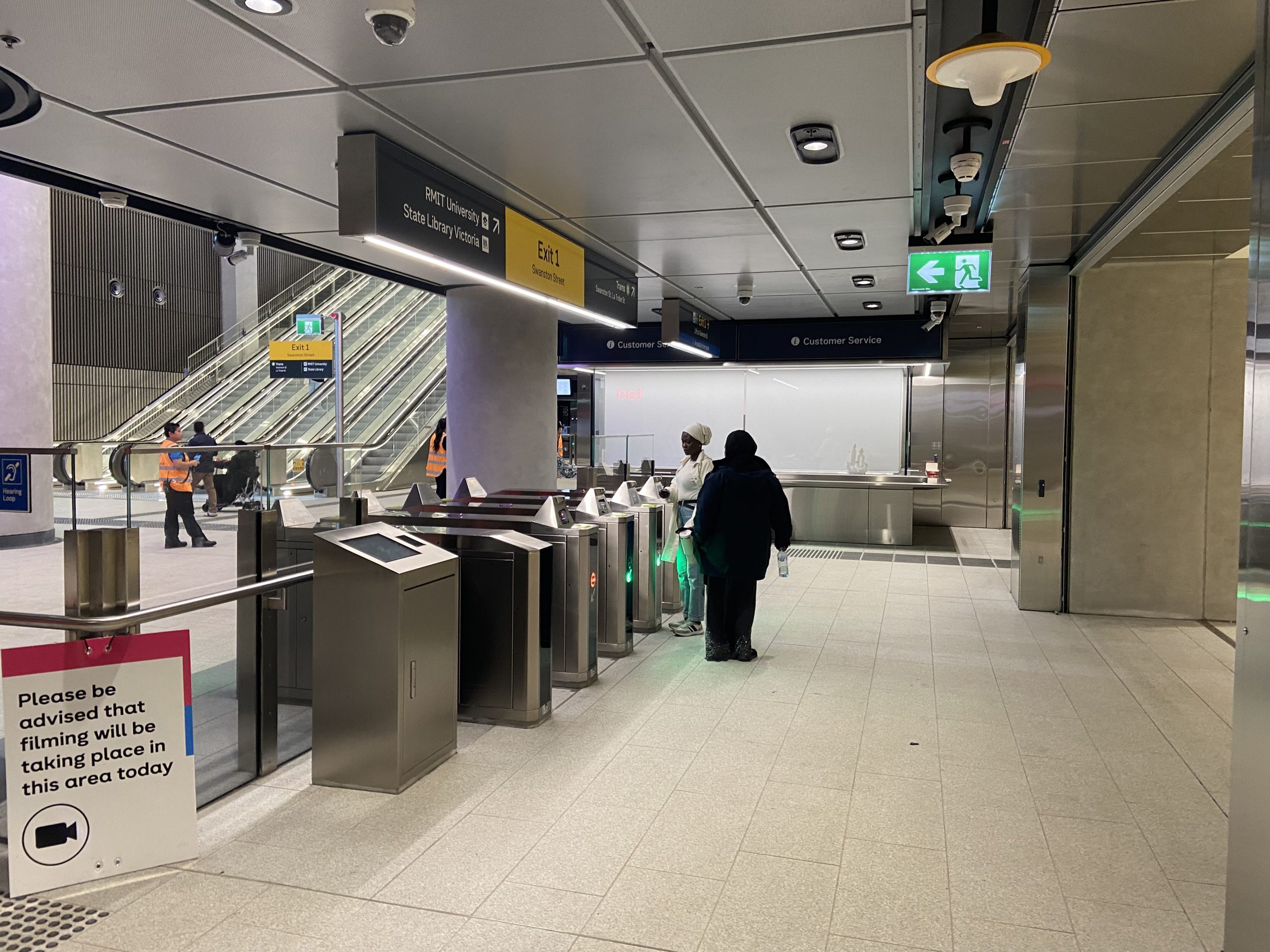
Took my first and only look thus far at the new State Library Railway Station this week and I was impressed. I arrived into Melbourne Central and it was a very simple transition from there to the new State Library Station.
The design will make it simple and convenient to transfer between either station when the crowds arrive tomorrow. I myself do not subscribe to the recent hysteria about needing to use a Myki to walk between the two railway stations if you are not travelling. There is simply not a reason to be taking a long elevator down into the bowels of the state library station concourse unless you are planning on travelling on the network, it would be quicker to cross the road.
I do understand how having access to the stations on other underground pedestrian walkways would be advantageous. I have long said an under ground link between Melbourne Central and the QV complex would be very very useful and prevent the crowds moving from there to Melbourne Central.
I would consider an underground walkway and entrance to the state library negating the need to cross busy Swanston Street would have been an added bonus.
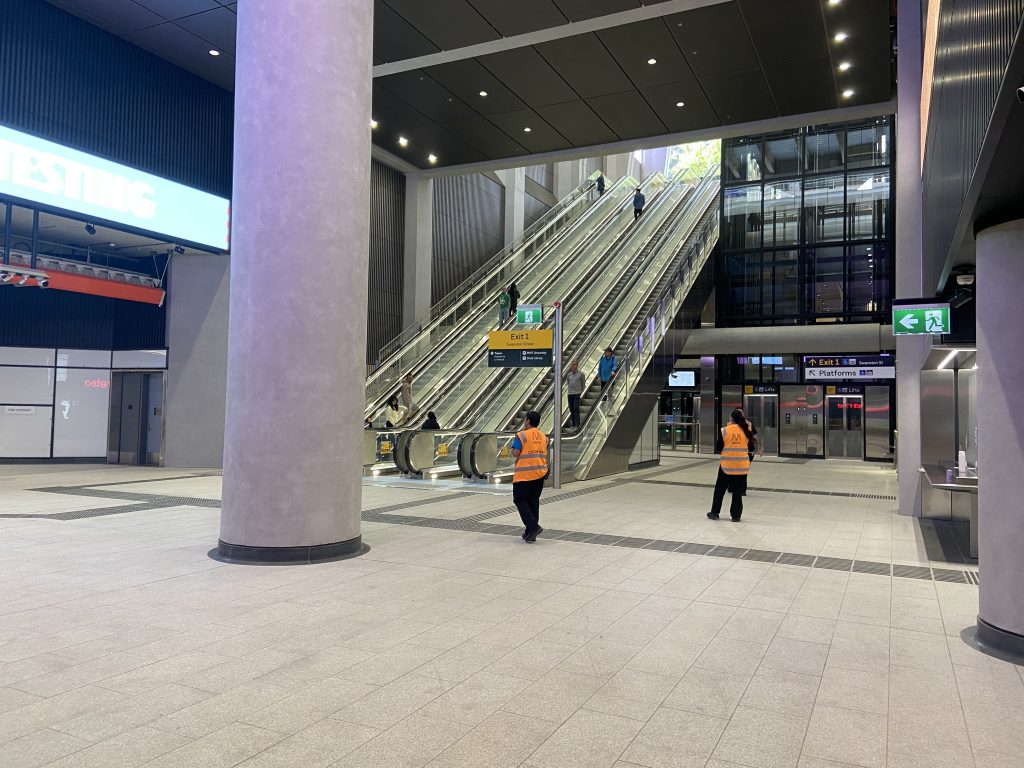
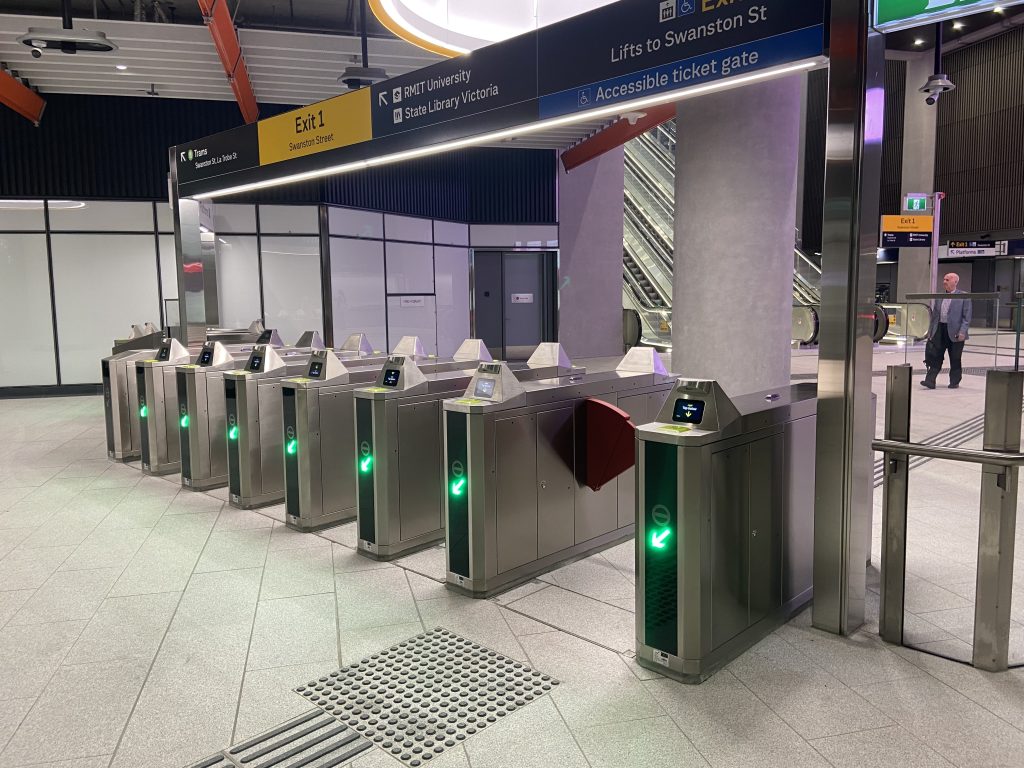
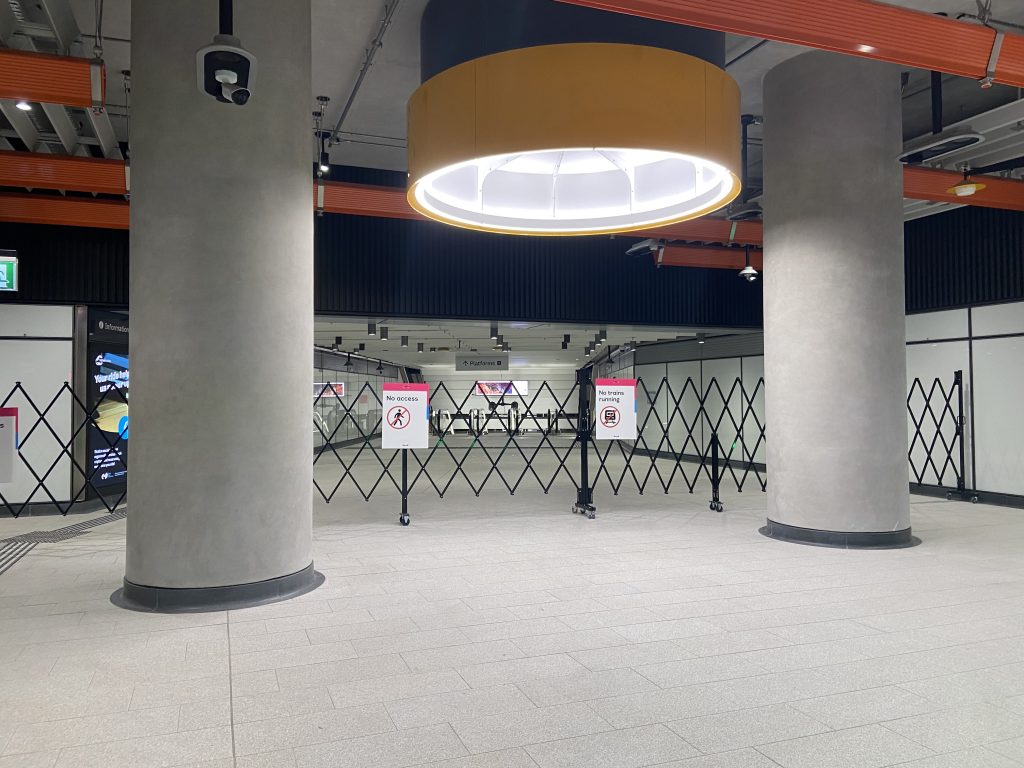
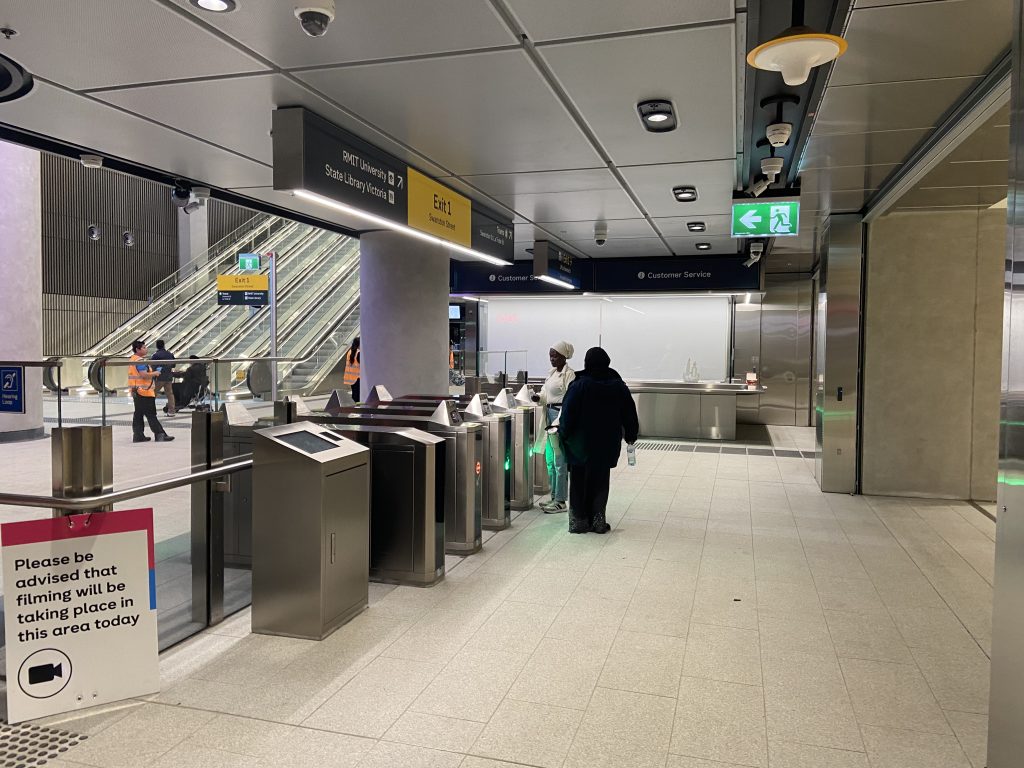
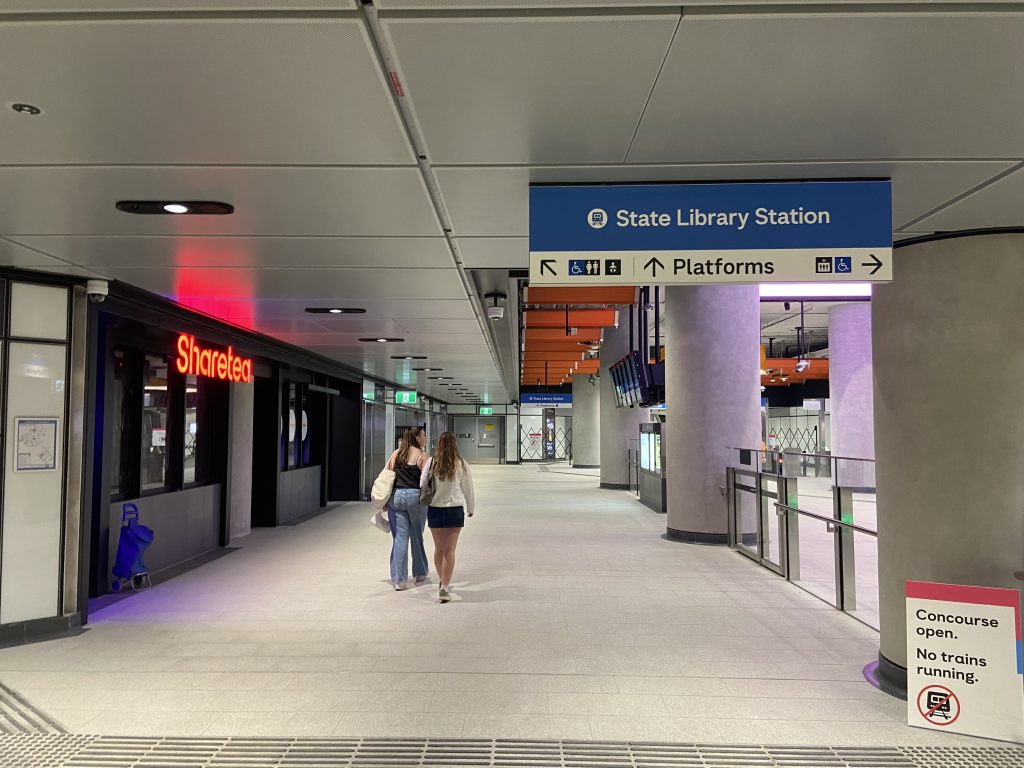
That being said, if you arrive at State Library and wish to access Melbourne Central this is easily achieved with a single barrier and touch off location. Either entry to the common ticketed area will get you access to either station as the photos above highlight.
The station looks clean and bright with plenty of light available. There were 5-6 staff at the station on hand to answer questions about the Melbourne Metro Tunnel and the railway station.
All in all this is an excellent outcome for Melbourne with the only issue overshadowing the project being the cost and the time it has taken to complete. I cannot see at this stage $15B in this project. We need to get smarter about building faster and making building decisions quicker.
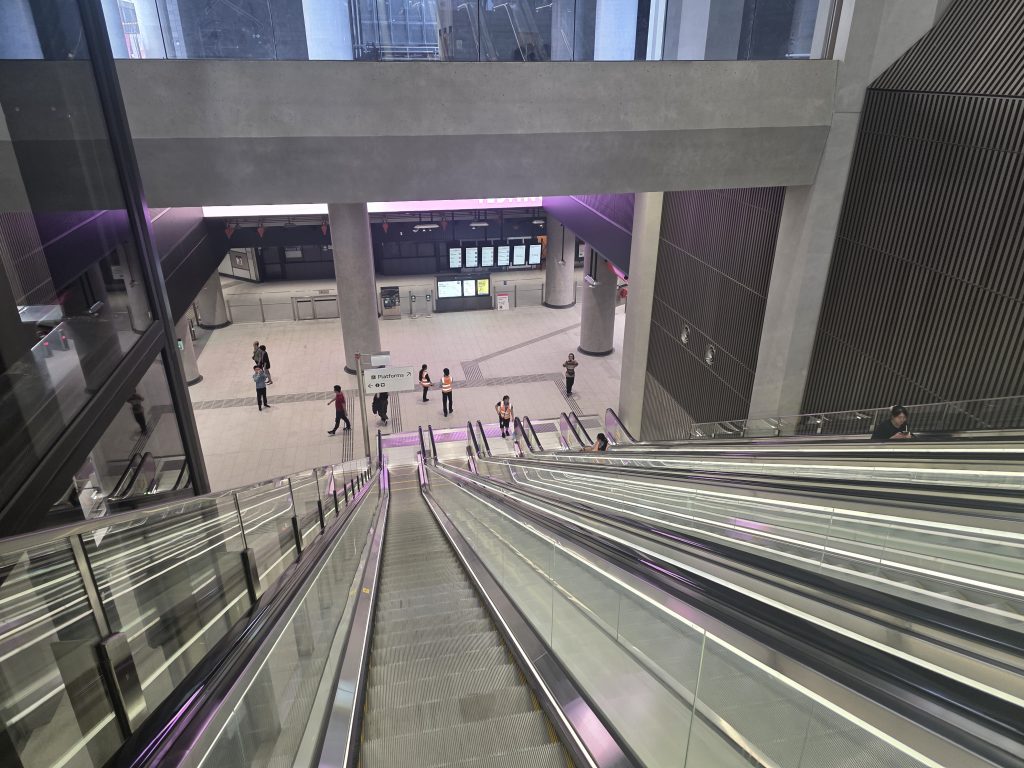
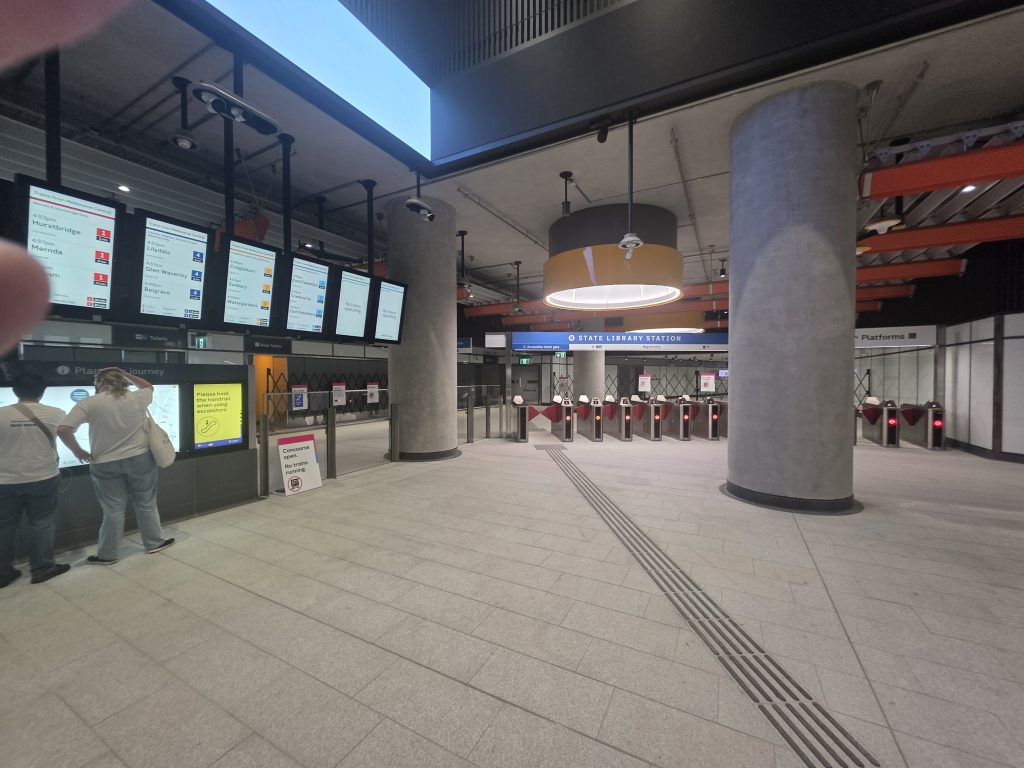
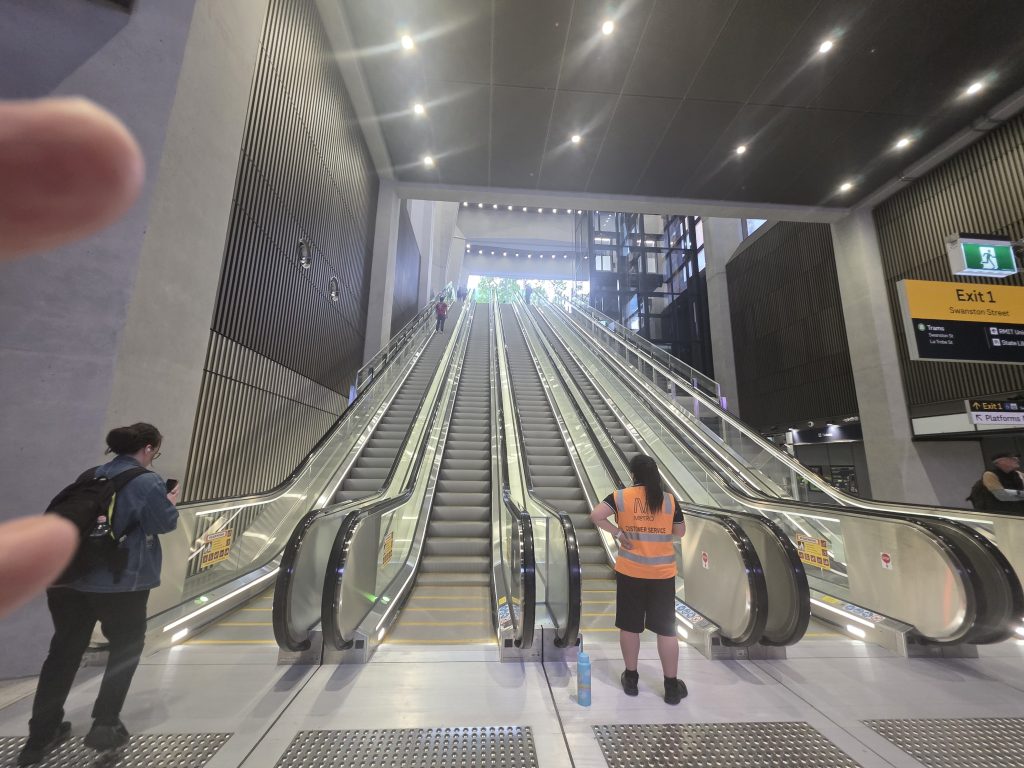
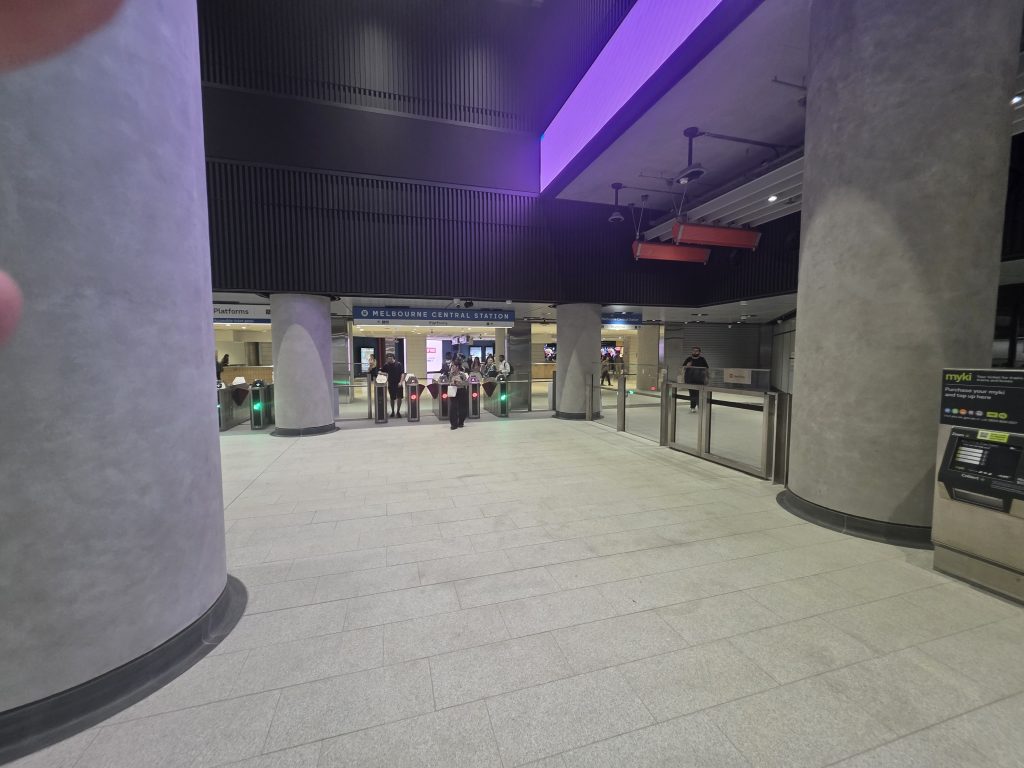
Let’s enjoy what we now have and use this network to increase our productivity and travel options. Looking forward to riding the network tomorrow.
Images from Brian Evans and David Roberston

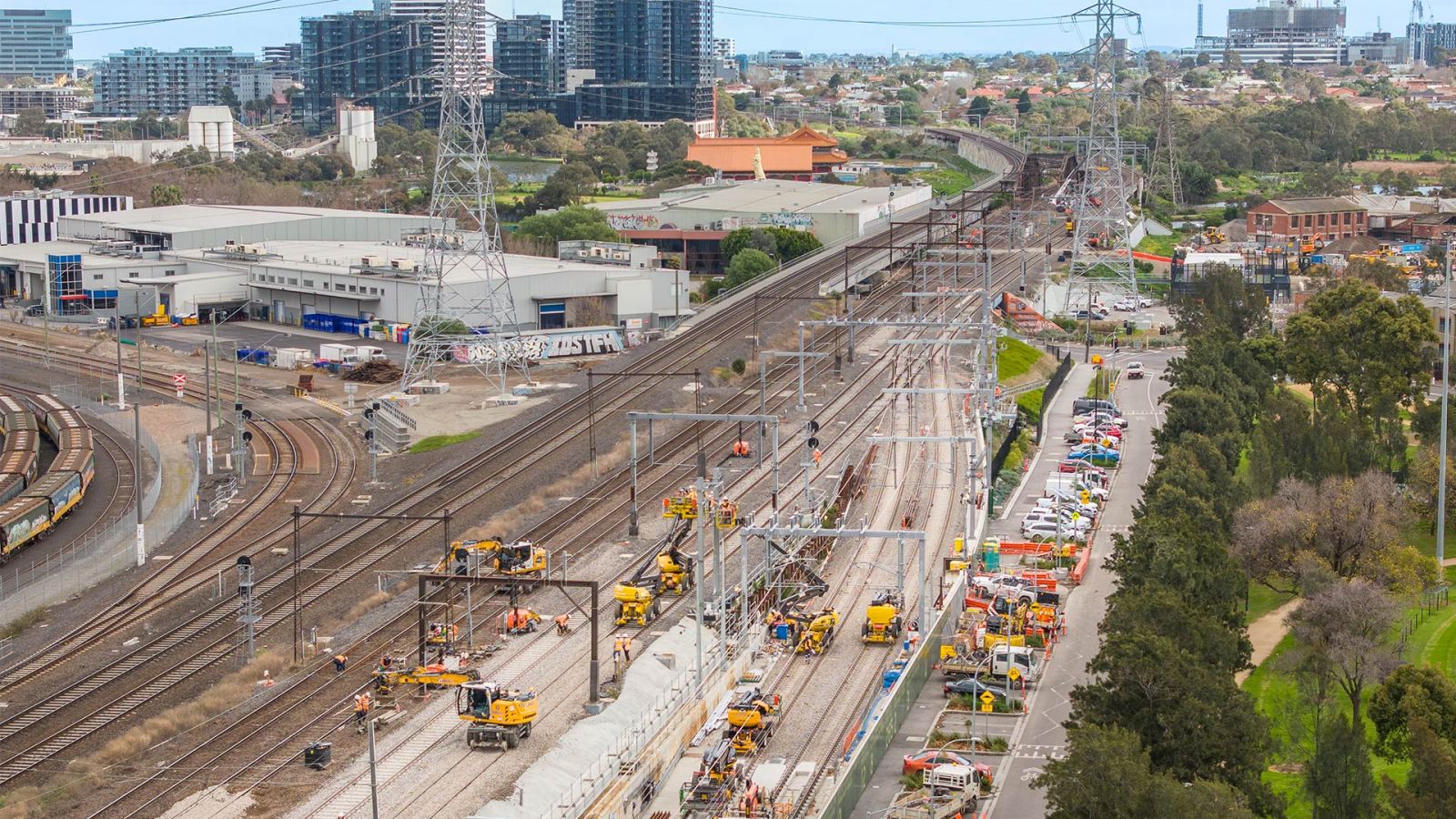
A wonderfully written article and positive amongst a lot of negative press over the past few weeks. Glad to see it is welcoming and bright. Accessibility looks great also.
Is that a customer service centre at the railway station in the photo?
Nice to read bevans nice work as usual.
Good overview.
I share tour thoughts on better underground connections to QV and state library station or Melbourne central. Melbourne does not do enough of these where Sydney does.
🚇 The Melbourne Metro Tunnel: Unlocking the Gridlock and Revolutionising Regional Rail
The completion of the Melbourne Metro Tunnel project, featuring twin 9km tunnels and five new underground stations, is far more than a simple addition to the rail network. It represents the most significant reconfiguration of Melbourne’s rail system in over 40 years, with its greatest benefit being the **massive capacity increase** and the subsequent **relief provided to the chronically congested City Loop**. For regional Victoria, particularly the services run by V/Line, the tunnel is not just a convenience—it is a necessary enabler for future reliability and frequency improvements.
—
## 1. ⚙️ Freeing the City Loop: The Core Enabler of Capacity
Melbourne’s metropolitan rail network, prior to the Metro Tunnel, operated as a strictly radial system, funnelling ten main lines into a constrained four-tunnel City Loop. This configuration was a major bottleneck:
* **The “Queue” Effect:** The City Loop forces inbound trains to wait for others to exit, creating a “queue” that limits service frequency. If one train is delayed, the **”cascade effect”** is immediate and severe, impacting every line using that section of the Loop.
* **Operational Separation:** The Metro Tunnel addresses this by creating a second, separate line running through the CBD. It pulls the high-demand **Sunbury, Cranbourne, and Pakenham lines** out of the City Loop entirely and places them onto their own cross-city route.
* **Increased Network Headroom:** By removing three of the busiest lines, the project creates the capacity for an estimated **half a million extra passengers** during peak periods per week. This **”headroom”** in the City Loop allows other lines, including those shared by V/Line services, to run more trains, more frequently, and with significantly improved reliability.
—
## 2. 🚂 Direct Benefits to V/Line and Regional Passengers
The primary role of the Metro Tunnel in serving regional passengers is by **untangling the operational complexities** that have long plagued V/Line’s performance.
### A. Improved Punctuality and Reliability
The article you cited, **”V/Line delivers more chaos and incompetence than services,”** highlights the systemic failure of the network to provide reliable services. Many V/Line trains, particularly those on the Ballarat and Geelong lines, share tracks with metropolitan services on the western side of the city.
* **Minimising Shared Track Delays:** When metropolitan services are delayed due to City Loop congestion, that delay **flows immediately** onto regional trains. By shifting three major metro lines out of the Loop, the Metro Tunnel creates cleaner paths and fewer potential points of conflict for the remaining metro lines, thus offering **V/Line services a clearer, more predictable run** into Southern Cross Station.
* **Enabling Future Growth:** The freed-up space will eventually allow for **more services on V/Line lines** like the Traralgon Line (which is planned to see frequency increases) and the Bendigo Line (which can run longer trains), tackling the very issue of **low service frequency and unreliability** that critics routinely target.
### B. New Access to Key Melbourne Hubs
Regional passengers no longer need to rely solely on Southern Cross Station as their access point to the city.
* **Health and Education Precincts:** The new **Parkville Station** provides **direct rail access** to the Royal Melbourne Hospital, the Royal Women’s Hospital, Peter MacCallum Cancer Centre, and the University of Melbourne. This is a game-changer for regional Victorians travelling to the city for medical appointments or education.
* **Business and Arts Districts:** The **Town Hall Station** (connecting directly to Flinders Street Station) and **Anzac Station** (serving the St Kilda Road business district) distribute passengers to new employment and leisure centres, reducing the need for lengthy walks or slow tram transfers from Southern Cross Station.
—
## 3. ⏱️ Faster, Turn-Up-and-Go Services
The Metro Tunnel is designed to transition the Sunbury/Pakenham/Cranbourne line into a true **metro-style “turn-up-and-go” service**, which is a crucial element in modernising the network.
* **High-Frequency Operation:** The tunnel uses **High Capacity Signalling (HCS)**, allowing trains to safely run closer together than ever before. This technology is the foundation for running trains every three to four minutes during peak periods, drastically reducing waiting times.
* **Reduced Journey Times:** The new line bypasses the complex, multi-stop City Loop for cross-city travel, offering direct time savings for all passengers on the Sunbury, Cranbourne, and Pakenham lines. For regional passengers, while they will still interchange, the ease and frequency of the connecting service will ensure a **faster overall journey** to the new city hubs.
—
## 4. 📝 Addressing the Critique: A Foundation for Improvement
The critical tone of the Vibewire article, which focused on V/Line’s chronic mismanagement and poor operational choices (such as using inadequate VLocity rolling stock on long-haul routes), actually reinforces the long-term necessity of the Metro Tunnel.
* **Separating the System:** The article’s critique highlights the failures of running an increasingly busy **metropolitan commuter service** and a **long-distance regional service** on the same constricted set of tracks. The Metro Tunnel begins the essential process of **system separation**, carving out clean paths for the highest-volume metro lines. This separation is the **precursor to genuine operational efficiency** for V/Line.
* **Enabling Service Uplift:** While V/Line’s leadership and rolling stock issues are separate from the tunnel construction itself, the infrastructure project removes the network constraint that **prevented service increases** for decades. The Metro Tunnel provides the “rail real estate” necessary to run more V/Line services if management chooses to, and if the network is upgraded to support the demand.
The Melbourne Metro Tunnel is a foundational investment. It fixes the systemic, physical limits of the 1970s City Loop, giving V/Line and the state government the **platform to finally deliver on the reliable and frequent regional rail network** that Victorians have long demanded and that critics like those on Vibewire have rightly observed to be lacking.
Will some trains run directly from the west to Southern Cross and some via the new metro tunnel route?