The current UK Government has made a habit of embarrassing about-turns on policy, but this week the left-wing first-term Labour Party reached new heights of stop-start performance with the announcement of a “recommencement” of Northern Powerhouse Rail — a curiously vague label for rail services across the North of England. Fortunately, RailFreight.com UK Editor Simon Walton was strapped in and ready for their clutch drop.
Northern Powerhouse Rail is, once again, back on track — at least in the glossy rhetoric of a government for whom Euston Road is just a little too far from the Thames. The official “Growth Plan for the North” promises “new and improved rail links to unlock opportunities for people, housing and businesses.” The cover shows no factories, only gleaming typefaces and imagined prosperity. Opposition parties sneer, businesses roll their eyes, and the people of the North collectively do a Jerry Maguire: “Show me the money!”
Well, maybe different this time. The government has pledged some money. £45 billion, apparently — although the reality is vaguer. There is a commitment to spend up to £45 billion on northern rail projects, spread over the next two decades. That amounts to an annual expenditure of roughly half the annual subsidy currently paid to passenger train operators, spread out over twenty years. Up front, £1.1 billion is earmarked for “consultation and feasibility studies.” No harm in getting things right the first time, but it is hard to avoid the sense that the money is doing very little on the track itself.

Pledging is easy, especially when delivery lies three political cycles in the future. In that spirit, I could pledge a billion pounds to completing my pet project: the Borders Railway, another billion to reconnect Peterhead and Fraserburgh in my native Scotland, ten billion to electrify all remaining main lines, and two billion to upgrade Ely — all with freight-ready infrastructure. I could promise a dozen more projects, all focused on freight and supporting sustainable growth – and I would have as much chance of seeing those trains run as the ministers making these announcements have of overseeing Northern Powerhouse Rail in action.
Freight. Guess what? Omitted, again
Transport Secretary Heidi Alexander took to the House of Commons on Wednesday, delivering a near-1,400-word statement reiterating the government’s commitment to NPR. Her message: improved railways will reinvigorate the North, raising productivity in its largest cities to the national average — potentially adding £40 billion a year to the UK economy. Yet, she never mentioned freight. Nor did anyone else during the debate. For a region historically reliant on rail for goods as well as people, this is a glaring omission.
Heidi Alexander bemoaned the previous government’s cancellation of High Speed 2 to Manchester and Leeds and described a northern railway “still reliant on diesel trains and two-track Victorian infrastructure.” A charitable reading: many parts of the North rely on rationalised, decrepit single-track Victorian infrastructure, a nuance that was apparently lost in the statement. Well, forgive her for not mentioning it, previous generations of her government allowed that rationalisation of infrastructure.
The scale of the disparity between North and South is starkly illustrated by the Transpennine Route between Manchester and Leeds. Roughly the same distance as London’s Central Line between Ealing and Epping, the 45-mile (72km) corridor is a critical link between two major northern cities (both bigger than Ealing or Epping). On paper, it is vital. In practice, it is caught between ambition and inertia.
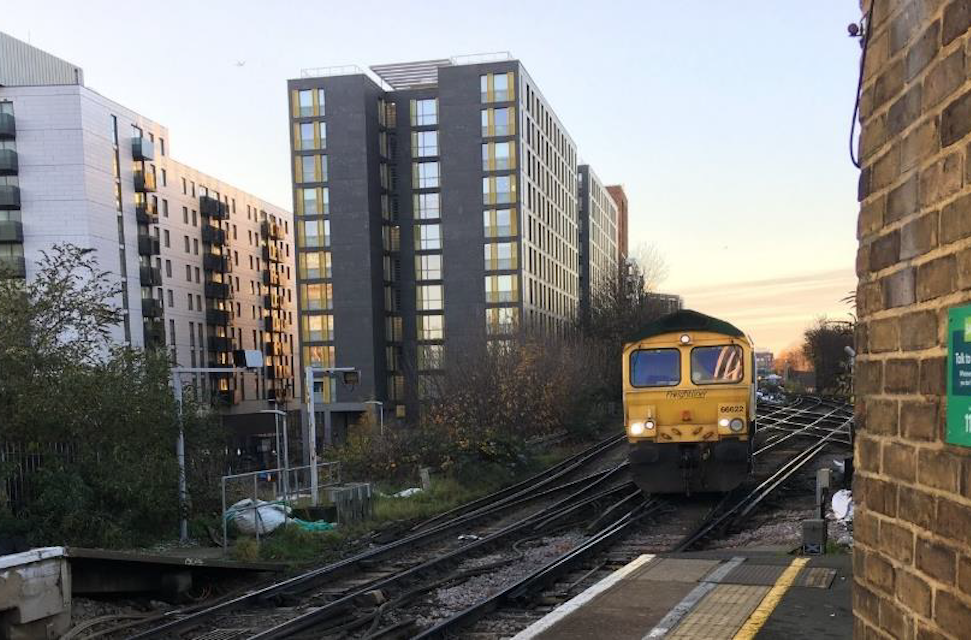
On a mid-morning weekday, there are just four direct trains an hour. That will increase, but it will still be a modest frequency compared with the Central Line, where trains swish past every two or three minutes. Journey times are broadly similar: the fastest Transpennine trains take just over an hour (often longer), while the Central Line, despite stopping at 49 stations, requires up to ninety minutes end-to-end. One line is a high-frequency urban lifeline; the other is a regional route expected to drive economic transformation with a fraction of the capacity.
The Transpennine Route Upgrade is, thankfully, actually underway and is rightly described as transformative, but the scale of planned improvements pales in comparison to the challenge. The route carries some freight alongside passengers, a mixed-traffic burden the Central Line never faces — London’s Tube moves commuters only, while goods travel along alternative corridors. The North has no such luxury: regional railways are expected to deliver speed, connectivity, and limited freight capacity, all on infrastructure that was never designed for modern economic expectations (it gets mentioned so often, people unfamiliar with Manchester believe there is a station called Castlefield Corridor – since so many trains stop there).
Stellar ambitions, but the eagle has not even taken off
Government pledges for northern railway investment — for all the fanfare of “transformational upgrades” — fall far short of what is required to close the South–North gap. Faster trains, smoother services, upgraded stations: small gains against decades of underinvestment. The Transpennine Route may improve, but it remains a symbol of ambition constrained by caution, a reminder that talk of a Northern Powerhouse has yet to meet the scale of the challenge.
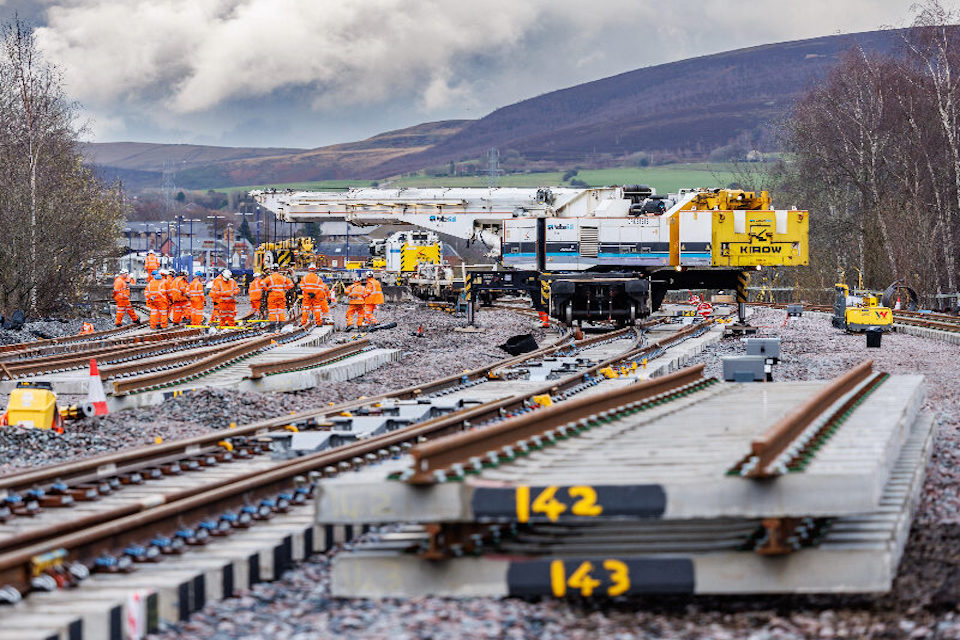
There is no new high-speed line for the North. Government sources will crow about their proclaimed reactivation of the Birmingham–Manchester corridor, but only because the land is already bought. Its specification will fall short of HS2, and even if it proceeds, it will follow NPR in some distant future. Manchester’s hopes of a new rail route remain as remote as a man walking on Mars. That man will likely be a Chinese man, and we all know about their alacrity at building railways.
In the meantime, the North is left with three threads: the Transpennine Route Upgrade, a “pledged” Northern Powerhouse Rail project whose delivery horizon stretches decades ahead, and a possible Birmingham–Manchester line that exists mostly in aspiration.
For all the government rhetoric about a second rail revolution, the reality is that the North will continue to operate on a patchwork of Victorian and slightly upgraded lines, expected to support both passengers and freight on a shoestring. The promise of economic transformation through rail remains a distant echo of the glossy reports, not yet grounded in the steel and sleepers that make journeys real.