
Internal NSW government emails obtained by the ABC reveal that Anthropic, the AI company behind Claude, sought discussions with the state government about locating up to 5 gigawatts of data centre capacity in New South Wales — more than three times the current capacity of Australia’s entire data centre industry.
Separately, the company issued a confidential tender to Australian data centre builders for 1.4 gigawatts of capacity, reportedly valued at more than $20 billion. Whatever the final scale, the direction of travel raises an obvious question: why concentrate this demand in the one mainland state least equipped to supply it cheaply, and least aligned with where Australia’s AI sector actually lives?
NSW already carries some of the highest electricity prices in the country, and its grid is under sustained pressure from coal plant closures, transmission bottlenecks, and rising demand — well before a multi-gigawatt AI load is added to the equation. Sydney industrial and commercial land prices are also among the most expensive in Australia, pushing up both construction costs and the ongoing cost of securing sites at the scale a hyperscale build requires.
By contrast, Victoria and South Australia are already proving themselves as the more logical homes for exactly this kind of investment — and the market is voting with its capital. In South Australia, US-based IREN has committed to an 800-megawatt, roughly $10 billion data centre at Bundey, 75km north-east of Adelaide, explicitly citing the state’s “clean energy abundance” and its trajectory toward a 100% net-renewable grid by 2027. ASX-listed 1414 Degrees has separately signed a Heads of Agreement for up to 1 gigawatt of AI infrastructure at its Aurora Energy Precinct near Port Augusta, backed by local solar and grid-scale storage.
Victoria’s pipeline is arguably even more compelling. Singapore-based Keppel has advanced plans for a $10 billion, 720-megawatt data centre campus on a 123-hectare site near Victoria’s former Hazelwood power station in the Latrobe Valley, deliberately sited within the proposed Gippsland Renewable Energy Zone to access one of the state’s largest electricity nodes and bypass congested distribution networks entirely.
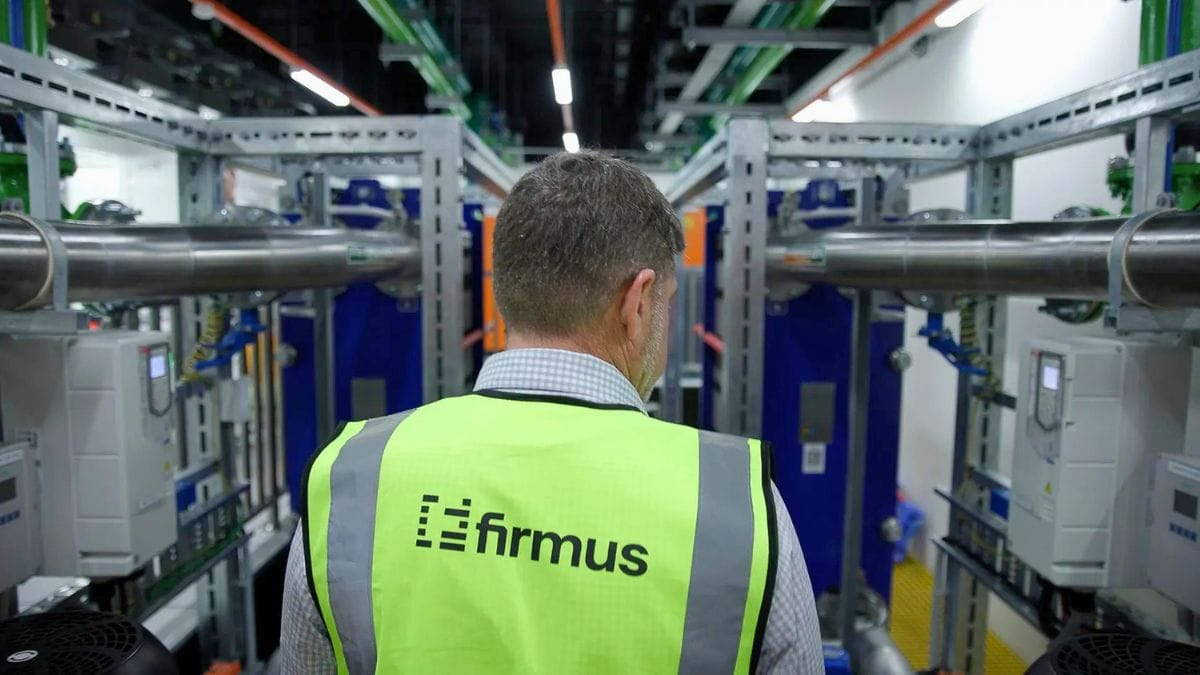
NextDC has secured Victorian development approval for its $2 billion, 150-megawatt M4 campus at Fishermans Bend, on top of its existing M1–M3 Melbourne footprint, while Nvidia has partnered with Melbourne-based Firmus Technologies on a $2.9 billion renewable-powered data centre programme, with its first Melbourne phase alone valued at $4.5 billion.
Add to this the recent press on a reported 1.2GW development at Lovely Banks (near Geelong) by NextDC Victoria is leading the nation on Data Centre Development.
Most strikingly, Syncline Energy has publicised plans for a 2.4-gigawatt, 140-hectare precinct at Plumpton, sited alongside the Melbourne Renewable Energy Hub — though it’s worth noting this remains at the pre-application stage with no formal planning permit yet lodged.
The oversight goes beyond power and land economics. Melbourne’s CBD, not Sydney’s, is Australia’s largest single AI company cluster, hosting 188 AI companies against Sydney’s 184. Anthropic is directing its largest Australian infrastructure ambitions toward the state with marginally less AI-company density, not more, and away from the two states where genuine committed capital — from IREN, 1414 Degrees, Keppel, NextDC and Nvidia — is already flowing toward cheaper, cleaner, better-sited power.
If Anthropic is serious about building infrastructure at this scale in Australia, a rigorous options assessment against what these operators have already recognised about Victoria and South Australia should have preceded any tender process, not followed it as an afterthought.
Doing business in a higher cost environment will lead to upward pricing pressure with increased direct costs at a time where there is a competitive landscape for AI services.

Anthropoid have not done their research how could a company not do this with $billion dollar investments. The media and AEMO have been stating NSW owner is out so how can they choose to headquarter there and expect to build a data centre and have it running in a short period of time?