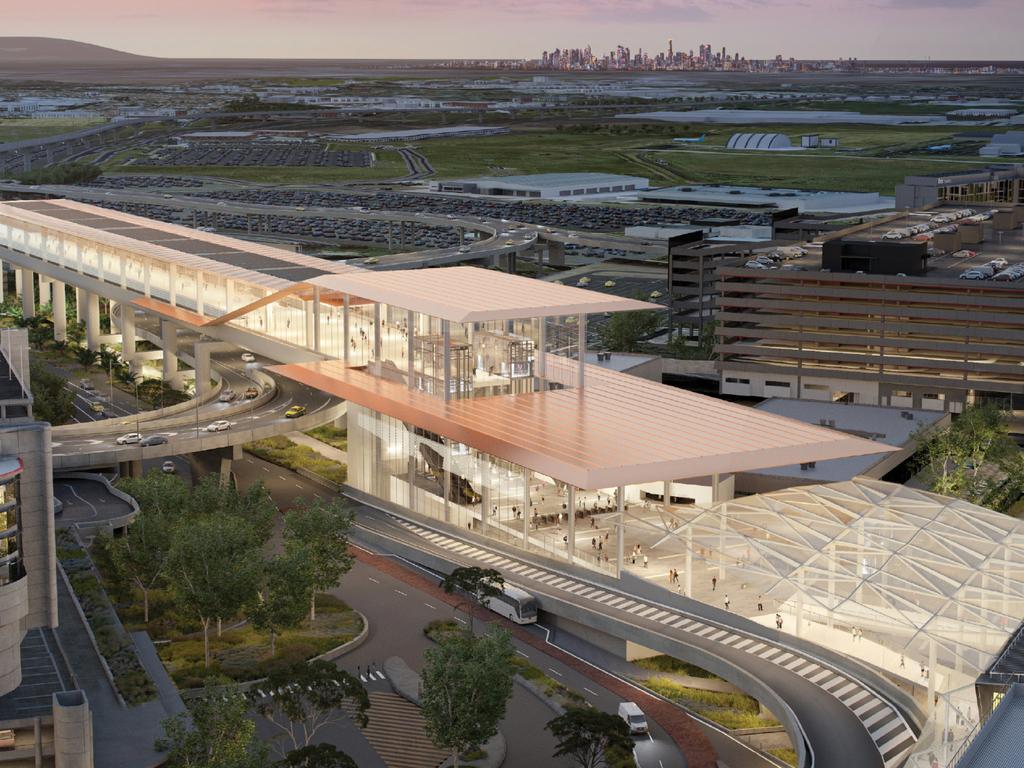
Melbourne is the largest city in Australia and largest in the developed world without a direct rail connection to its main airport, and for decades the case for fixing that has seemed obvious.
A rail link to Tullamarine, tied into the Metro network via Sunshine Station, promises faster and more reliable trips than the SkyBus and car-clogged Tullamarine Freeway, better access for workers in the growing western suburbs, reduced congestion, and a genuine economic dividend — the state’s own modelling has put the return at roughly $2.10 in economic benefit for every dollar spent. The project would also anchor broader development around Sunshine, turning a transit hub into a genuine second CBD-adjacent precinct.
The trouble is that the version of the project actually being built is a long way from the cheapest way to deliver those benefits. Heavy rail into an underground or elevated airport station, tunnelled corridors, and full integration with the Metro Tunnel and Suburban Rail Loop are enormously expensive engineering undertakings.
Cheaper alternatives were always on the table: a dedicated busway or bus rapid transit corridor from Sunshine or the CBD, an upgraded and truly rapid SkyBus with priority lanes, or a lighter-touch surface rail spur using existing corridors rather than new tunnelling. Any of these could have delivered most of the travel-time and reliability benefits — a one-seat, congestion-free ride to the terminal — at a fraction of the capital cost, and years sooner.
The Federal Government was prepared to fund the airport connection via a tunnel from the CBD to the Airport via Maidstone and Highpoint Shopping Centre, this was also a cheaper option. Instead, successive governments chose the most expensive, most prestigious option, then struggled to fund it.
That struggle is now well documented. First costed at $8–13 billion when signed off in 2019, the project has since blown out past $13 billion, with completion pushed from an original ambition of the mid-2020s out to at least 2033. A protracted standoff between the state government and Melbourne Airport‘s private owners over whether the terminal station should be underground or at grade froze progress for years and added directly to both the delay and the cost.
Layered on top of ordinary infrastructure cost blowouts is a darker problem: corruption within the CFMEU on Victoria’s “Big Build” program of which the airport rail is part. Investigations into the union commissioned after it was placed into administration estimated that criminal infiltration — extortion, rigged procurement, and “ghost shift” labour-hire rorts — inflated the cost of Big Build projects by around 15 percent, or roughly $15 billion in taxpayer funds across the program. Lawyer Geoffrey Watson SC, who produced that estimate, has called it conservative. Calls for a full royal commission, rather than a state anti-corruption body without “follow the money” powers over private subcontractors, remain unresolved.
None of this means rail to the airport is a bad idea — the case for better airport access is strong. But the gap between what a cheaper, faster-to-build alternative could have delivered and what taxpayers are now funding is a useful case study in how prestige infrastructure, contractual brinkmanship, and weak oversight of the construction sector combine to turn a good idea into an expensive, delayed one.

Interesting article highlighting again the solution for The Melbourne airport rail line was not the best and far too expensive. Can be delivered for far less cost and the direct route would be a lot better.