The prevailing narrative of the British economy is one of service-sector dominance, a landscape of finance and consultancy where the soot-stained factories of the 20th century have been consigned to history. The United Kingdom has progressively dismantled its heavy industrial base since the late 1970s, leaving this island dependent on global supply chains for the tangible assets of modern life. However, when the British look more closely at the rails beneath their feet, a different story emerges, says RailFreight.com UK Editor Simon Walton.
The railway industry remains a defiant bastion of domestic manufacturing, proving that the UK still possesses the craft and the capacity to build. Far from being a relic of a bygone era, our rail manufacturing base is a modern, sophisticated ecosystem that underpins the wider economy. It is a beacon of what is still possible when engineering excellence meets strategic investment. With laser guided lathe in hand.
From Shirebrook to the world stage
For some years, I’ve been hanging around the factory floor in Shirebrook, much to the consternation of those more qualified to do so. Nevertheless, it’s always a privilege to visit WH Davis—the UK’s last independent freight rolling stock manufacturer—who demonstrate on a daily basis that British “heavy metal” is still a global contender. The company recently secured a landmark €44 million (£38 million) export deal to supply 150 intermodal freight wagons to Irish Rail, their first such export in two decades.

The contract has not only revitalised the local economy but has facilitated a 25% expansion of their workforce. It might not be on the historical scale of Swindon or Shildon, but its a wagon works that works, and has work for years to come.This success in Nottinghamshire is a diamond drill-bit of a sharp reminder that the skills required for traditional manufacturing are alive and well.
Turning the wheels of industry
WH Davis is also currently producing infrastructure maintenance wagons for Ireland under a 10-year framework agreement that could eventually see up to 400 units delivered. It is a tangible example of a UK firm using modern engineering to solve logistical challenges, proving that we can still export high-value, steel-based products while supporting the long-term resilience of international rail networks. A Guinness all round to celebrate that.

Celebrations of relief too at Burton-upon-Trent, just 25 miles (40km) southwest of the Shirebrook factories. Here, the domestic shunting locomotive market has seen a vital “save” with the acquisition of Clayton Equipment assets by Clarke Chapman in January. Now operating as Clayton Locomotives Ltd, the Staffordshire firm was rescued from administration, ensuring that nearly a century of expertise, latterly in zero-emission and battery-hybrid locomotives, stays in British hands. This is a critical development for rail freight, as Clayton remains a leader in “last mile” low-emission shunting solutions that the industry desperately needs for decarbonisation. I feel compelled to return cynical type, and note that the rescue went completely below the governmental radar.
Titans of assembly and niche innovation
While the “Big Five” manufacturers—Alstom, Hitachi, Siemens, CAF, and Stadler—often operate as multinational entities, their UK plants are significant industrial hubs. Alstom’s Litchurch Lane in Derby remains the largest site of its kind in the country, currently balancing the delivery of HS2 stock with a follow-on order for the Elizabeth Line trains. Only this week, the site celebrated the unveiling of the first fully refurbished CrossCountry Voyager, part of a £60 million (€69m) programme that helps safeguard jobs and stabilise a landmark engineering site (there’s an onsite report at RailTech.com).

Notably, the much-maligned and politically divisive HS2 high-speed rail project is driving real benefits at ground level. It is driving a manufacturing renaissance across three key UK rail engineering sites. While Hitachi’s Newton Aycliffe plant leads on body shell welding, Alstom’s Derby site will handle final assembly, and their historic Crewe Works has been tasked with manufacturing the bogies. It’s the first time these high-speed components have been built in Britain in a generation – just in time to pass on those skills to younger professionals, who, even if the railway does not provide a career, is certainly providing a pipeline to one.
Hitachi’s Newton Aycliffe plant in County Durham continues to be a cornerstone of northern industrial identity, assembling the Intercity Express Programme and regional fleets. These sites are more than just assembly halls; they are crucibles for transferable skills. The precision engineering required for a passenger train body shell is not worlds apart from the requirements of a high-specification freight wagon or a heavy industrial component. These plants maintain a high-tech manufacturing culture that benefits the entire UK supply chain.
A foundation built on British steel and concrete
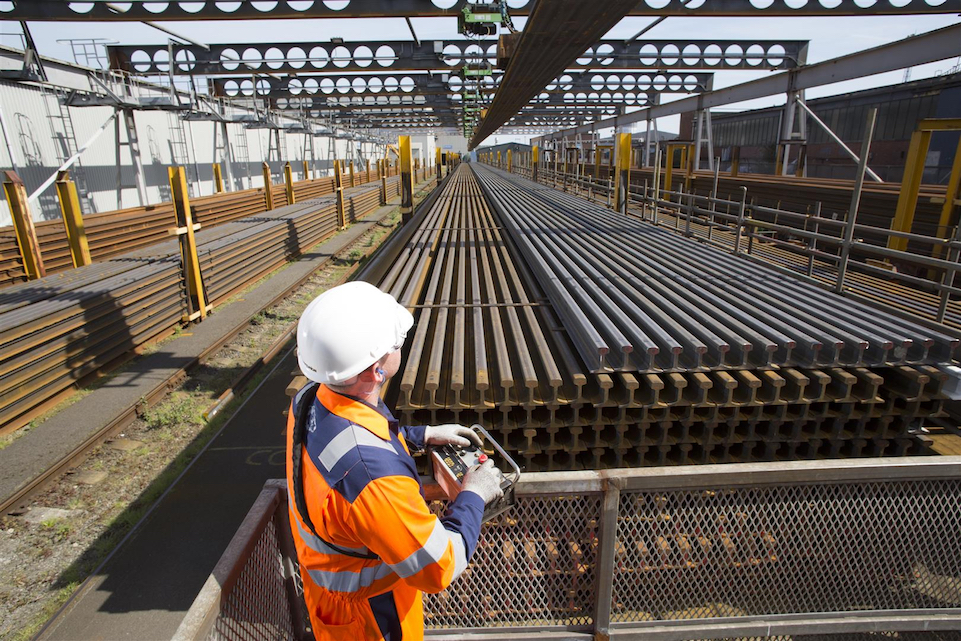
The manufacturing base extends beyond the rolling stock to the very fabric of the network. British Steel in Scunthorpe remains a world leader, producing the high-quality rail that keeps the UK moving – and exporting too. Similarly, the civil engineering side of the industry relies on specialist manufacturers like Pacadar UK, based on the Isle of Grain, where Kent is more the industrial backyard than the more familiar Garden of England.

Pacadar has been instrumental in the delivery of HS2, casting tens of thousands of concrete tunnel ring segments. The synergy between rail and heavy manufacturing is obvious. Many of these segments are transported to construction sites by rail, removing thousands of lorries from the road. This virtuous cycle sees rail freight support the manufacturing of the very infrastructure that will eventually expand the rail network itself, a point often missed in the broader economic debate.
The Rail Forum UK Rail Manufacturing Capability Brochure has just been published this month. serves as a “bible”, not just for the rail industry, but as a showcase for over 400 companies, all with the transferable skills and capacity to support British manufacturing. It is a compendium of industry, developing the expertise required to sustain the wider UK economy through high-value engineering and digital innovation. It underlines a fact that is largely ignored in the economic narrative. The UK rail industry is a modern industrial powerhouse hidden in plain sight. The ecosystem surrounding British railway ingenuity is still there. It is unfashionable, but it is a vital bedrock of our industrial future.