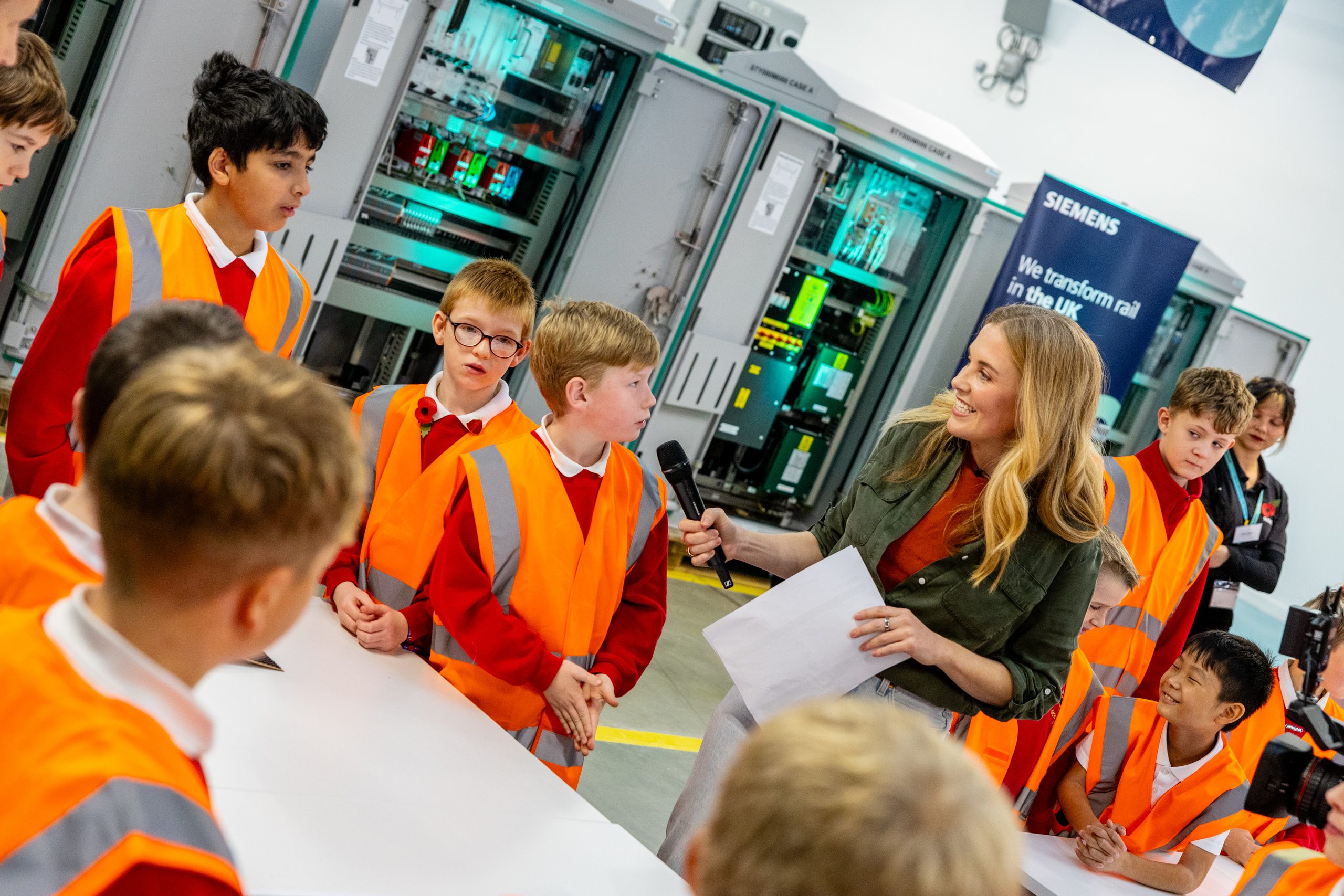
Siemens has officially opened its new, state-of-the-art manufacturing and research facility in Chippenham, marking a £100 million investment in the UK’s rail infrastructure. The opening was attended by UK Prime Minister Andy Burnham and Secretary of State for Transport Heidi Alexander.
The new site at SouthPoint Business Park serves as a global centre of excellence for signalling and control systems, replacing the historic neighbouring facility. The transition to the new facility, including the transfer of all 800 local staff, was completed without any interruption in production. This milestone highlights the critical role of advanced digital technology in creating a more resilient, efficient, and sustainable railway.
“There is huge ambition to transform Britain’s railways by bringing track and train together to create a simpler, more reliable service for passengers and freight” said Rob Morris, Managing Director of Siemens Mobility UK and Ireland. Our new centre strengthens our ability to design, test and manufacture the next generation of rail technology, just like Chippenham has done for over a century.
“The systems developed here will support millions of passenger journeys, helping to deliver a more reliable railway across Britain while serving rail networks around the world,” said Rob Morris, Managing Director of Siemens Mobility UK and Ireland.
The new facility marks the next chapter for a historic rail hub that dates back to 1897. Originally established by Evans O’Donnell and later the headquarters of the Westinghouse Brake & Signalling Company, Chippenham has been a global centre of excellence for over a century, delivering critical technology for iconic projects like London’s Elizabeth, Victoria, and Central lines. This legacy of innovation is now being carried forward into a world-class, sustainable environment at SouthPoint Business Park.
Built to the BREEAM ‘Excellent’ standard, the new site features energy-efficient offices and production areas designed to blend with their surroundings, including a 10% net increase in biodiversity through native planting. This modern, collaborative workspace enables Siemens to scale the production of advanced systems, such as computer-based interlockings and the European Train Control System (ETCS), ensuring that Chippenham remains at the heart of the UK’s digital rail revolution.
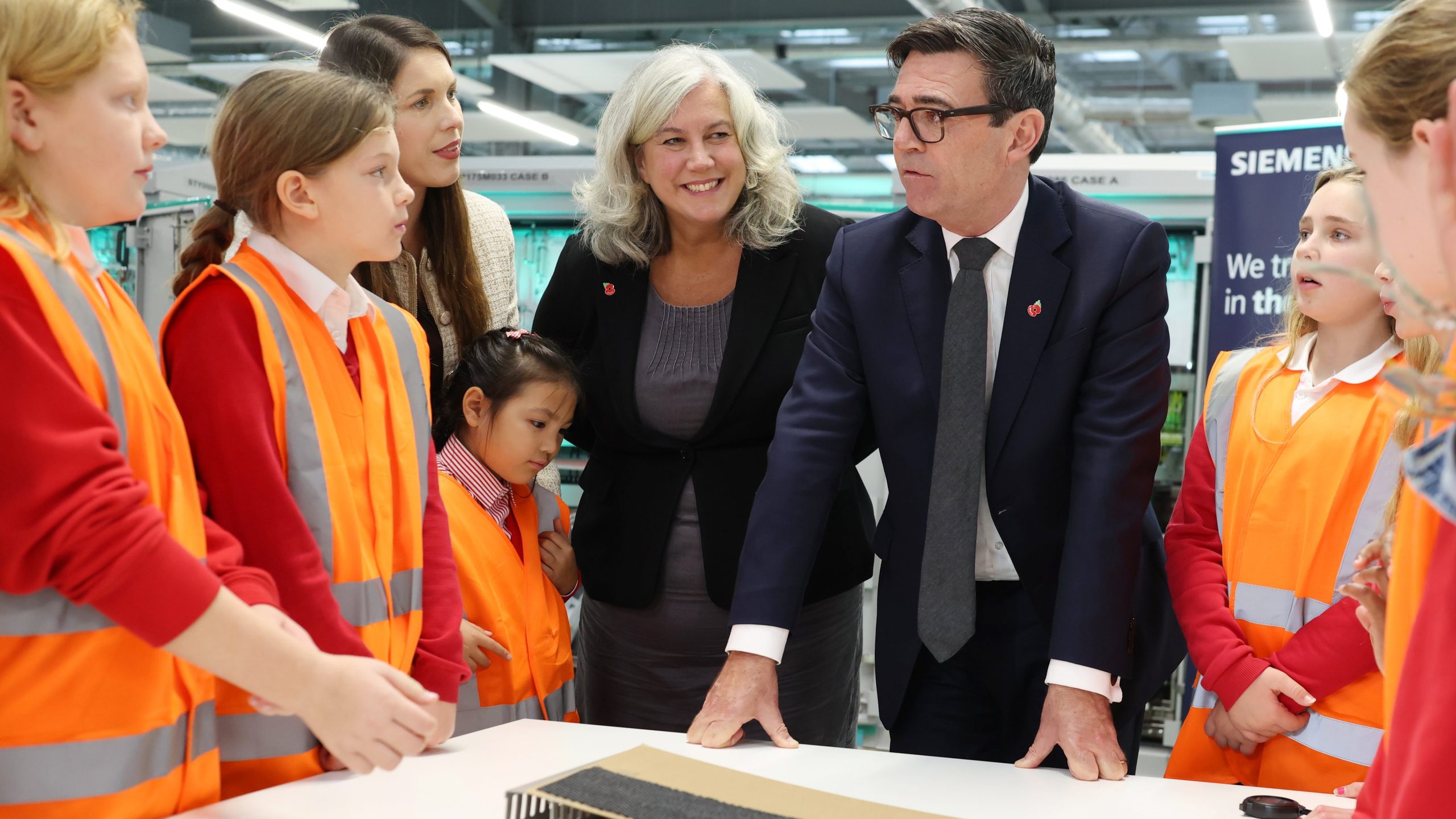
To celebrate the opening of the new facility, Siemens hosted a hands-on national STEM lesson for local pupils, which was broadcast to more than 1,000 children nationwide. The session was delivered by BAFTA-winning presenter and science communicator, Maddie Moate.
“Science becomes so much more exciting when you can see what it actually does in the real world,” said Maddie. We’ve taken things children learn about in the classroom – forces, electricity and simple problem-solving – and shown how those same ideas help make a railway work.
“There are few better places to learn science than inside a factory where engineers are living it every day. And it’s a powerful way of showing young people how jobs in places like this are doors that are open to them,” said Maddie Moate, BAFTA-winning presenter and science communicator.
“As an engineer and a mum to a ten-year-old daughter that wants to have a job like mine, I want young people to see that engineering is for them. There are so many different routes into the industry and career options behind the railways people use every day.”
The event reflects a growing national focus on employers introducing children to the world of work from primary school age onwards. Last year, Siemens UK&I welcomed 326 apprentices, graduates, and interns into the business, and through the National Training Academy for Rail, has trained more than 28,000 people.
Last year Siemens’ education and skills activities reached more than 600,000 students, teachers and members of the community and supported over 2,800 schools across the country. Almost 13,000 people also took part in its virtual work experience offer, helping it reach young people from a much broader range of backgrounds.
“If children get the opportunity to meet an engineer, walk into a place like our new state-of-the-art Rail Technology Centre and understand that the science they are learning at school is being used to solve real problems, those careers suddenly become much easier to imagine,” said Becky Worsey, Assistant Chief Engineer, Siemens Mobility UK and Ireland.
“Primary school is exactly the age when children start forming ideas about what they are good at and what they might want to do in the future, so it is important that we broaden those horizons early.
Image credit: Siemens Mobility UK & Ireland