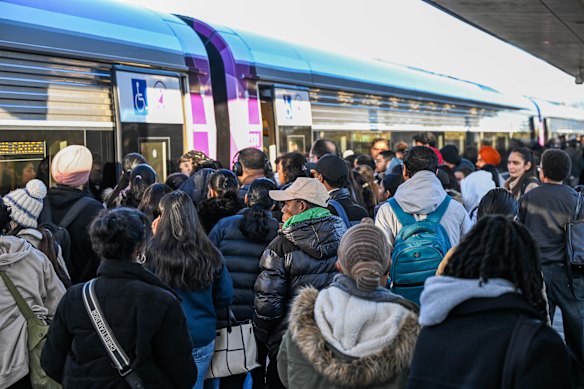
Free public transport would cost Victoria $1 billion a year if made permanent – a move being urged by the state Greens but which transport experts caution would divert funds needed to expand and improve services.
Premier Jacinta Allan on Sunday announced that her government would extend its free public transport policy for a second month, with free travel until the end of May, followed by half-price fares until the end of 2026.
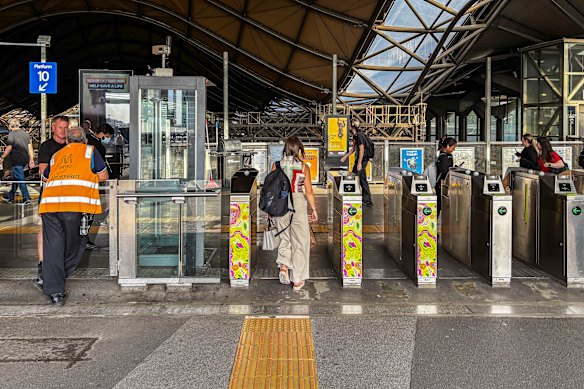
Labor says the initiatives – intended to deliver hip-pocket relief and reduce fuel demand during the oil crisis – will cost about $400 million, with discounted travel to end a month after the November state election.
Myki fares are capped at $11.40 a day, meaning a full-fare, five-day-a-week commuter would save up to $250 a month during April and May, and more than $850 due to half-priced fares from June to December.
But the Victorian Greens say myki gates should be left open permanently and will campaign for free public transport alongside more frequent services in the lead-up to the November election.
Costings by the Parliamentary Budget Office requested by the Greens found that free public transport would cost $940 million next financial year and $1 billion in 2027/28, based on government projections of fare revenue growth. Free travel would set the budget back $12.5 billion over the next decade, the office found.
If you consider the cost of this initiative and return the system to public ownership and operation this would reduce even further. Take that amount and overlay this with reduced cr use, environmental wins and productivity gains and you have a major winner!
Victorian Greens transport spokesperson Katherine Copsey said Labor should not roll back a smart cost-of-living policy when fuel prices remained high.
“While Labor dangles short-term discounts timed to the election, the Greens want real, lasting solutions to make life easier and more affordable for people,” she said.
“This is about choices. We could fund 25 years of free public transport for the cost of a single private toll road project like the North East Link.”
The North East Link is a bigger disaster than the already failed West Gate Tunnel. Look at the delight and success of the Metro Tunnel project and it is easy to see what value can be gained by larger public transport investments. The North East Link has no viable business case and is simply a boondoggle for the CFMEU. It does not delivery anything useful at $40B investment and should never have been attempted.
The state should immediately look at investments in Electrification to Ballarat and Geelong and between Geelong and Ballarat. Add to this the extension of Werribee services to Wyndhamvale and you have a better system. Electrification of mainline services should be priority as should the removal of old Vlocity Trains on longer routes.
But RMIT Professor of Urban Policy Jago Dodson said he was generally against free public transport because the benefits flowed towards people in areas with high-quality public transport access – which also tended to be wealthier, inner-city areas.
This is not a valid reason not to do it.
Lower-income families in areas with poor network access were less likely to benefit, he said, while the loss of fare revenue could actually jeopardise the service improvements they need.
“If you take a billion a year out of the state government budget it’s got to be made up somewhere,” Dodson said. “My policy preference in general is to retain fares for public transport and to, in part, use that money to expand public transport in areas that are poorly serviced.”
Dodson did say, however, that free fares could become more justifiable if paired with a commitment to cease highway expansions and use charges on motorists, like congestion charges, to fund public transport improvements.
Public transport is already heavily subsidised in Victoria. The state government paid private transport operators $3.3 billion last financial year, while passengers paid $736 million in fares, which was distributed roughly 50/50 between the operators and government.
Yet another reason why the network should be returned to public management saving $billions per annum. Step up Victoria and get this network back into Public Management.
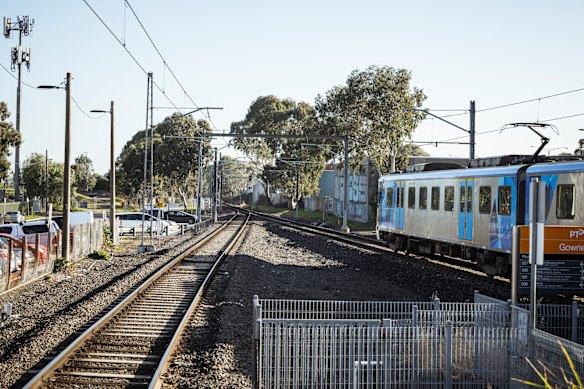
The Greens say duplication of the Upfield line, at a cost of just over $245 million, is one of the projects the state should prioritise to enable better and more frequent services.
On Monday, Allan announced improvements to off-peak services on the Belgrave, Lilydale, Glen Waverley, Alamein, Mernda and Hurstbridge lines by the end of the year. The upgrades will cut some 30- and 40-minute wait times in the evenings and weekend mornings back to 20 minutes.
Allan also announced a $673.6 million order of 25 new X’Trapolis 2.0 trains, bringing the total order to 50. The new train sets will gradually replace ageing Comeng trains on the Craigieburn, Upfield and Frankston lines.
Opposition public transport spokesman Matthew Guy said the government was reheating old announcements, with the X’Trapolis 2.0 order first announced five years ago.
“And they’re not extra trains. They’re going to replace 45-year-old trains that are being retired. So we’re not getting extra seats,” he said.
The Age with commentary
The problem with the current network is that it is outsource to a Chinese company who wishes only to run this network at a profit. If you wish to offer free public transport definitely in Victoria then Metro Trains must be dissolved and the network return to public ownership and control. It is only then the network costs will reduce as at the moment the government is paying costs and paying for profit whilst outsource to a company that has done a very poor job of running Melbourne‘s public transport system.
The network should be free to use but sadly the network is still underfunded.
I do agree returning to Victorians should be mandated and take immediate effect post the contract expiration of the current contract from a Hong Kong company.