The impending sale of DB Cargo UK raises several questions that extend beyond the business itself. The future ownership of one of Britain’s largest rail freight operators has implications for the wider UK freight market. The German parent company has domestic reasons for disposing of its British business, but the consequences are international in scope.
Britain’s industrial logistics may be in flux, but the prospect of acquiring a ready-made rail freight business is proving attractive. A change of ownership at DB Cargo UK could be a huge shakeup for customers, staff and the UK’s rail freight ambitions. Whether as a single unit, a break-up of the business, or a suite of investment partners, there is a queue of suitors.
Bids on the table or talk on corners?
The latest substantial report, published on 13 October, suggests the sale process has attracted interest from more than 40 potential bidders and investors. Bloomberg, in a widely syndicated report, said unions feared the business might be broken up rather than sold intact. Around 2,300 jobs could be at risk, according to those concerns. However, interest from investors is not the same as 40 competing offers to buy the entire company.
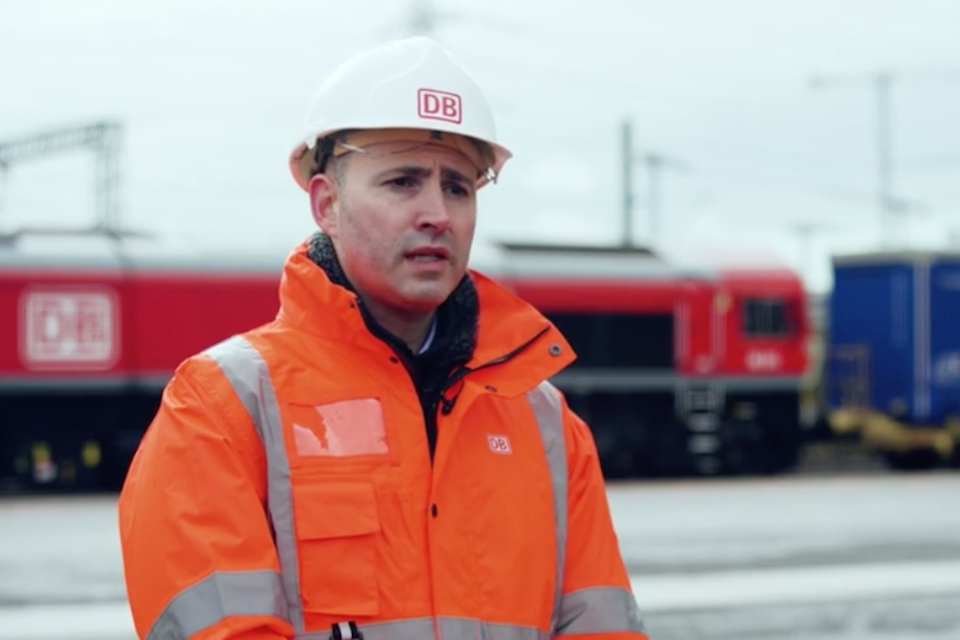
The report also highlighted DB Cargo UK’s substantial physical assets. The company has around 228 locomotives, 6,500 wagons and a property portfolio including around 150 depots, terminals and railheads. The latter is attracting attention.
Several sites occupy potentially valuable urban land, and many are already actively marketed by the existing owners. That creates an obvious tension between the value of the business as a functioning railway and the potential value of individual assets. The question is whether a buyer wants to move freight by rail, unlock property value, or pursue some combination of the two. That potential asset stripping is fuelling concerned speculation.
From German restructuring to a British auction
In mid-August, news broke that Deutsche Bahn had engaged restructuring adviser Interpath to oversee an auction and was already talking to prospective bidders. RailFreight.com and Rail Business UK reported the decision on 17 August, citing Deutsche Bahn’s strategic focus on its core Central European operations. The company’s CEO Andrea Rossi had already informed staff of the sale. The British arm of the business is being sold against the backdrop of restructuring pressures affecting its German parent, rather than as an isolated transaction in the UK market.
Subsequent coverage examined potential interest from infrastructure funds and shipping and ports multinational DP World. These remain reported possibilities, not confirmed bids or evidence of a preferred purchaser. However, the shipping sector has already invested heavily in the UK rail freight scene, and any number of shipping lines could seek to vertically integrate their UK logistics chain with an acquisition of the business.
DB Cargo UK has assets … and liabilities
DB Cargo UK’s financial performance helps explain why this is not simply a case of putting a healthy railway on the market and waiting for the highest offer. A reported turnover of £274.4 million (in 2024) is a considerable business, albeit one with a loss of £12.3 million, is bound to attract attention. That loss is down from £67.5 million in 2023. The improvement is significant, but the business was still in the operating red. A purchaser will need to assess whether operational changes, new investment or a different commercial strategy can deliver sustainable returns.

The operator also remains important to the national freight market. Office of Rail and Road figures put its share of freight operators’ train-kilometres at 22.3% in 2025–26. That is a substantial presence, even as competition from GB Railfreight and Freightliner has intensified. A change of ownership could influence services, customers, locomotive availability and terminal access. Any sale that weakens capacity or disrupts established traffic flows could have consequences beyond the company’s own balance sheet.
Jobs, land and the risk of a piecemeal sale
The unions’ concern is not simply who puts up the cash, but what happens afterwards. ASLEF expressed concerns for the around 650 DB Cargo UK train drivers it represents. The Transport Salaried Staffs’ Association has called for protection against compulsory redundancies. Reports have raised the possibility of assets being sold separately, with locomotives, wagons and rail-connected land potentially attracting different buyers.
The stakes extend beyond individual employment contracts. DB Cargo UK’s fleet and network of depots, terminals and railheads form part of the infrastructure supporting freight services across Britain. If assets were sold for uses unrelated to rail freight, replacing lost facilities could be difficult or expensive. Conversely, a purchaser prepared to invest in the business as a going concern could provide a platform for renewed growth. The challenge is to distinguish commercially viable restructuring from the disposal of assets that the wider freight market needs.
Government ambitions face a test
Labour Party MP Rebecca Long Bailey, representing Salford, a constituency at the heart of the rail freight debate, tabled a written question on 12 October asking the Transport Secretary Heidi Alexander what steps the UK Government was taking to protect rail freight jobs and assets. That makes the Government’s position an important outstanding part of the story, rather than an issue that can yet be treated as settled.
The wider policy context makes the sale particularly pertinent. The Government has set an ambition to increase rail freight, with a target reported as 75% growth by 2050. Yet growth requires locomotives, wagons, terminals, rail-connected land and people to operate the trains. Ministers must decide whether the market can be trusted to preserve those capabilities, or whether particular assets and services warrant safeguards. The sale is a commercial decision for Deutsche Bahn, but its consequences could reach well beyond the seller and whoever eventually becomes the buyer – and whether that buyer is from the corporate sector, or even the public sector.