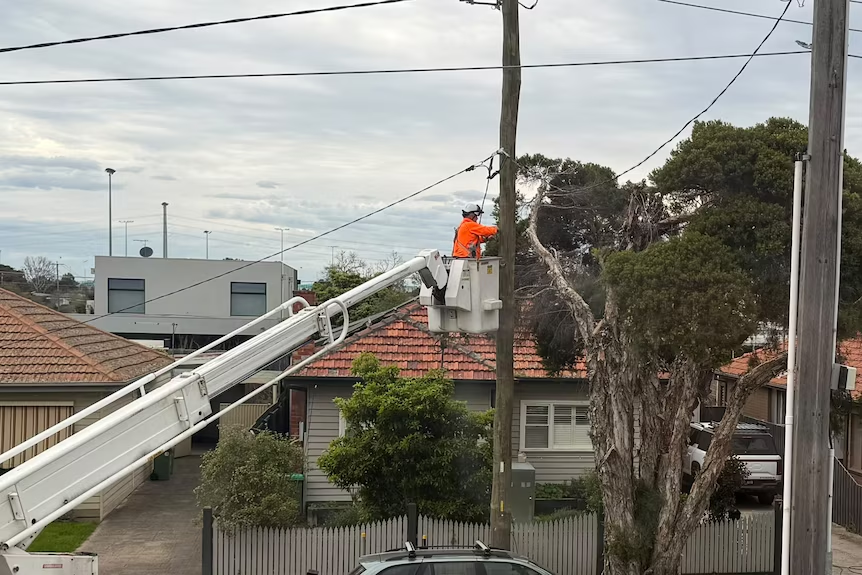
Cameron Botterill returned home one day to find towering new power poles on his residential street in Melbourne’s inner west. He called them “absolute monstrosities” that loom over everything else in the suburb and feel out of place in a residential area he says never asked for them.
The poles, installed within a single day, stand more than twice the height of the seven-metre wooden poles they replaced and can carry up to 66,000 volts, around 160 times the previous voltage. Botterill was told in July by his distributor, Jemena, that power would be cut so crews could do the work, but only learned the reason once the poles were already up: they would feed a data centre more than a kilometre away. He said he was startled such infrastructure could go into a residential street.
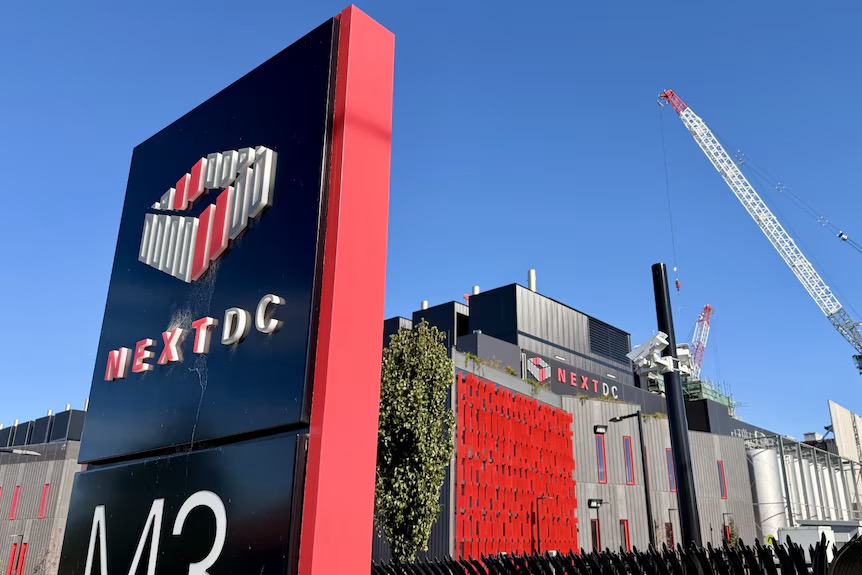
A NextDC data centre already operates nearby in West Footscray and is being expanded, with another proposed for the suburb and a further one planned in Spotswood. Jemena describes the works as part of a broader network upgrade to meet Melbourne’s rising energy needs. University of Melbourne mechanical engineering professor Michael Brear said the taller poles are largely a safety measure, since large loads like data centres are best supplied at higher voltages than a typical household connection, which requires taller infrastructure to deliver power both safely and efficiently.
On the day Jemena crews showed up in August, residents left cars and bins out to block equipment needed to install the poles. Some taped notes on car windows explaining the protest action.
A common complaint has emerged across inner-west streets where the poles have gone in: residents say they were not told in advance. Jemena has acknowledged its communication and engagement fell short and says it is taking that feedback seriously, and has paused works to hear community concerns.
In Spotswood, Paul Tyndale’s family had their power cut for a new pole installation, and it was only then that they discovered a data centre was proposed less than half a kilometre from their home.


M3 is a very large campus—planned for up to 225 MW—and needs substantial new network infrastructure to bring in that power. Reported work included installing 66,000-volt lines on tall poles through residential streets. Jemena paused the work in September amid resident and council objections; the council said it had not given required consent for work in road reserves. However, the council did not confirm that those particular upgrades were specifically for M3, and NEXTDC has not confirmed that this is the cause of its delay. So the connection between the paused works and the M3 delay is plausible and reported, but not yet established in public disclosures.
Why it matters financially:
A data centre can be built and partly operating yet still be unable to bring additional capacity online until the utility connection is ready. That can delay customer deployments and billing. M3 is already partially operational: reporting says 42 MW came online in FY26, with another 165 MW under development. Citi analysts estimated that as much as A$25 million of FY27 earnings could be at risk, but that is an analyst estimate—not a confirmed loss or company forecast revision. NEXTDC’s board was still assessing the implications when it requested a trading halt.
What it could mean for the industry:
The broader warning is that access to electricity and the local network may become a critical constraint on data-centre growth, alongside construction, financing and customer demand. Melbourne’s west is already seeing strong demand for connections, and network operators have warned that proposed data-centre loads exceed available capacity in the area. The M3 episode also shows how utility construction, local approvals and community acceptance can affect schedules—not just the data-centre developer’s own build plan.