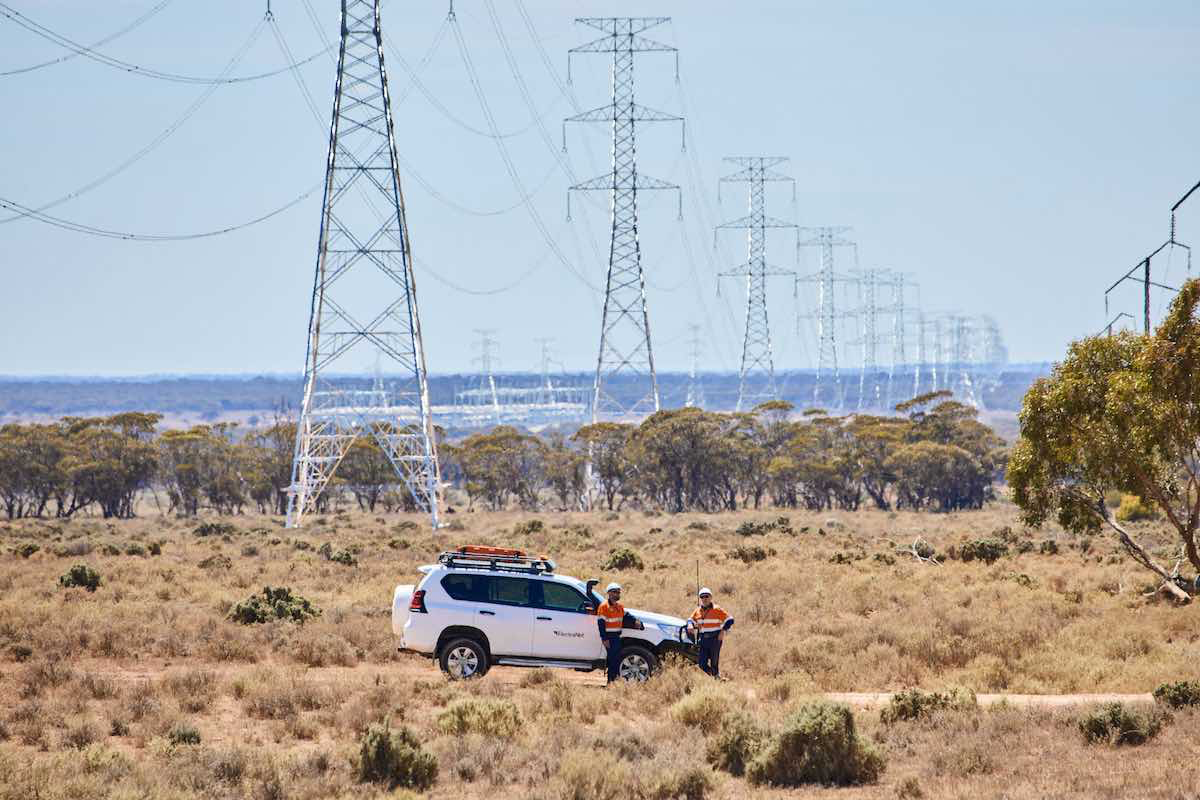
One of Australia’s biggest data centre proposals to date is set to cover 610 hectares of land, and will need four substations, three sheds to house its racks, and two 330 kilovolt (kV) power lines to hook into the grid and enough diesel capacity to keep the operations going for at least four days should the grid go down.
The first planning documents filed with the federal government’s EPBC process reveals that it will store 500 kilolitres (kL) of diesel on site — enough to fill 20 per cent of an Olympic sized pool — as well as 3,000 litre “day storage tanks” beside each generator.
These will provide 96 hours of backup for Iren’s 800 megawatt (MW) draw on the grid for its Bundey data centre complex, should the grid go down. The 800 MW power needs is equivalent to 550 MW of IT load.
The US-based data centre specialist Iren announced in June that it is planning to build the city-scale project near the Bundey sub-station, around 75 km north-east of Adelaide. Media reports estimate the total cost of the facility at about $10 billion.
It said then it was attracted to South Australia’s high share of renewable energy – already at 75 per cent share of wind and solar and heading towards 100 per cent net renewables next year, before the centre is built – although it will be required to contract new wind and solar to support its energy needs under new government requirements.
However, the Bundey centre, like others, will build huge capacity of diesel generators as back up for the grid. Batteries will be installed, but only with enough storage to allow time for the diesel generators to be switched on if needed. Iren says the diesel generators will be rarely used, but will be required to provide up to 96 hours of back-up if needed.
The project as a whole will need three data halls, worth around 200 MW of IT load each. Three primary substations will feed power to these and connect to a bulk substation, which will handle electricity coming in from the grid, via those 330 kV power lines.