The railway between Lewes and Haywards Heath will remain closed for at least another 10 days while teams recover the derailed train and begin repairs to the railway.
Customers travelling next week, and in the weeks ahead, are advised to check before they travel and, where possible, use alternative train services via Brighton.
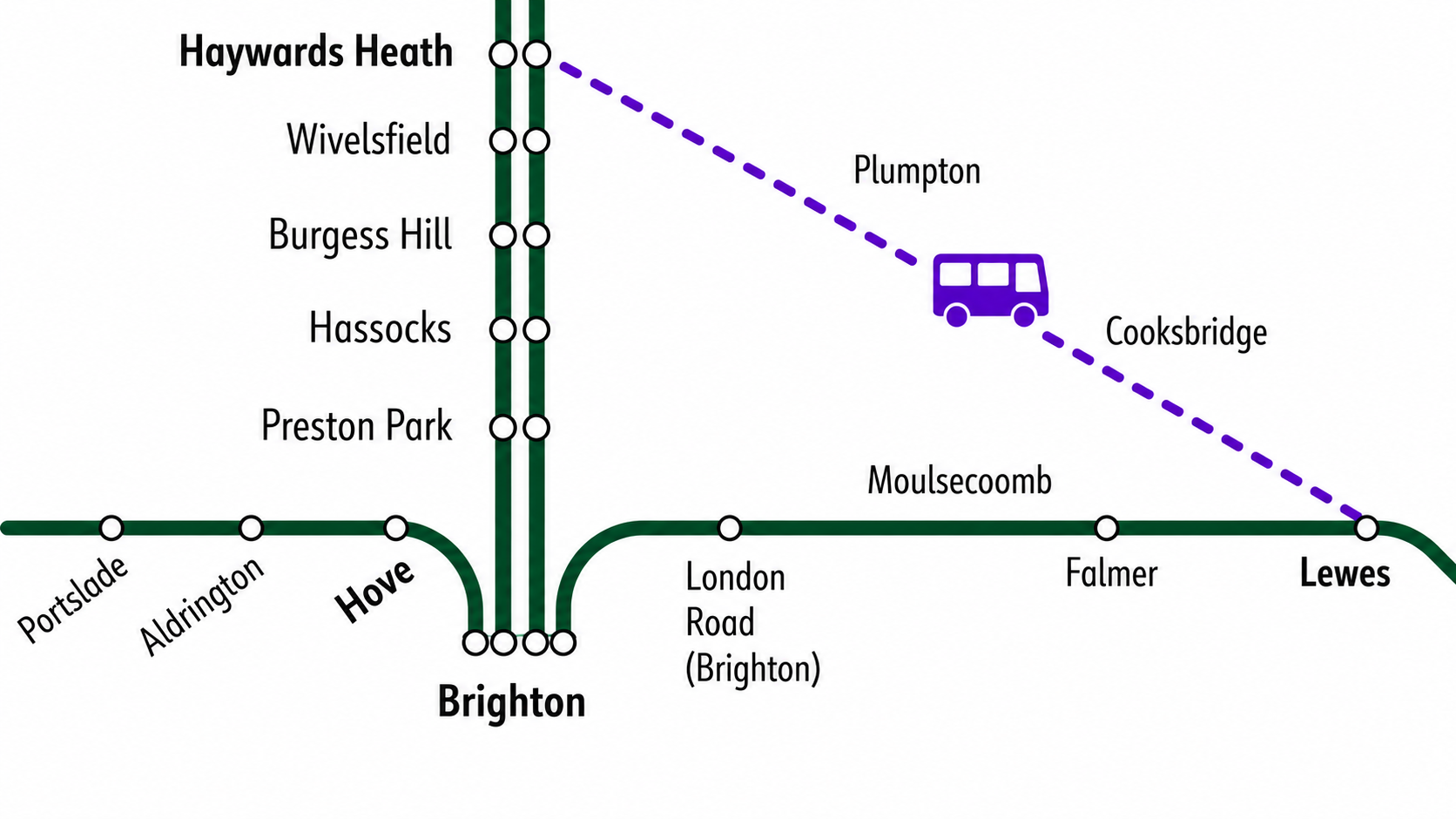
Rail replacement buses will run between Lewes and Haywards Heath, serving Cooksbridge and Plumpton. These buses have limited capacity, so customers travelling to other stations should travel via Brighton instead.
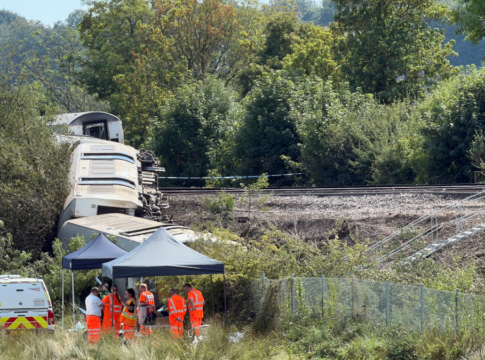
The closure follows the derailment of a Southern train near Lewes on Thursday 13 August.
Rail replacement buses will run between Lewes and Haywards Heath, serving Cooksbridge and Plumpton. Customers making other journeys are advised to travel by train via Brighton.
Tickets will be accepted on relevant alternative Southern, Thameslink and Southeastern services as well as Brighton & Hove Buses and London Underground services between London terminal stations.
Journey planning apps and websites are being updated at least one day in advance for each following day. Customers are advised to check live travel updates before they travel.
If customers would prefer to postpone their journey until the line is reopened, their ticket will remain valid for travel and can be used at a later date. It will also be accepted by all other operators on the day of travel.
For the latest Southern rail travel information visit: www.southernrailway.com
The Rail Accident and Investigation Branch (RAIB) completed its work on site on Saturday and has now handed the site back to Network Rail. RAIB’s investigation into the derailment continues.
A complex recovery operation is now under way. Three carriages derailed and slid part-way down the embankment. These will need to be carefully lifted away by crane.
The location makes this particularly difficult. The railway is close to a river, in a Site of Special Scientific Interest, and restricted road access is only via a residential area. As much specialist equipment as possible is being brought to the site by rail given the challenges of access by road.
Engineers are now preparing the site for two 125-tonne rail-mounted cranes, among the largest cranes available for use on the railway. Before lifting can begin, teams must make sure the ground and railway are stable and strong enough to safely support the cranes and the weight of the carriages.
Once the train has been removed, engineers will be able to fully assess the damage to the railway and understand the scale of the repair work needed before services can resume safely.
The railway is working with Lewes District Council and other partners throughout the recovery. This work is taking place near to homes and wildlife, and the team is engaging closely with the local community as this sensitive work takes place. The rail industry is grateful to local communities for their support.
John Whitehurst, chief executive officer of Greater Thameslink Railway (GTR), which operates Southern Railway, said: “It has been an incredibly difficult time for our customers and colleagues, and our thoughts remain with everyone affected by this, particularly the family and friends of those who have been injured.
“We recognise the impact this incident will have on customers’ journeys in the days ahead, and we’re working closely with Network Rail to do everything we can to keep people moving while recovery work continues and the railway is restored safely. We know this recovery effort is not only affecting rail customers, but also local communities around Lewes, and I’d like to thank them for their patience and understanding while our teams work to restore the railway.
“We’re providing replacement transport where needed and deploying additional colleagues at stations to support customers and help them complete their journeys. I thank customers for their patience and understanding while the railway recovers from this incident.”
Lucy McAuliffe, Network Rail’s Sussex route director, commented: “This is a complex recovery operation in a very difficult location, and our teams are working hard to recover the carriages and repair the railway, to resume services safely as soon as we can.
“We know the closure is disruptive and the recovery work also affects people living close to the railway. I’m grateful for the support and understanding of the local community while we carry out this work, and for the patience of our customers during this time. We are working around the clock to get this done. We will share more updates as the recovery work progresses.”
Image credit: GTR