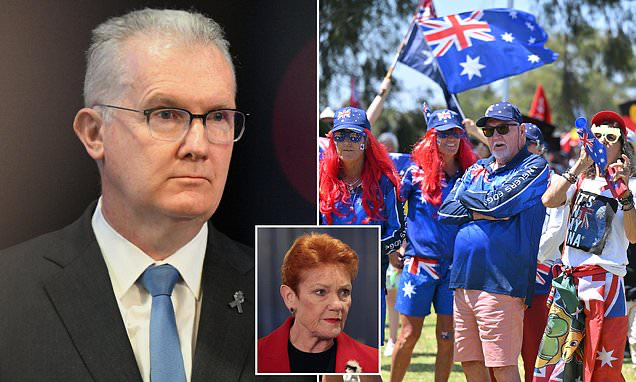
Home Affairs Minister Tony Burke has postponed a National Press Club address where he was expected to unveil a sweeping package of reforms aimed at sharply reducing migration.
The proposed crackdown reportedly included tougher family visa rules, caps on backpacker numbers and tighter restrictions on the work and appeal rights of asylum seekers.
Under the proposed family visa changes, the spouses, children and parents of Australian citizens and permanent residents would no longer be able to apply for family visas while visiting Australia on tourist visas.
Instead, the families have to wait overseas until their permanent visas were approved, removing the ability for many applicants to move onto bridging visas that currently allow them to remain in Australia, work and access Medicare while they wait.
The reforms were also expected to limit the ability of asylum seekers to work while their protection claims were assessed and restrict their ability to appeal rejected applications, in an effort to deter non-genuine claims.
Backpackers were also set to face tighter controls, with the government reportedly considering caps on working holiday makers seekino to extend their stay into a second and third year.
While lotteries already apply to applicants from China, India and Vietnam, the proposal would reportedly expand limits to backpackers from all countries.
The proposed changes form part of a broader package designed to deliver a rapid and significant reduction in net migration.
Burke had been due to announce the measures at the National Press Club on Thursday but withdrew late on Tuesday.
He also directed officials to prioritise applicants already in Australia over offshore applicants for permanent skilled and family visas, with limited exceptions for workers in law enforcement and defence.
The directive effectively pushes lower-priority offshore applicants further back in the queue, reducing the number of permanent migrants arriving from overseas in the short term.
Other reported measures include an across-the-board increase in visa application fees.
The Albanese government is becoming increasingly concerned about shifting public attitudes towards immigration, as migration levels emerge as a key political issue and Pauline Hanson’s One Nation continues to gain support.
A Lowy Institute poll released in June found 55 per cent of Australians believe the number of migrants arriving in Australia each year is too high.
The government is also understood to be closely watching One Nation’s continued strength in the polls.
Daily Mail Australia understands intense cabinet discussions over several of the proposed reforms on Monday prompted Burke to postpone the address until a verdict was reached from members.
‘The speech would deal with the migration system as a whole,’ a spokesperson for Burke said.
‘Yesterday it became clear that some elements of the speech would not be finalised by Thursday. We’re working with the Press Club to find a new date.
Late last month, Burke quietly introduced a separate series of migration changes expected to further reduce net migration.