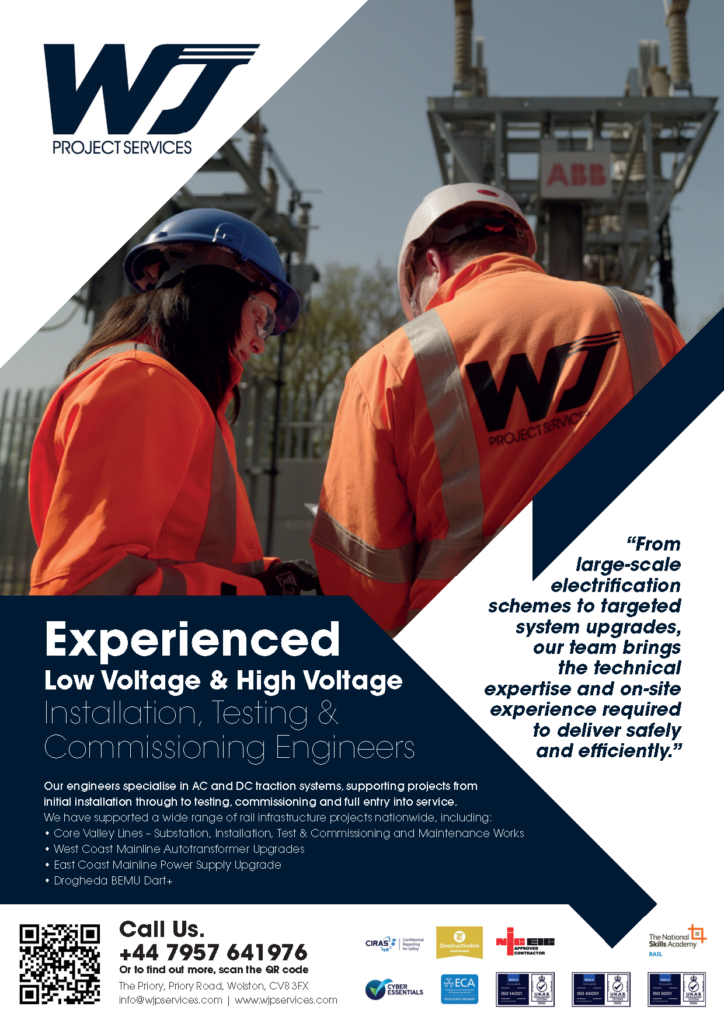
The drive towards electrification is creating new opportunities but also increases the complexity of infrastructure projects. New traction power systems, substations, protection equipment, and control systems must all work together seamlessly before a railway can enter service. Ensuring that happens safely and efficiently is at the heart of WJ Project Services.
Established in 2007, the company specialises in the installation, testing, commissioning, and energisation of electrical systems across the rail sector and beyond. While much of the industry’s attention focuses on the design and construction phases of projects, WJ Project Services specialises at the point where infrastructure must be proven and handed over for operation.

“Our focus is on solving problems and giving clients confidence that systems will perform as expected,” explains Founding Director Ashley Jordan. We’re a highly skilled engineering business that can look at a problem, analyse it, develop a solution, and then implement that solution safely and efficiently.”
Since becoming part of the Amcomri Group in 2023, the company has gained access to broader engineering capabilities while maintaining its specialist focus. The arrangement provides the best of both worlds, says Ashley.
“Being part of Amcomri has opened up many opportunities, while still allowing us to operate as a focused specialist business.
“We’ve got the security and support of a larger group, but we’re still agile and able to respond quickly to our clients’ needs.”
Beyond testing and commissioning
Although best known for its work on rail electrification and traction power systems, WJ Project Services’s expertise extends across a wide range of electrical infrastructure.
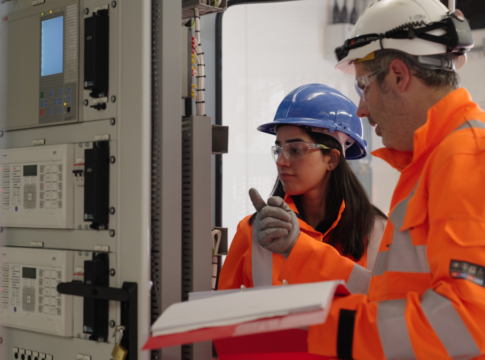
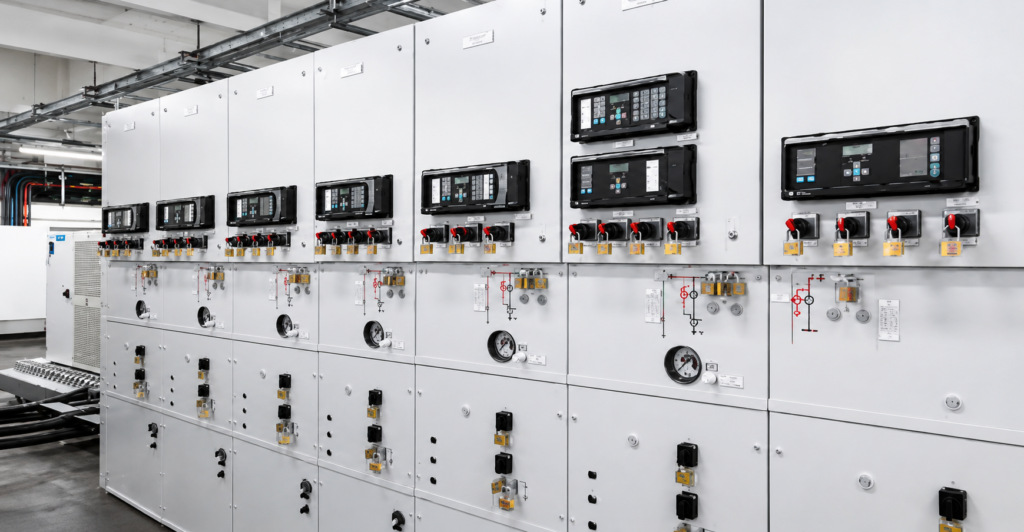
The company works on both high- and low-voltage systems, carrying out installation, retrofit modifications, testing, commissioning, protection and control upgrades, SCADA integration, and final entry-into-service activities.
Its engineers are authorised to undertake switching operations on Network Rail infrastructure and private networks, carrying out isolation and earthing, safety documentation, energisation, and commissioning activities on some of the railway’s most critical assets.
“We install, test, commission and undertake the final entry-into-service or energisation testing associated with those circuits,” Ashley explains. “We employ technically skilled and competent engineers who can support everything from installation through to the point where the equipment enters service.”
The business also supports Network Rail in a less visible but equally important role, providing training, mentoring, and assessment services for maintenance teams and electrical staff.
When asked what differentiates WJ Project Services from its competitors, Ashley highlights the company’s collaborative approach.
Rather than operating as a standalone contractor, WJ Project Services often embeds engineers directly within client organisations, becoming an integral part of project delivery teams.
“We tend to embed quite heavily within our clients’ teams,” he says. “It’s much more of an ‘alongside’ relationship than simply working for somebody else.”
That philosophy is reflected in the company’s reputation for taking ownership of complex projects and reducing risk for clients.
“We want to be known as the company which takes away problems from the client,” Ashley adds. “We’re there to support first and foremost, and collaboration is absolutely integral to how we operate.”
Delivering major projects
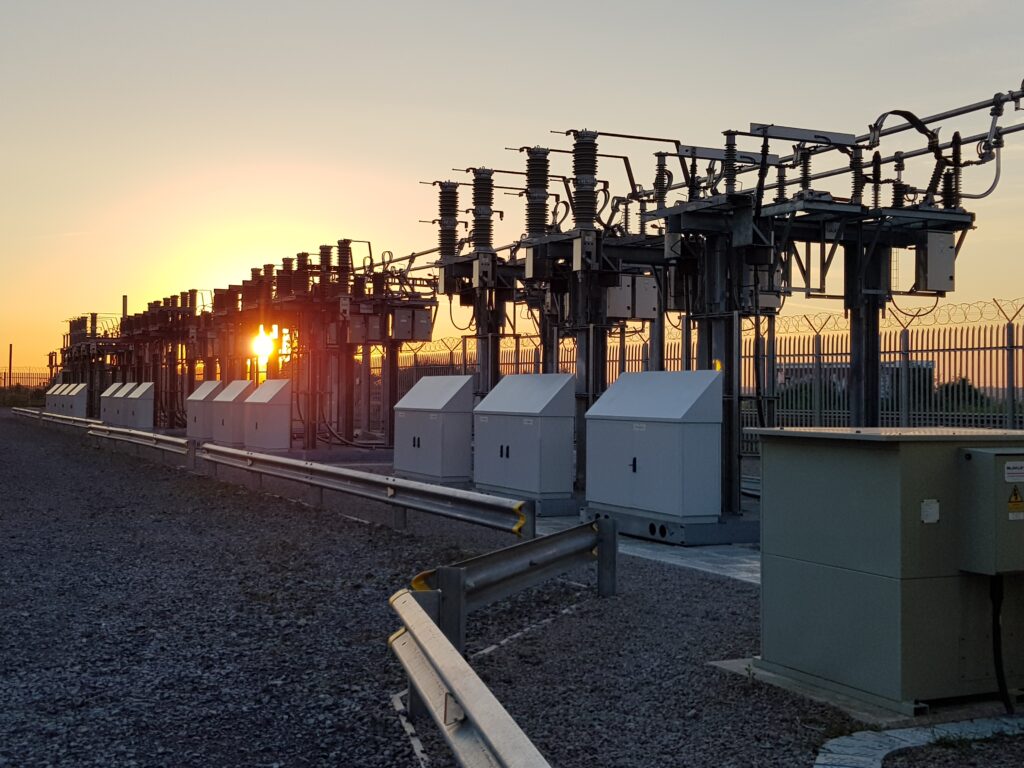
One of WJ Project Services’ greatest strengths is meticulous planning and preparation. Commissioning activities frequently take place during short possession windows where there is little room for error. Every stage of testing, switching, and energisation must be carefully planned and executed. According to Ashley, success depends on understanding every aspect of the job before arriving on site.
“Our attention to detail is one of the things we’re most proud of,” he says. “Every commissioning activity is planned step-by-step. We look at the job from every angle, understand the potential pitfalls, and work through them before we get to site.”
That approach was recently demonstrated on the Core Valley Lines programme in South Wales, where WJ Project Services supported the commissioning of electrification infrastructure into Cardiff Bay.
“The whole commissioning was delivered successfully ahead of time,” Ashley explained. “The railway was energised and trains were running on Sunday morning. That comes from understanding the infrastructure, understanding operations, and planning every stage of the work.”
Over the years, WJ Project Services has contributed to many of the UK’s most significant electrification and power supply programmes. Its engineers have worked on schemes including the West Coast Main Line Power Supply Upgrade, Great Western Electrification, and the East Coast Main Line power supply works.
The company has also expanded its activities in Ireland, where it has been involved in innovative projects designed to support future railway electrification. One example is a pioneering battery storage project delivered for Drogheda, which Ashley describes as a significant milestone for the industry.
“It was a first-of-its-kind project,” he said. “That battery storage system changes the way future electrification can be implemented. Projects like that demonstrate the experience we have and the value we can bring to emerging technologies.”
As the company has grown, it has adapted to changing market conditions. While previous control periods were characterised by a small number of large-scale programmes, today’s rail industry often requires the delivery of numerous smaller projects simultaneously.
“We used to be involved in two or three major schemes at a time,” Ashley explained. “Now we’re often supporting 12 or 15 smaller projects. The challenge is different, but we’ve adapted to it.”
Like many organisations across the rail sector, WJ Project Services recognises that attracting and developing skilled engineers is one of the industry’s biggest challenges. The company therefore continues to invest heavily in training, mentoring, and developing the next generation of talent.
“We’ve got graduates in the business, we’re bringing in new engineers, and we’re training people to become commissioning engineers,” Ashley says. “There simply aren’t enough people being brought through the industry at the moment, so it’s important that we invest in developing those skills ourselves.”
The emphasis on training extends beyond technical competence. WJ Project Services believes that practical experience, mentoring, and exposure to real projects are essential for creating the highly skilled engineers the industry requires.
Confidence through competence
Although rail remains at the heart of the business, WJ Project Services is increasingly applying its expertise to adjacent sectors.
The company is actively developing opportunities within energy infrastructure, renewables, private networks, data centres, and other electrical engineering environments where commissioning and power systems expertise are in demand.
Rail currently accounts for around 75-80% of the company’s activities, but Ashley believes diversification will strengthen the business while continuing to support the railway.
“We’ll always see rail as our core market,” he said. “But we’re also moving into energy, renewables, and other sectors where our skills are transferable. The experience we’ve developed in rail gives us a really strong foundation.”
As electrification, decarbonisation, and energy transition continue to shape the future of transport infrastructure, demand for specialist engineering expertise is likely to increase.
For Ashley, the company’s role remains straightforward.
“Clients bring us in when the work is complex or when they need confidence that systems will perform as expected,” he says.
“That’s what we provide: confidence, technical capability, and the ability to deliver.”
Visit our website at www.wjpservices.com.
Image credit: WJ Project Services