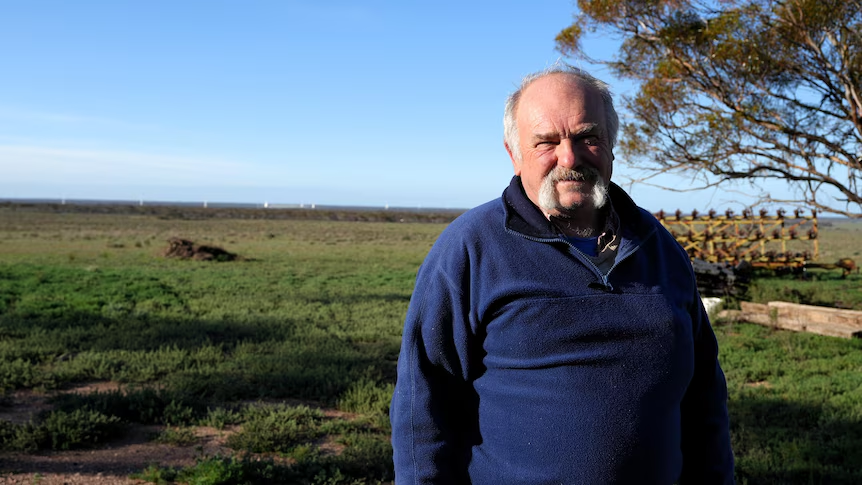
Clayton Heinrich has owned his 1,000-hectare farm in the locality of Bright in South Australia’s Mid North for more than 40 years.
He said the once-clear horizon of his retirement property had changed dramatically over the past three years, and his plans were now uncertain.
“I used to get people out here to have a look at the stars … camping out here, but I guess those days may be gone.”
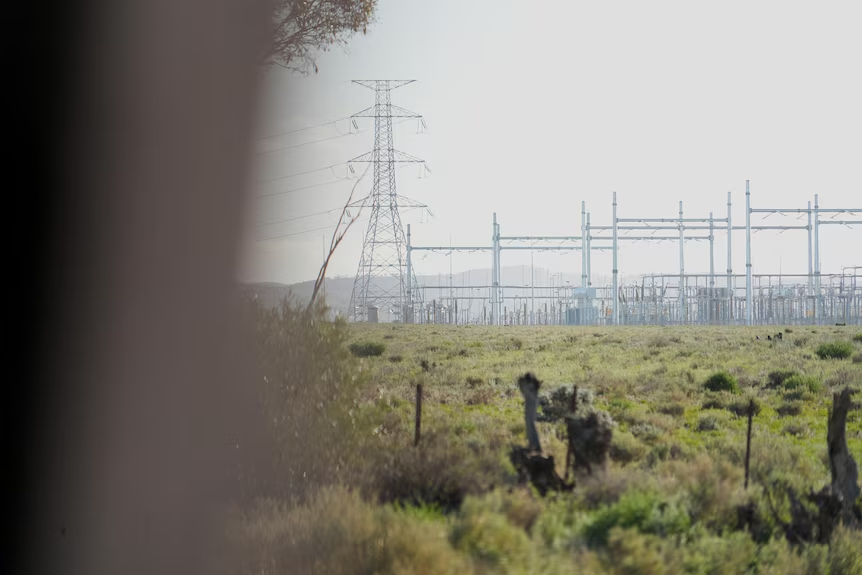
Three kilometres from Mr Heinrich’s property is the locality of Bundey, an area home to an electrical substation crucial to Australia’s largest energy transmission project.
Australian company IREN has now proposed a $10 billion data centre to be built “adjacent to” the Bundey substation, using its infrastructure to support an 800-megawatt project.
“It was quite a shock, I had no inkling of this happening,” Mr Heinrich said.
What exactly is the shock? Is it that people are now investing and you do not wish for this to happen or that there is so much scuttlebutt in the market about water usage you are concerned about the water impact to your land?
What is known about the project
Data centres are designed to process, store and manage digital data and have been popping up at locations across Australia and overseas.
The Bundey development is yet to be formally assessed through the appropriate development processes, including consultation and review from state departments.
But, if approved, it would be one of the biggest data centres in the Asia Pacific region.
IREN is the company behind the project and said once complete, it would create 200 ongoing skilled jobs for the region.
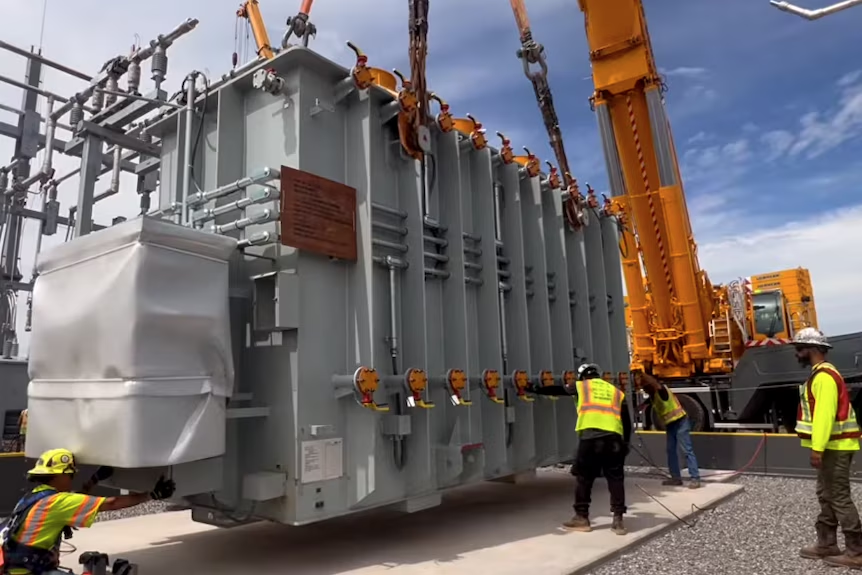
Co-founder and chief executive Daniel Roberts said the centre would use a closed-loop cooling system, which involved coolant being circulated in a sealed loop and dispersing heat through the air, not through water.
“I haven’t got the exact data, but we are talking a very, very small amount of up-front water … [it will be] a few Olympic-sized swimming pools,” he told Deb Tribe on 891 ABC Radio.
Australian National University environmental accounting associate professor Michael Vardon said closed-loop systems still require “topping up”.
“It’s not as water-intensive as other technologies, but it’s still absolutely massive,” Mr Vardon said.
“We don’t actually know how much existing data centres are using in terms of water. We’ve got a good guess at the power, but we know very little about the water.”
An IREN spokesperson said after the initial fill, less than one per cent of its total on-site tank capacity would be depleted annually.
Latest generation data centre developments such has this facility use very little water and it is almost all closed loop cooling so there ar enough issues on availability once the cooling loop is established.