As ‘Rail Safety Week’ takes place this week, attention is focused on the impact of trespass, vandalism and cable theft incidents on the railway. In 2025/26, these incidents resulted in more than 143,000 delay minutes and remain among the leading causes of disruption for passengers travelling across Anglia.
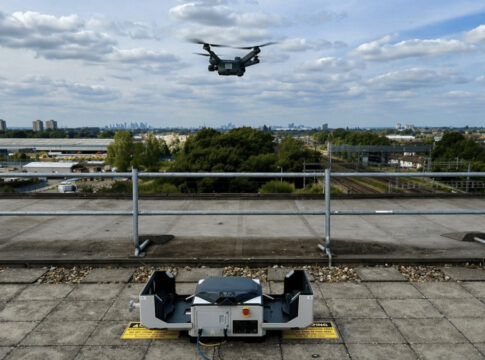
From late summer 2026, GBR Anglia will begin trials of a new Beyond Visual Line of Sight (BVLOS) drone technology in Romford to support faster response times to trespass incidents and early identification of infrastructure issues, improving journeys for passenger and freight services across the Anglia route.
The trial has been approved by the UK Civil Aviation Authority. It forms part of the ongoing work by Network Rail, c2c, and Greater Anglia as Anglia’s integrated railway, improving coordination between track and train to support more efficient planning and response across the region.
Following sixteen months of development work, these BVLOS drones will be operated on Network Rail’s behalf by specialist supplier heliguy . This trial will allow Network Rail teams to access live aerial coverage up to 400 metres from Romford Rail Operating Centre, providing faster access to information compared with standard drone systems and reducing the need for staff to enter higher-risk areas.
The drones are also fitted with high-resolution thermal imaging cameras, which support the early identification of wear or damage across track, drainage, structures and lineside equipment before it develops into faults. The aim is to expand the use of BVLOS drone operations across strategic locations in Anglia, with flights extending up to four kilometres.
A parallel trial will also take place on Network Rail’s Western route in Gloucester. Together, the trials will help Network Rail assess how BVLOS drone technology could support faster incident response and more efficient inspections, helping improve performance for passenger and freight services.
Richard Barke, route crime and security manager for Network Rail’s Anglia route, said:
“Trespass, vandalism and cable theft are some of the biggest causes of delay for passengers across the East of England.
“The learning from Romford will help us understand how this technology could support faster and more effective incident response across the Anglia route in the future.
“That means better coordination between route crime teams, operations and response teams, so we can deal with incidents more quickly and keep disruption to a minimum for passengers.”
Image credit: Network Rail