Across the Atlantic, crime on the rails has become almost cinematic in scale. The ransacking of intermodal trains moving through Los Angeles, reported by RailFreight.com in 2022, saw thieves brazenly raiding moving trains, scattering packaging like confetti along the tracks. Drone footage showed scenes reminiscent of a post-apocalyptic heist: hundreds of open containers, shredded parcels, and abandoned goods. Don’t let it happen here, says RailFreight.com UK Editor Simon Walton.
It’s easy to look at that from a British perspective and think: “It couldn’t happen here, could it? After all, the days of the Great Train Robbery are behind us. Consigned, if not to history, then to cultural folklore. Our railways in utopian Britain are modern, secured, policed. They don’t suffer from theft, vandalism, crime. Well, here’s an alarm bell ringing, and it’s more than a wake-up call.
Off the rails, but not off the radar
Perhaps only because the kind of high-value, high-risk cargo that tempted Ronnie Biggs and company has largely been pushed off the rails. Parcels, mail, and high-street retail goods are now much more likely to move by road. There’s a creeping suspicion that crime might not have disappeared. It may just have changed tracks. It doesn’t take Sherlock Holmes to work out that elementary fact.
A handful of ambitious operators like Varamis Rail have been trying to return time-sensitive logistics, parcels and high-value express cargo, to rail. Their high-speed electric services promise agility and low emissions. With those trains operating at 100 miles per hour (160km/h), they’re hardly an easy target for thieves. That said, Varamis appears to have slipped into hiatus, and the future of express rail freight in the UK remains uncertain.
NavCIS: Special Victims Unit
In the meantime, the bulk of British freight continues to roll in containers. Steel boxes on steel wheels seem an impregnable combination. It has long been assumed that such traffic is secure. Intermodal operations are perceived as less susceptible to pilferage than road haulage, which is plagued by theft from parked trucks, insecure lay-bys, and criminal gangs skilled at slicing curtain-siders.
So frequent are these road-related thefts that an entire police unit has been created to tackle them. The National Vehicle Crime Intelligence Service (NaVCIS) is one of the few remaining examples of direct public-private cooperation in freight security. Funded entirely by industry, NaVCIS Freight monitors and investigates cargo thefts, building intelligence that otherwise might be missed by conventional policing. Now, NaVCIS has its eyes on the rails.
A Quiet Place for a Quiet Crime Part Two
Speaking to Friday Freight Path, Mike Dawber, Field Intelligence Officer for NaVCIS’s Freight Desk, described rail freight theft as an “under-reported and under-recognised” threat. It’s not about armed gangs or masked robbers. It’s subtle, silent, and often invisible until the point of delivery.
“We had a case about 18 months ago,” says Dawber, “where containers carrying alcohol were being pilfered. A 40-foot box would be missing one or two pallets by the time it reached its destination, out of maybe thirty inside. Hard to detect. But repeated over ten containers, that’s a significant theft.”
The culprits had gone a step further: replacing tampered seals with convincing counterfeits. At a glance, everything looked intact. The thefts were only discovered once the cargo arrived abroad. Short-shipped and short-changed. “It turned into a bit of a bun fight,” Dawber adds in a turn of typical British understatement. “There was no visible evidence of theft, so many of the losses were simply written off, masked from the statistics.”

Seal compromise, he points out, is a global issue, which includes Britain. Just because rail freight is harder to access doesn’t mean it’s immune. As Mike Dawber puts it: “Go into any motorway service station and you’ll see discarded seals and packaging. It’s happening right under our noses.” There’s no guarantee either that those seals didn’t come from containers that had spent part of their journey behind a ’66 on the rails of Britain.
Mike Dawber would know. He had a call scheduled with colleagues in Texas the same day, discussing transatlantic cargo theft patterns. It’s an ancient problem, he says, half-laughing, half resigned to a long haul against the criminals who target goods in transit.“One of my students once did a thesis on cargo theft from Roman roads.”
In 2018, NaVCIS estimated the average value of a cargo theft at £30,000 (€36,000). While UK rail terminals and ports are generally secure, Dawber warns that it’s the “last mile” where vulnerabilities emerge, especially once goods are loaded for onward road travel.
A North American Warning
At the Freight Fraud Symposium in Dallas earlier this year, industry and law enforcement convened to discuss the worrying escalation of freight crime in the US. There, they dissected the anatomy of modern supply chain crime: phishing, catfishing, double brokering, identity fraud, cargo theft, and insider abuse. If these terms are unfamiliar, then rest unassured, they are the language of the criminals, and they are fluent.
The scale of rail freight in North America dwarfs the UK, but the tactics are increasingly borderless. The symposium covered the latest in cargo crime countermeasures—from forensic tagging and tracking to digital verification of hauliers. British operators should be paying close attention.
The worst response is complacency
Right now, trains in the UK aren’t being ransacked, but that’s not to say UK rail is free from crime. Most criminal attention focuses elsewhere. Easier, but no less costly for the victims are road cargo, copper cabling, and the scourge of graffiti.
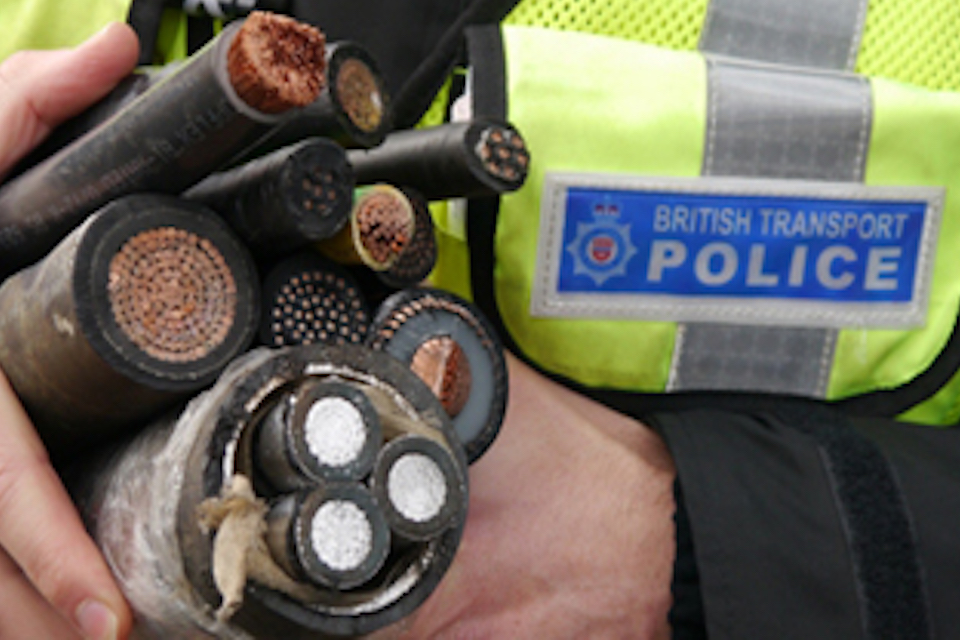
Metal theft, particularly of copper cabling, continues to plague the British network. The West Coast Main Line, Europe’s busiest mixed traffic route, has been a hotspot, prompting the deployment of covert drones and “DNA beads”—traceable liquid tags designed to link thieves to stolen metal. The damage from such thefts can disrupt not just WCML services, both freight and passenger, but the whole network. For freight flows that means particularly time-critical intermodal runs. No groceries in Newtonmore because of some cable blagger in Newton-le-Willows.
Meanwhile, graffiti continues to scar freight rolling stock. Taggers may be “artists” in their own minds, but their handiwork often forces wagons out of service for deep cleaning, incurring direct costs and reducing network capacity. There’s a code among the graffitieratti. Don’t cover safety or ID markings, so the railways won’t remove the tags. But that doesn’t make it acceptable, or victimless. The rail industry spends around £3.5 million (€4.15m) annually on graffiti removal. The economic impact in London alone is said to exceed £100 million (€118m). Add to that trespass, fly tipping and outright attacks on trains and the costs soon spiral.
CCTV, video analytics, cloud-based security systems, and motion-triggered warnings are being rolled out, especially at sidings and depots. One such system—Optex’s CHeKT—uses AI and LiDAR to detect intruders and deliver real-time alerts. It’s a glimpse of a high-tech future where freight crime is stopped before it starts.
Breaching the ‘Broken Windows’ threshold
There’s a theory in urban policing called the “broken windows” approach. Ignoring small-scale vandalism and disorder leads to bigger crimes. Could the same logic apply to the rail network? Empirical evidence suggests that’s the case. Graffiti, copper theft, and trespass are just the visible symptoms of a deeper vulnerability.
If we tolerate these low-level intrusions, we open the door to larger threats, perhaps even cargo theft on the scale seen in North America. That’s a question worth asking. While freight trains in Britain may not be under siege today, the tracks of tomorrow could tell a different story. If we’re not alert, equipped, and serious about security and lawlessness, we might just see the Great Train Robbery shunt back out of folklore and onto a railway near you. That’s a picture no one wants to see.