From Westminster, UK government chancellor Rachel Reeves’s latest cost-of-living package has delivered welcome relief to parts of the logistics industry. Hauliers have secured a year-long temporary reprieve on HGV taxation. Rail freight operators, meanwhile, receive a reduction in the tax applied to red diesel. On the surface, that sounds like balanced support for Britain’s transport economy. Dig deeper, however, and the railway sector may once again find itself on the wrong side of government priorities, argues RailFreight.com UK Editor Simon Walton.
There is no doubt that some rail freight businesses will welcome immediate reductions in operating costs. Diesel traction still dominates large parts of the British freight railway. Heavy aggregate trains, construction traffic, what is left of steel flows and regional services remain heavily dependent on diesel locomotives. Yet the broader package overwhelmingly favours road transport. In doing so, Westminster risks undermining years of rhetoric about modal shift, decarbonisation and ambitions to increase rail freight volumes by seventy-five per cent before 2050.
Red diesel relief comes with complications
For many readers outside the transport sector, the term ‘red diesel’ may sound mysterious. In reality, it is ordinary diesel fuel carrying a lower rate of duty because it is intended for approved off-road or specialist uses. It’s politically motivated fuel, not politically sourced fuel. The diesel is dyed red to distinguish it from standard road diesel and to deter misuse. Agriculture, construction and certain rail operations have traditionally benefited from the rebate. Rail freight only regained broader access to red diesel entitlements relatively recently, following changes introduced during 2022.
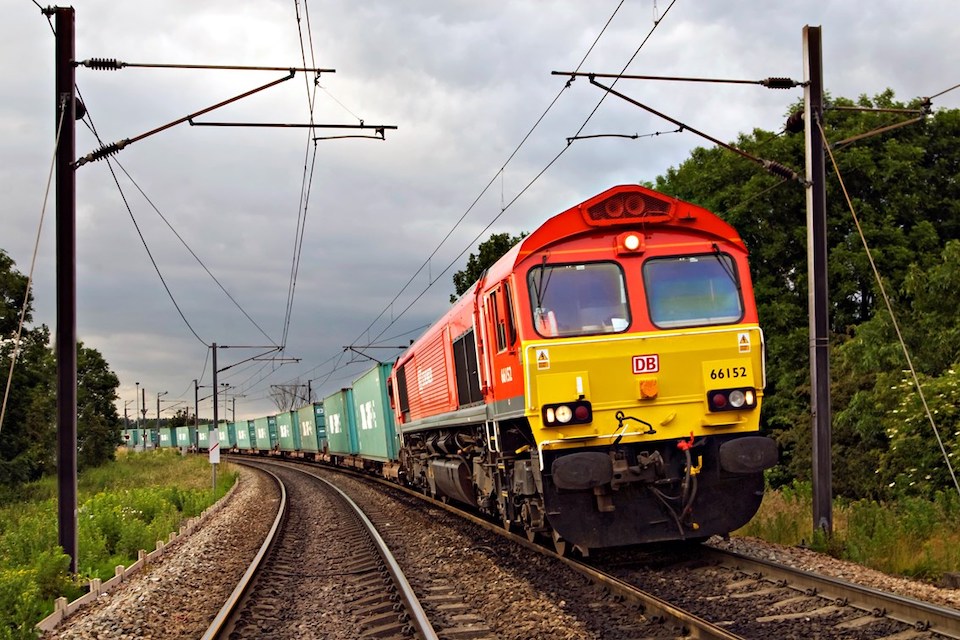
That matters because diesel traction remains essential to British freight operations. Despite steady electrification elsewhere in Europe, large parts of the United Kingdom’s freight network still lack overhead wiring (Nominally “UK” but there is no freight operation in Northern Ireland). Freight operators continue to rely on diesel locomotives to move stone, containers, metals and industrial traffic across non-electrified routes. For operators such as DB Cargo UK, Freightliner and GB Railfreight, any reduction in diesel costs delivers at least temporary breathing space – despite all those operators investing in electric and, more recently, in multi-fuel traction units.

There may also be quiet relief that Britain is no longer heavily entangled with Russian diesel supply chains. Only a few years ago, dependence on Russian refined fuel products represented an uncomfortable strategic weakness. This week’s announcements that broadly open the UK market to refined hydrocarbons originating in Russia have sparked furious condemnation from the outraged public. It’s no solace that the argument is confined to jet fuel. However, let’s be relieved that the prospect of protest blockades of freight trains is not on the cards just yet. Today’s debate instead centres on taxation, competitiveness and economic pressure. Those are serious enough concerns on their own without throwing geopolitical fuel insecurity into the equation.
The road sector gains far more
The difficulty for rail freight lies in the wider context. Westminster did not simply cut costs for rail operators. It simultaneously strengthened the competitive position of road haulage. Extending the five pence (six cents) fuel duty reduction – per litre – directly benefits trucking fleets. A twelve-month HGV tax holiday further lowers operating costs for freight companies already fighting fiercely for market share. Additional distance-based tax relief measures also reinforce dependence on road transport across the wider economy.

The rail freight sector has consistently argued that frozen fuel duty distorts competition against the railway. Right now, that’s a hard argument to countermand. Rail operators face track access charges, infrastructure constraints and rising electricity prices. Meanwhile, the road network remains publicly funded on a scale that rail freight companies can only envy. Every additional intervention supporting haulage risks widening the commercial gap. The latest package may therefore hand with one measure while taking away considerably more with another.

The timing is particularly uncomfortable. RailFreight.com has seen documents from at least two rail operators, spanning both passenger and freight sectors, which directly link current and proposed cost-cutting exercises to deteriorating trading conditions. At least one senior leadership team has openly referenced government policy while communicating internally with staff. Nobody explicitly states that Westminster is damaging the sector, but the inference is unmistakable. RailFreight.com has also received confidential briefings suggesting parts of the industry remain deeply concerned about further economic shocks still to come.
Freight growth ambitions look increasingly detached
Ironically, there may soon be more freight available to move. Industry expectations point towards an incoming wave of container traffic during the coming months. International supply chains continue adjusting after prolonged disruption. Port activity remains volatile but potentially promising. Under normal circumstances, that should represent good news for the railway. Additional container flows traditionally provide opportunities for intermodal rail growth and for reducing pressure on congested trunk roads.
However, serious doubts remain over whether the railway can fully absorb additional demand. Network capacity remains constrained in several key freight corridors. Infrastructure upgrades continue progressing slowly. Terminal availability remains inconsistent. If rail cannot provide the required flexibility or responsiveness, the logistics market will naturally turn towards road haulage. Westminster’s latest measures may now make that decision even easier for customers balancing reliability against cost.
That reality sits awkwardly beside the government’s repeated commitment to expanding rail freight by at least seventy-five per cent before 2050. The target continues appearing in policy documents and industry speeches. Yet practical support often feels limited when compared with measures routinely benefiting the road sector. A trip up Scotland’s A9 route, between Perth and Inverness, will graphically demonstrate the hundreds of millions being poured into upgrading the hundred-mile (160km) route, while the Highland Main Line runs parallel, mainly still in its single-track Victorian configuration. Freight operators continue investing heavily in locomotives, wagons, terminals and technology. What they increasingly appear to lack is confidence that government policy genuinely prioritises modal shift beyond the level of political slogan.
A difficult market faces another test
It would be easy, and perhaps politically convenient, simply to talk up the resilience of rail freight. Yet some difficult truths deserve acknowledgement. The sluggish performance currently affecting Britain’s freight railway is not uniquely British. Continental operators report similarly disappointing conditions. Weak industrial demand, uncertain consumer confidence and volatile international trade continue weighing heavily across European logistics markets. Rail freight is hardly alone in feeling the pressure.

Britain’s wider economy also remains becalmed. Different political parties will offer different explanations for that situation. Regardless of viewpoint, the consequence for freight transport is obvious. Lower economic activity reduces freight demand. Investment decisions become cautious. Customers prioritise immediate costs over long-term sustainability ambitions. In that environment, even modest reductions in road haulage costs can significantly influence commercial decisions across the logistics sector.
Still, there are reasons for cautious optimism. The British rail freight industry continues to demonstrate pragmatic management and long-term ambition. Operators remain willing to invest despite challenging conditions. The widely quoted growth target remains achievable without materially damaging the dominant road haulage sector. There is clearly room for both modes within a balanced national logistics strategy. Nevertheless, after years of promises surrounding decarbonisation and modal shift, the railway could reasonably ask Westminster for something more substantial than indirect assistance attached to a broader road-focused policy. A Cost of rail freight package would be nice, Chancellor Reeves.