Scotland wants to see a radical modal shift to rail freight. Yet, there’s a blocked artery that cries out for investment to help make that happen. Meanwhile, the road that parallels this sinew of Caledonian commerce lacks the capacity and the level of investment that would make it the key to unlocking a wealth of economic potential. This Friday, Simon Walton is back in his great northern land.
This is a tale of two routes. One is a venerable railway, a single-track artery running for 118 miles (189 kilometres) through the heart of the Highlands. The other is a road. A thoroughly modern thoroughfare. It has seen continuous improvement and investment for decades. While the government in Edinburgh pays lip service to the benefits of rail, its actions speak louder than words. It pours billions into the A9 while leaving the Highland Mainline to languish on a budget that hardly sets the heather alight.
Out on a limb
The Highland Mainline (HML) has been one of those impressive, long, straight lines on the national rail schematic – and dramatic too. In reality, though, it’s still a late 19th-century line, conceived to serve a different era, and despite some sections being doubled in the early 1900s, it remains a single-track for the majority of its length. It’s far from reaching its full 21st-century potential. While the Scottish government’s own transport strategy highlights the need for a modal shift to rail, the HML has seen minimal investment. A recent upgrade project, completed in 2019, cost a modest £57 million (65,7 million euros). More extensive upgrades remain only in the pages of review documents. So no freight shuttles, dualling or electrification just yet.
Contrast this with the A9 dualling programme, which has a budget of £3.7 billion – 4,2 billion euros – (argue the figures, but the contrast is stark). The road has a dedicated website, and a high-level committee oversees its progress from single track with passing places to near-motorway standard, demonstrating a political commitment and focus that is simply not afforded to the railway. While the government talks of shifting freight from road to rail, the A9 dualling project is set to cut journey times for lorries, cementing its status as the dominant transport mode for commerce in the Highlands of Scotland.
The Highland Mainline’s potential
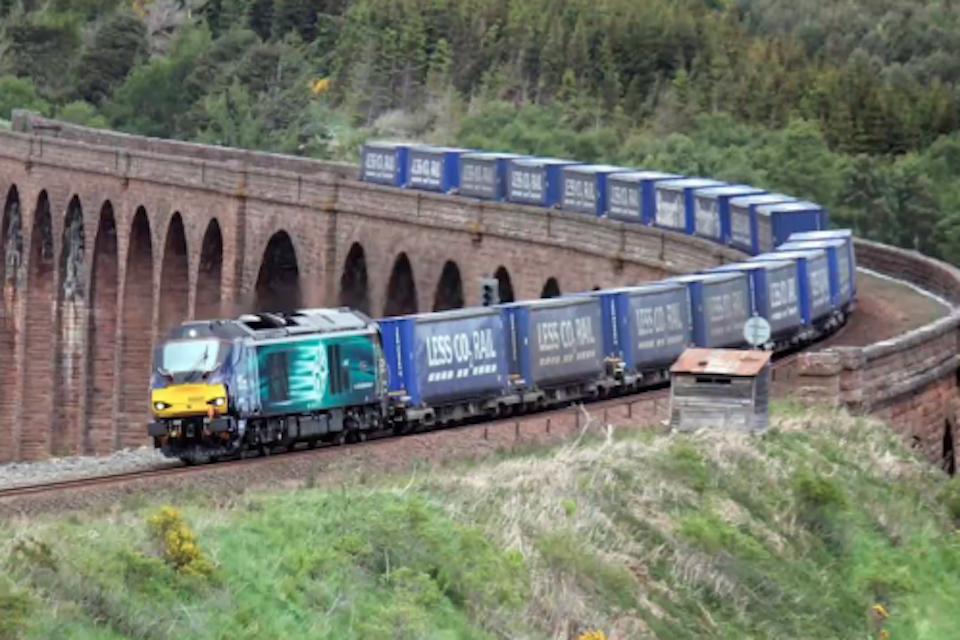
Today, the HML carries a range of freight, most notably the daily intermodal trains for Tesco, earning Inverness the moniker of “Tesco Town” (if it were bigger, it might be Supermarket City). It also transports timber, cement, and nuclear waste. But this is a mere fraction of what is possible. If the HML were significantly upgraded, it could carry far more. Imagine additional intermodal trains bringing a wider variety of fast-moving consumer goods (FMCGs), or dedicated services for the agricultural produce and spirits that are so vital to the Highland economy, before even mentioning the self-loading freight: passengers, who do admittedly have a roughly hourly service that’s as fast as road transport – almost.
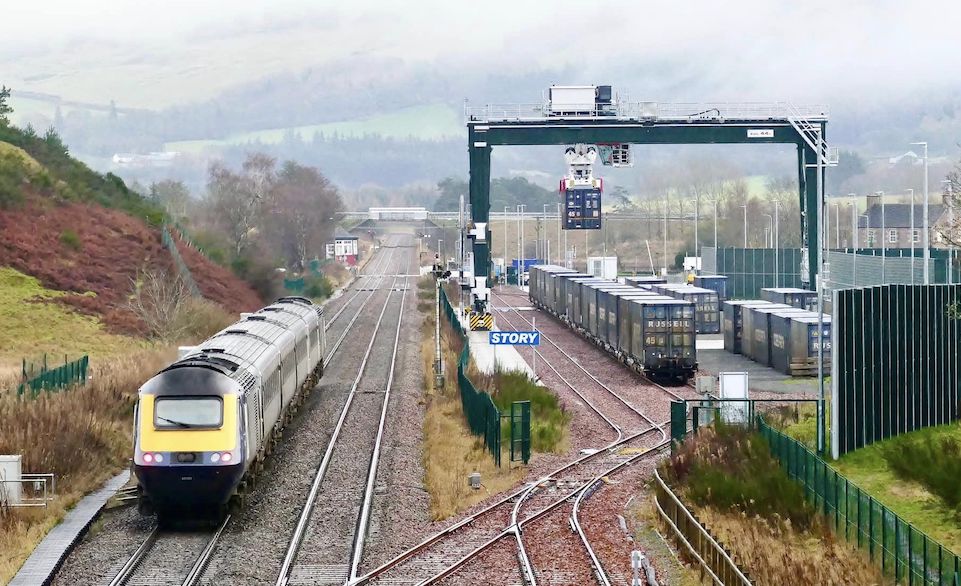
Studies into the potential of the Highland Mainline support this vision. The “Sustainable Investment Hierarchy” and the ten-year-old “Scotland’s Rail Freight Strategy” both identify the HML as a strategic route with significant potential for freight growth. Such an investment would not only reduce lorry traffic on the A9, but also stimulate the economy of the entire north of Scotland. For this to happen, both Perth and Inverness require modern intermodal freight facilities. Perth currently has none, while Inverness has a rudimentary terminal that is little more than a siding and a reachstacker. Modern, purpose-built terminals would be a powerful signal of intent, transforming the HML from a Cinderella line into a dynamic driver of economic growth.
Lobby groups have recognised that potential, and some even go as far as agreeing that dualling would be the answer. No one is advocating a pie-in-the-sky Le Shuttle-style lorry service between the Gateway to the Highlands (Perth) and the capital of the Highlands (Inverness). Maybe that’s just because ambition like that generally brings out the worst derisory elements of the Scottish persona. Take it from me, that’s a put-down you don’t need to experience.
A Campaign for Change
The case for dualling the Highland Mainline should be compelling, and it is a cause that deserves more political attention. Turn this into a spine, not a withered limb. While there is no official campaign for the line’s development, a movement is needed to unite commercial stakeholders, communities along the route, economists and environmentalists who see the benefits of a sustainable transport network. A “Campaign for the Highland Mainline” might well attract broad support and pressure the government in Edinburgh to honour its commitment to modal shift.

A Campaign for the Highland Mainline could be a clear call for a strategic re-evaluation of Scotland’s transport priorities. Advocate for a future where our key transport links are not just about moving people and goods, but about doing so in the most efficient, sustainable, and economically beneficial way possible. The Highland Mainline is more than a piece of railway track. It is the backbone of the Highlands. It’s time we gave it the investment and priority it deserves. That road could do with an upgrade too.