Just 2.8% of surveyed disabled rail passengers say replacement services are fully accessible, according to new independent research published by Great British Rail Replacement (GBRR) on Disabled Access Day.
Commissioned in 2025, the research reveals 30% of disabled passengers polled were left without a viable alternative when their train was cancelled or replaced, while two-thirds (66%) of research participants report their experience during disruption has deteriorated over the past year.
The research draws on insights from 145 disabled UK rail users as part of a wider national study. When faced with disruption, more than half (53%) of surveyed disabled passengers would rather cancel or postpone their journey, or take alternative public transport, than use rail replacement. 32% of those questioned said they had to rely on a friend to collect them.
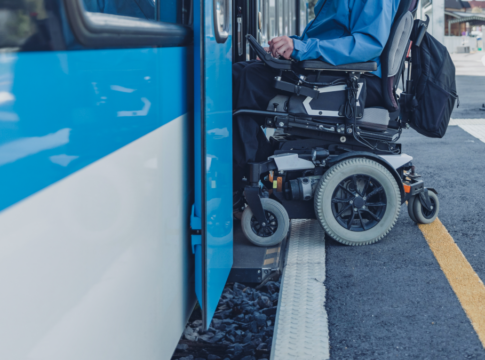
Physical access into replacement vehicles is the single largest barrier reported by disabled passengers, cited by 32% of respondents. Unsuitable transport options are often deployed during disruption, highlighting wider challenges around the availability of accessible vehicles across the network.
Respondents also highlight unclear signage, inconsistent staff support and limited accessible information as barriers during time-critical moments, which can create wayfinding challenges and contribute to crowding at busy stations or boarding points.
Ian Jeffrey, director of Great British Rail Replacement at CMAC Group, says: “Rail disruption is an inconvenience for all. For disabled passengers, it often results in being stranded without a safe or suitable alternative.”
“The challenges faced by disabled passengers reduce confidence and independence during disruption – eroding trust in the railway network. Now is the time to address that gap and embed accessibility as a core principle in every rail replacement plan, ensuring disruption does not result in exclusion or disadvantage.”
The full Great British Rail Replacement Accessibility White Paper 2026 is available to download here.
Image credit: CMAC Group