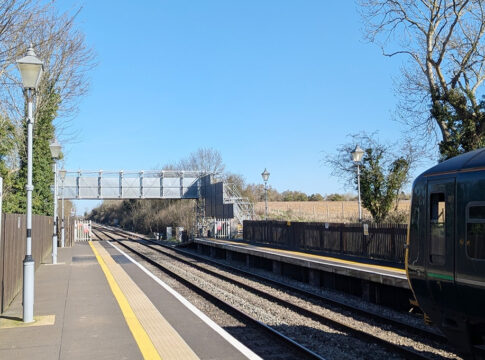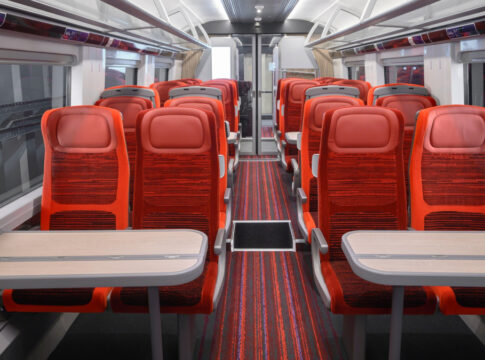
A new generation of comfort and speed is coming for LNER customers on the East Coast Main Line with the introduction of 10 state-of-the-art intercity trains, delivering improved journey experiences.
LNER has released a fleet name and the latest interior images of the trains, built by manufacturer CAF and financed by Porterbrook, to show customers what they can expect following their introduction to the UK rail network in the coming years.
The new fleet will help support and accommodate strong demand for rail travel on the East Coast Main Line. Since Covid, LNER has seen a year-on-year increase in customers, with more than 24 million customers in 2024-25. The introduction, in December 2025, of a new, transformative timetable has brought an extra 60,000 seats per week across the route, and new CAF-built trains will further grow capacity and reliability.
The Class 897 trains will be the first new fleet introduced as part of Great British Railways (GBR). The trains will be operated under GBR and will be branded as such on their interior and exterior.
To help them stand apart from the existing Azuma fleet, the new Class 897 trains will be named ‘Serenza’. The name is a hybrid of ‘serene’ and the Spanish-style suffix ‘-enza’, evoking a feeling of peacefulness and calm, combined with energy, movement, and modernity.
The new Class 897 trains will be the first long distance trains in the UK to be tri-mode, meaning they are able to run on overhead electric power, alongside diesel engines and batteries when there are no overhead wires. The 10 carriage trains will each have a total of 569 seats across Standard and First Class, alongside wheelchair spaces with companion seating.
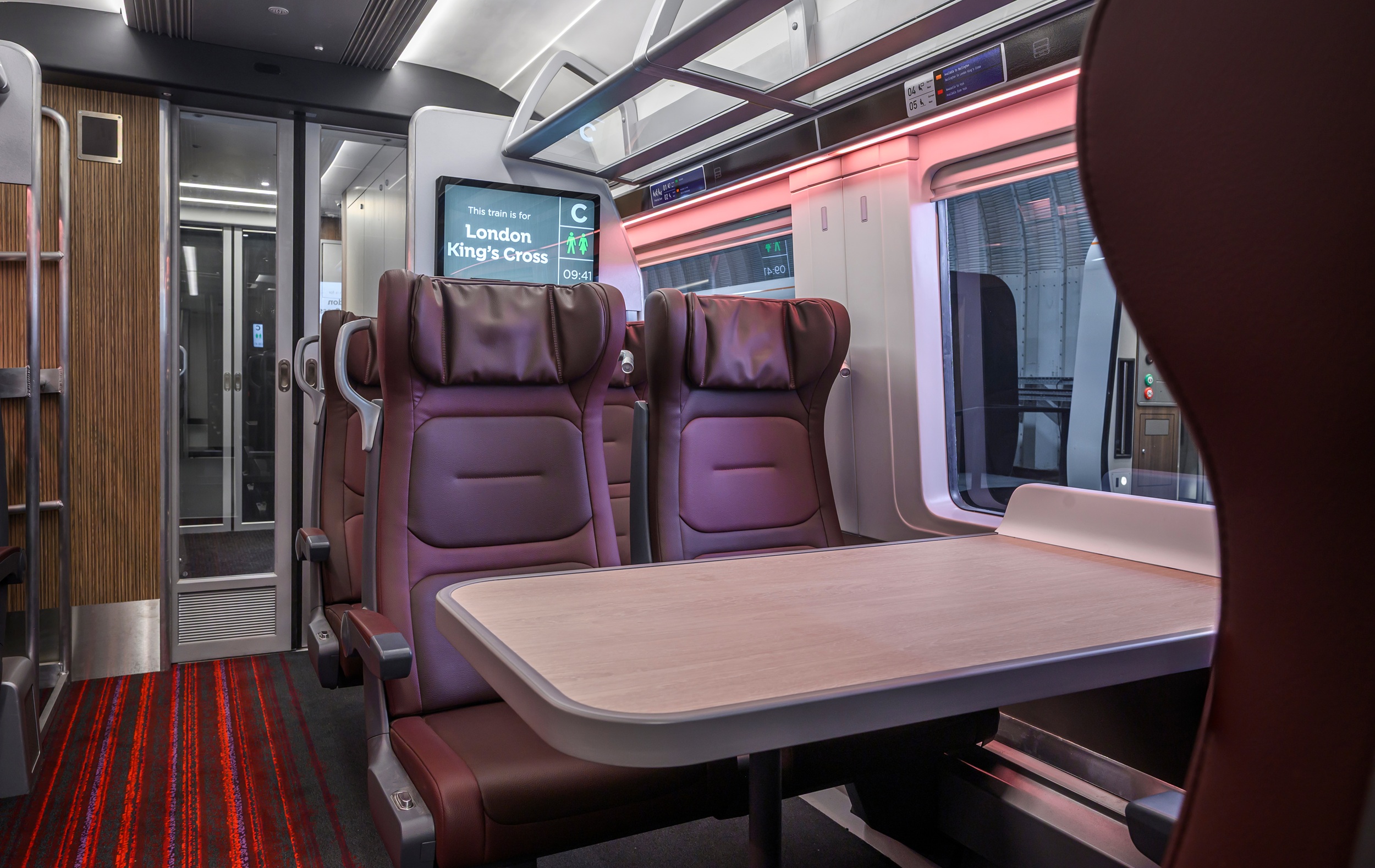
The interior design has been developed with customer and stakeholder feedback in mind to deliver a great customer experience. Customers will benefit from improved seating comfort in both Standard and First Class, with the ability to recline in First Class. New and enhanced seat pads have been developed, side bolsters and head cushions widened, and cushions reshaped to best support customers. Seat materials have also been carefully selected to maximise durability and sustainability.
New digital screens in each carriage will keep customers up to date with the latest live journey and safety information. Customers will also be able to stay hydrated on the move with the introduction of five water bottle refill stations throughout the train.
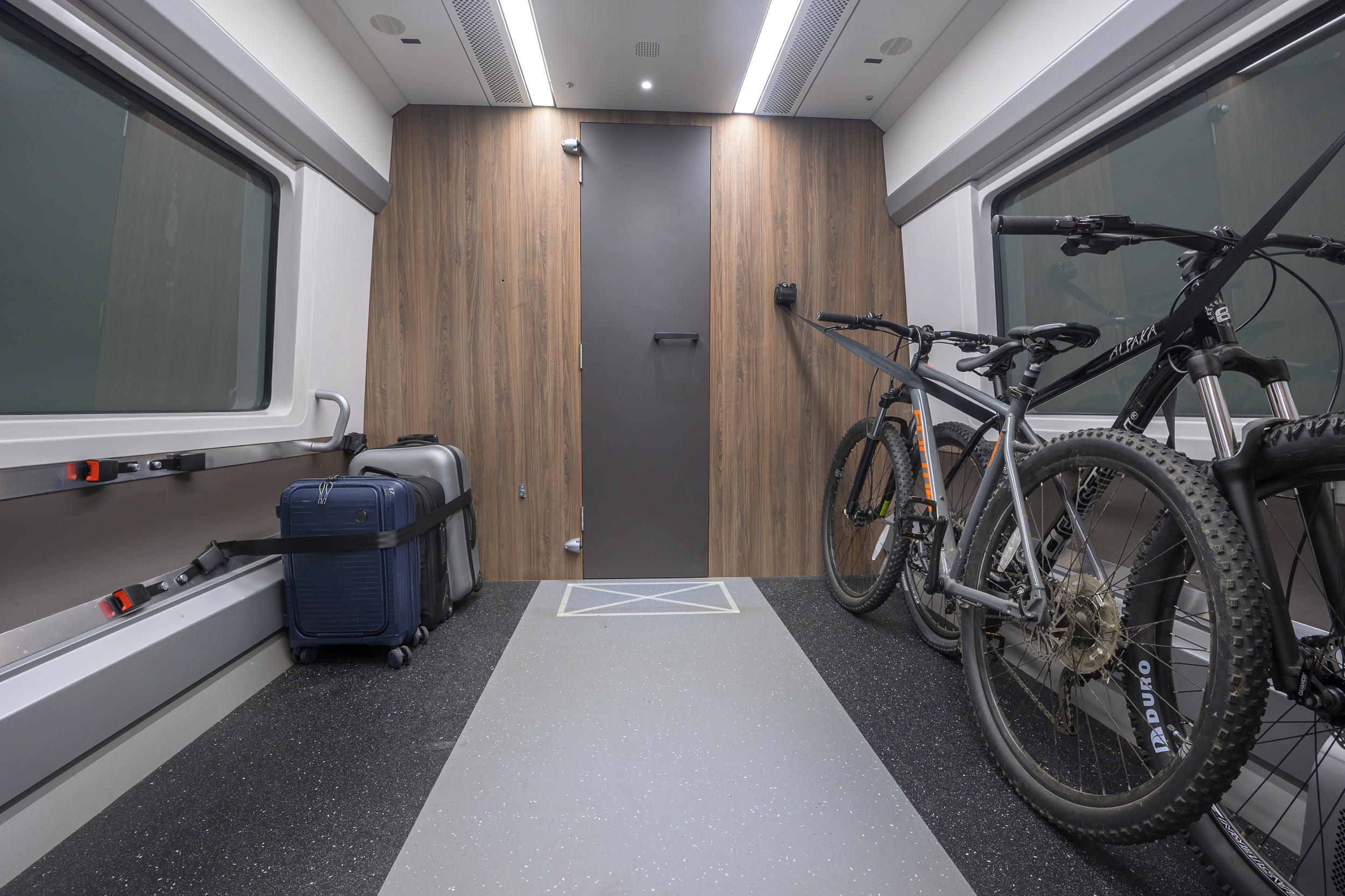
For cyclists, LNER has listened to and acted on feedback, fully redesigning bike storage areas with easy-to-use bike straps enabling customers to quickly and efficiently secure their bike while travelling by train.
New, softer lighting, including mood and table lighting in First Class, has been designed to provide customers with a more comfortable journey, especially when travelling during early mornings and evenings.
Dr Linda Wain, Engineering Director at LNER, said: “This is an exciting milestone for LNER as we reveal an insight into what our customers can expect from their journeys in the future and unveil a name. Our new fleet will bring more comfortable, more reliable, and greener journeys across the East Coast Main Line for decades to come and we are looking forward to their introduction in the coming years.
“Reaching this stage has taken a huge amount of work and it has been great to work in partnership with CAF as we design this new fleet of trains. As LNER continues to welcome more customers onboard, these trains will be vital in helping to meet demand for train travel while delivering a new, modern experience for our customers.”
Tables have been redesigned to give more room for wheelchair users, seat legs have been moved, creating additional space for assistance dogs, a grab rail has been installed along the full length of the Café Bar, additional luggage racks will be in carriages with wheelchair spaces to reduce the likelihood of luggage misuse, and braille seat numbers will feature helping visually impaired customers find their seat more easily.
Overall, a total of 47 recommendations were made by the panel, with the vast majority acted upon and included in the design.
The train’s tri-mode capability will allow them to be utilised across the entire LNER route if required, a route that stretches close to 1,000 miles. Their introduction will help LNER to be an even more environmentally friendly way to travel, using battery power rather than diesel engines on the approach to and departure from station calls that do not have overhead electric power.
While most of the design of the fleet’s interior has been agreed, some minor changes may still be made until the project reaches design freeze.
The Class 897 trains will replace LNER’s InterCity 225 fleet, which is close to 40 years old. The new fleet will be introduced in the coming years, with further details to be released as the project progresses.
Image credit: LNER