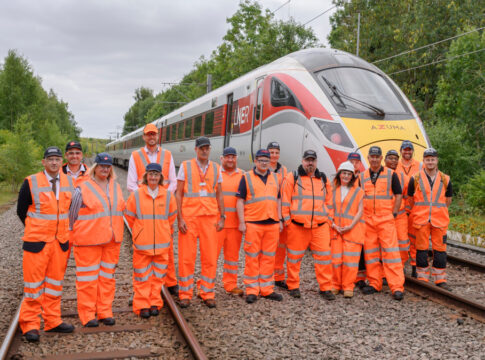
Testing at speed of digital in-cab signalling has been successfully completed for the train which provides the largest inter-city fleet on the East Coast Main Line.
The iconic LNER Azuma has been put through its paces in recent weeks on the Melton test track through the Leicestershire countryside.
Completing its dynamic testing is a step forward towards providing passengers with more reliable and greener journeys through the Government-funded East Coast Digital Programme (ECDP).
The British-built Hitachi Rail train came fitted with European Train Control System (ETCS) in-cab signalling equipment, and has gone through a software upgrade in readiness for using this performance boosting technology on passenger services from next year.
The testing at Melton – using the site’s ETCS capability – proves that the upgraded equipment on the train works well, including its integration with the lineside and signalling centre components of ETCS, in operating conditions.
The collaboration between Hitachi Rail, LNER, Network Rail and Agility Trains to progress this ‘First in Class’ train is paving the way for all Hitachi Rail’s intercity fleets on the East Coast Main Line to be cleared for operating in passenger services using ETCS.
The milestone is significant not just for the East Coast Main Line but for the wider network’s digital masterplan.
Ed Akers, Network Rail’s industry partnership director, ECDP, said: “The Azuma fleet is pivotal to the upcoming change in how the East Coast Main Line operates, so this marks significant progress for our transformational programme. We’re also helping the wider digital mission by readying for ETCS operation a train type that operates as far and wide as Inverness and Penzance.
“We continue to work with our partners to prepare for the introduction of main line ETCS services next year, delivering a more reliable and resilient railway for passengers.”
Dr Linda Wain, engineering director at LNER, said: “The ETCS project and in-cab digital signalling is going to deliver real benefits to the East Coast Main Line. It’ll enable us to run our trains in a more environmentally friendly way and allow us to reach new levels of efficiency and safety.
“We’re incredibly proud that Azuma was selected to be one of the ‘first in class’ trains to test this new technology and lead the way for other Class 800 Hitachi fleets. Reaching this milestone is a testament to the close collaboration of all the teams involved.”
Angus Thom, senior director OS&M operations, Hitachi Rail, commented: “ETCS represents a radical step forward in digital in-cab signalling, which will unlock new levels of capacity and reliability. This successful upgrade and testing of the latest ETCS software and hardware is an important technical milestone as we progress towards digital signalling on intercity routes.
“Pioneering ETCS on intercity routes is only possible due the incredible collaboration between Hitachi Rail, LNER, Network Rail and Agility Trains. It’s taken a few years to get to this important stage, which is testament to the strength of our partnerships and shared commitment to innovation.”
With its dynamic testing now complete, the Azuma First in Class will undergo further software development before going through the assurance process for regulatory approvals.
It is expected to take part in ‘system of system’ testing on the East Coast Main Line in the next few months, in parallel with a wider fitment programme across the Class 80x Hitachi fleets.
Image credit: Network Rail