Historians have uncovered the story of a devastating attack in Sussex which resulted in the first death of a train driver in WW2.
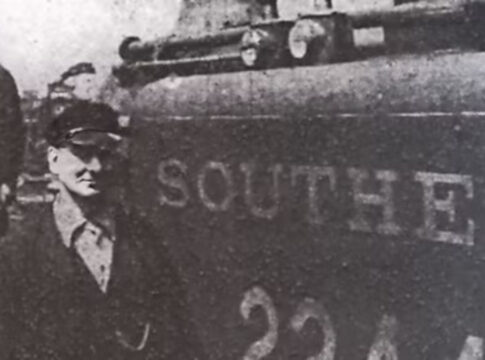
A plaque was unveiled at Bishopstone station on Thursday, July 3 to commemorate Southern train driver Charles Henry Pattenden, who was killed on July 3, 1940 in his line of duty when a German Luftwaffe plane opened fire on the 17:37 train from Seaford.
Pattenden’s surviving relatives, including grandchildren and great-grandchildren were there to reveal the plaque, installed by the Friends of Bishopstone Station (FOBS), exactly 85 years on from the tragic day at an event in the restored station building.
FOBS director Graham Moore set out to find out more about this attack in January this year, putting out an appeal for information online, and it wasn’t long before Ivor Pattenden, grandson of driver Charles, showed up at one of the Friends’ events in the restored community space at the station.
Barbara Mine, chair of Friends of Bishopstone Station said: “We were really amazed to see Ivor turn up to one of our Meet Up Mondays at the station, and he really helped us piece together this 85-year-old puzzle.
“I am so proud of the work that’s gone into this by our community group, especially by our researcher Graham Moore.”
Graham’s incredible research has uncovered the most detailed timeline of events which led to the first attack on a passenger train in wartime Britain, which killed Charles Pattenden aged 59.
A booklet was produced by Graham and FOBS members to showcase his findings.
An excerpt of The Five Thirty-Seven
At 5:37pm, the steam train departed from Seaford Station on its way to Horsted Keynes, the D1 tank engine, No. 2244 pushing the carriages from the rear.
It stopped at the still-new Bishopstone Station and then set off again. It was perfectly on time as it passed through Bishopstone Beach Halt, which was still in use as a summer station between 6th April 1939 and 1st Jan 1942, but it is not clear if the 5:37pm train stopped there on the fateful day.
As the train drew level with the Halt, it was about this time that a single German Dornier bomber was seen fast approaching the coast from France.
As the train drove past the halt for the exposed Tide Mills stretch of the line, the enemy aircraft ruthlessly opened fire on it with machine guns.
The passengers took cover by crouching on the carriage floor. Bullets easily penetrated the train’s carriages.
The aircraft then delivered its load of six bombs, which exploded in the Oyster Ponds area, not far from the halt.
The train had, by this time, come to an abrupt halt although it is not clear whether Mr Pattenden, or Mr Cox, stopped the train. Although neither train nor carriages were directly hit by the bombs, they felt the force and suffered blast damage with most, if not all, of the glass being shattered and the wooden frame and panels splintering.
Splinters struck Driver Charles Pattenden causing a serious injury, and he died a short time later.
Ivor Pattenden, grandson of Charles Pattenden, said: “It was a great success and a few tears were shed. I’d like to thank the Friends of Bishopstone Station for their incredible research, and this has helped fill some gaps in our family history.”
The plaque was unveiled in the station’s art-deco booking hall, which has been restored along with the original station toilets and former parcel office, to become a focal point for the community.
Rob Whitehead, community engagement manager at Southern, which manages Bishopstone station, said: “I’m really proud of the heritage and history which forms part of the fabric of all of our stations – especially this year, as we mark the 200thanniversary of the railway.
“I’m equally as proud to support organisations like the Friends of Bishopstone Station which help foster this history so it can be appreciated for generations to come.”
Image credit: GTR