Sri Lanka Railways (SLR) once ran rail buses: road buses converted to run on railway tracks. They served lines where passenger numbers were too low to justify a full train. Today, no rail buses are in operation in Sri Lanka.
How the rail bus began
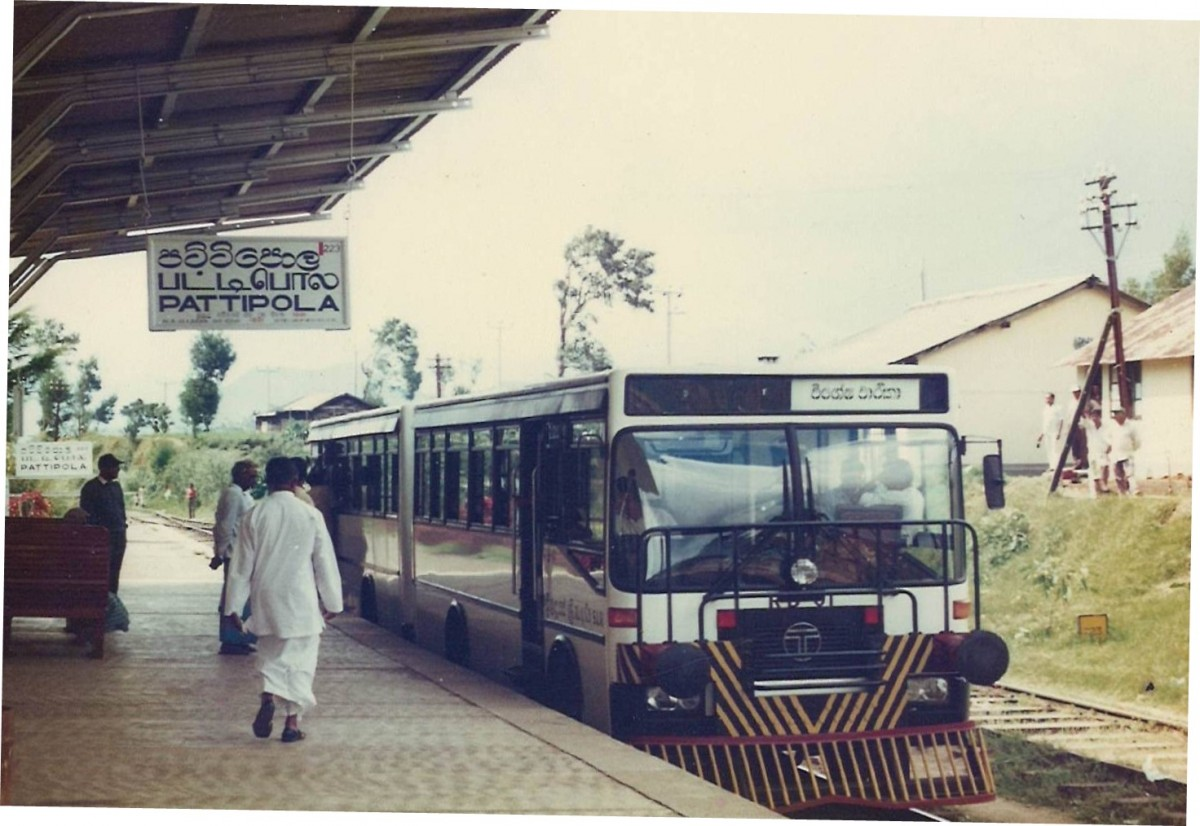
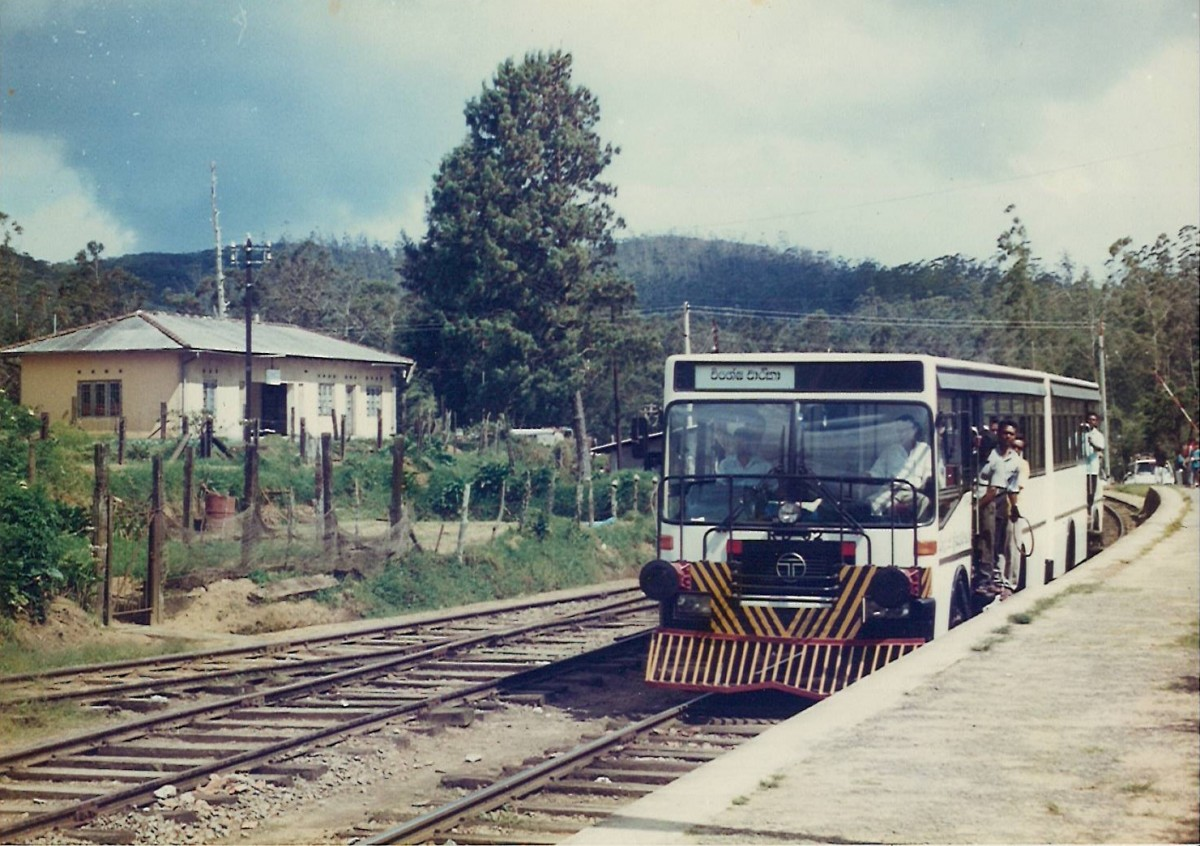
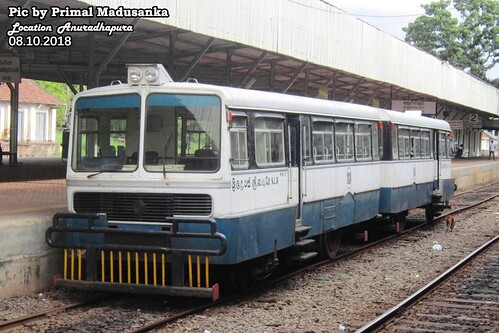
The first rail bus service started around 1995, using two TATA buses supplied by DIMO. Later, Lanka Ashok Leyland buses became the main type used. Their 6,000 cc, 160 hp engines were also built for road use.
The idea was simple. A train needs a locomotive, several carriages and a large crew. A rail bus needed far less fuel and staff, which made it cheaper to run on quiet routes.
How a rail bus was built
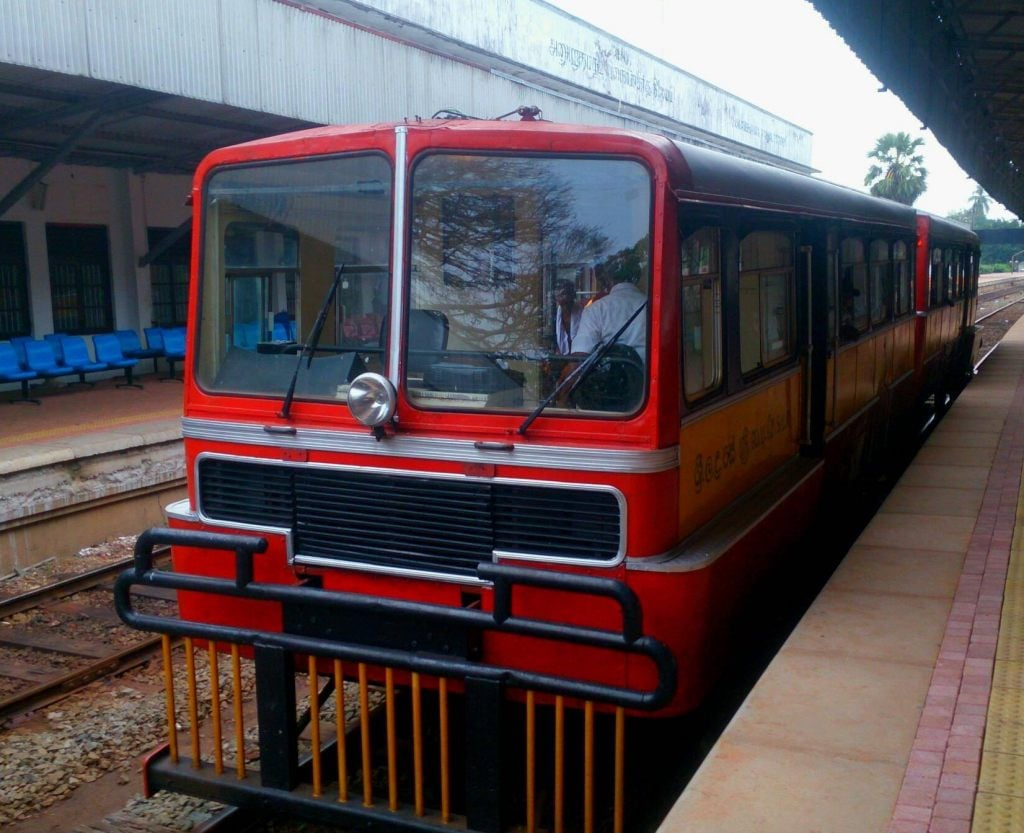
Each rail bus was made from two ordinary road buses joined back to back. Engineers changed the body, gearbox and engine, and replaced the road wheels with steel railway wheels. Because there was a driving cab at each end, the rail bus could run in either direction without being turned around, much like a diesel multiple unit (DMU).
Where rail buses ran
Over the years, rail buses ran on several routes:
-
Kelani Valley Line
-
Mannar Line (Northern Line to Talaimannar)
-
Eastern routes, including Batticaloa to Trincomalee
-
Northern Line, including Polgahawela to Maho
-
Peradeniya to Kandy
In 2008–09, the Government of India funded a project to strengthen the eastern service. Lanka Ashok Leyland converted 10 buses into five rail buses for the Batticaloa–Trincomalee route, working with SLR’s Ratmalana workshop. The aim was to serve not only the main stations but also villages along the line. Unlike trains, these rail buses could stop anywhere on the track to pick up passengers.
Rail buses were not used on the hill-country line, as their engines were not powerful enough for the steep climbs. However, one set was once seen at Pattipola, the highest station in Sri Lanka, during an excursion trip.
Why the rail buses stopped
Rail buses filled an important gap, but they had limits. They carried fewer passengers than trains, and on quiet routes they sometimes ran with only two or three people on board, or none at all.
Their light build also made them less robust than trains. In November 2022, a rail bus derailed after hitting a fallen tree near Pothuhera on the Northern Line. In May 2023, another rail bus derailed in the same area when a tree fell on it.
The Polgahawela–Mahawa service was one of the last rail bus routes in the country. According to a report published on 11 November 2026, SLR still owns 21 rail buses, but very few are in working condition.
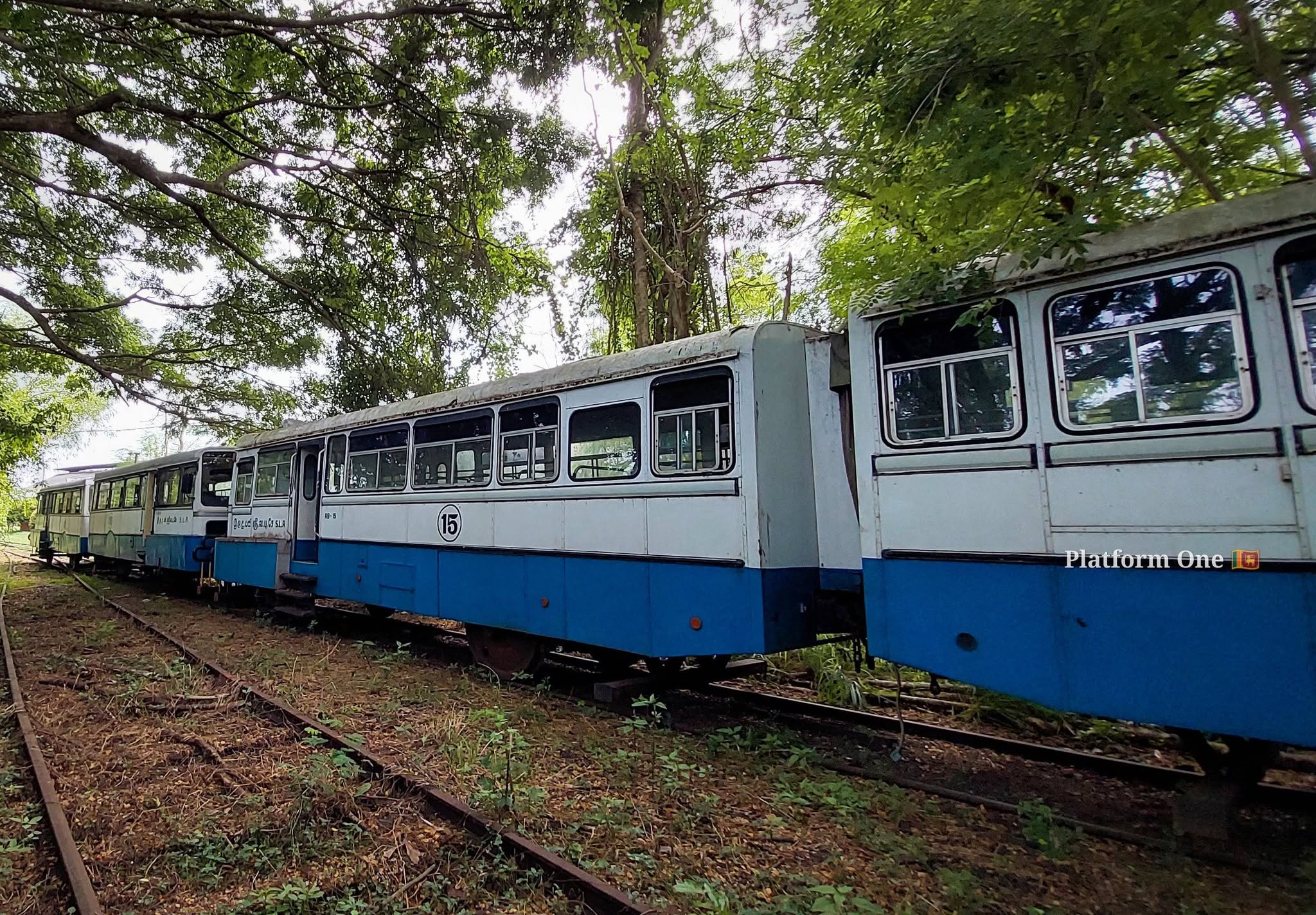
Today, none are in service, and the routes they covered are served by regular trains or road buses.
A short chapter in railway history
Rail buses were a practical, low-cost answer to a real problem. For many people in rural areas, they were the only rail link to the nearest town. For railway fans, they remain one of the most unusual vehicles ever to run on Sri Lanka’s tracks.
Images are from https://www.rail-pictures.com and Primal Madusanka