Near the small township of Rokewood in Victoria’s south-west, more than 200 turbines rise above 16,000 hectares of farmland. Golden Plains is the largest wind farm in the Southern Hemisphere, according to TagEnergy managing director Andrew Riggs, and supplies about 9 per cent of Victoria’s annual electricity demand.
Capacity is set to almost double within months, from 756 megawatts to 1.3 gigawatts. Amazon and Equinix are its two large customers, together taking about 352MW, more than a quarter of the output. Riggs says both want green energy because their own customers demand it.
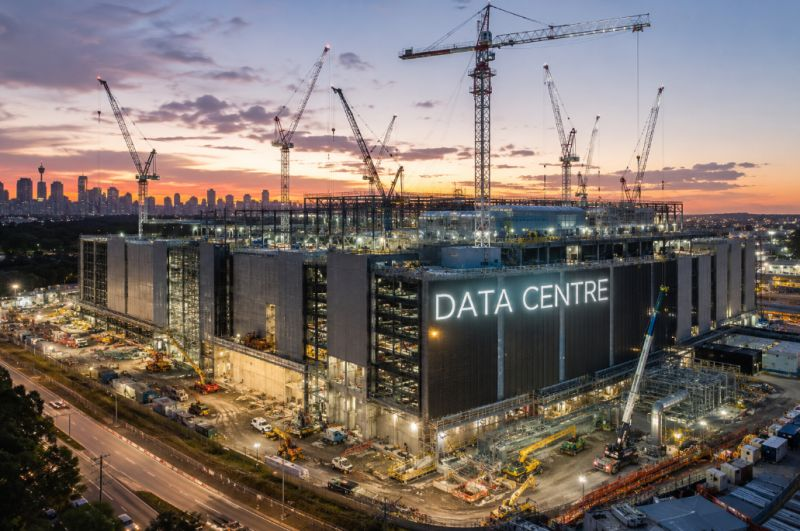
That demand reflects a wider surge. Melbourne is Australia’s fastest-growing data centre market, with $6 billion of investment in the past year, according to the Victorian government. Around 50 facilities now operate, mostly in Melbourne’s west, and they are permitted to draw up to 840MW from the grid, though they currently use about a quarter of that. Their consumption is expected to quadruple by 2030.
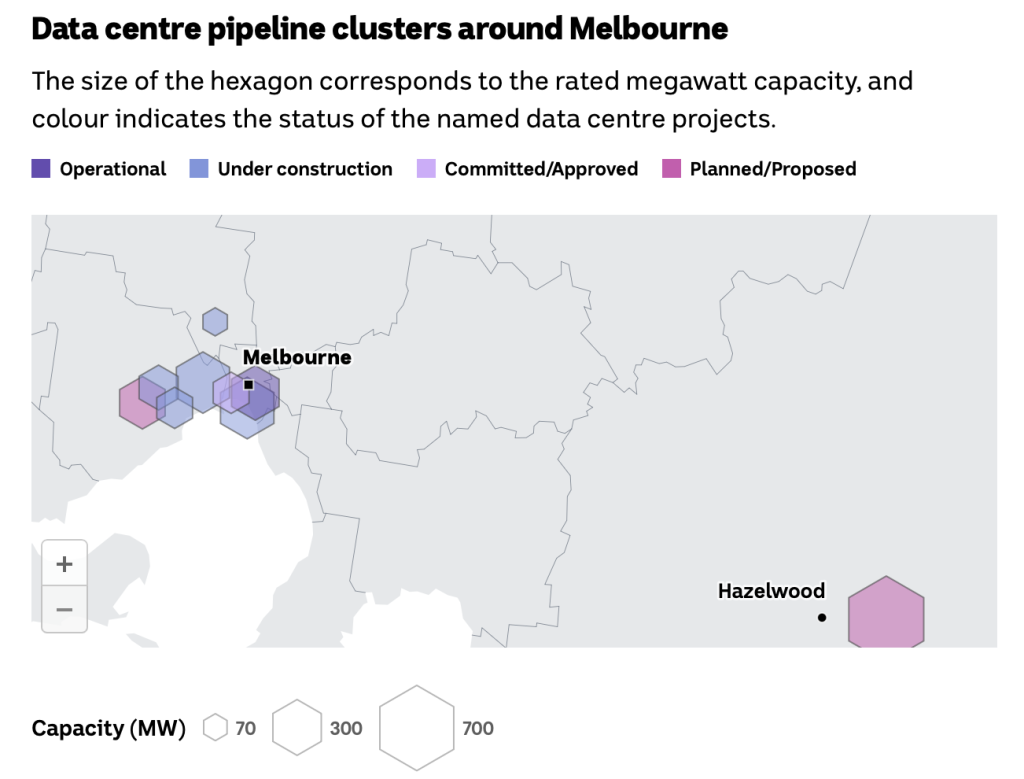
The pipeline keeps growing. Keppel’s proposed Hazelwood campus sits within the Gippsland Renewable Energy Zone, NextDC has disclosed 1,200MW for its M5 site, and Syncline has floated a 2.4-gigawatt precinct at Plumpton. Premier Ben Carroll has also proposed that new data centres secure their own renewable supply and pay for grid upgrades, which would reward clean supply arrangements like this one.
Victoria’s advantage is that clean generation is being built beside the demand rather than promised after it. Contrast that with Moss Vale in NSW, where a 675MW gas plant has been proposed to run a data centre campus.