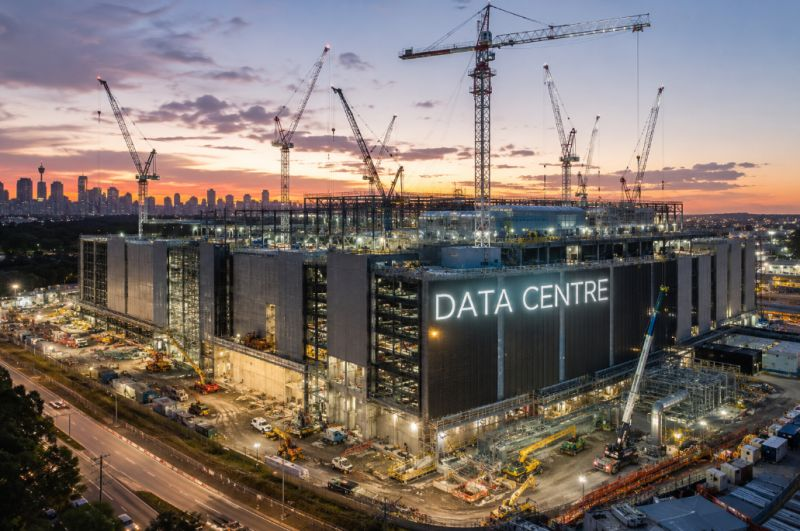
It’s set to be the largest data centre project in Australia, but the Western Downs Digital Park (WDDP) has left many Australians with unanswered questions.
Artificial intelligence behemoth Anthropic has signed a long-term lease to run its Claude AI system out of the yet-to-be-built data centre in Queensland’s Western Downs.
Zerra DC, a developer based in Singapore, has forked out $30 billion to build the data centre, and it is expected to take four to six years to build the facility.
Despite that, Anthropic plans to start using Building One at the centre in 2027.
It’s important to note that Anthropic’s lease is subject to Foreign Investment Review Board approval.
Queensland Premier David Crisafulli says this data centre investment will drive down energy costs for consumers and bring jobs to the community.
But as Queensland opens the door to artificial intelligence, here’s some things you should know about the proposed centre in Western Downs.
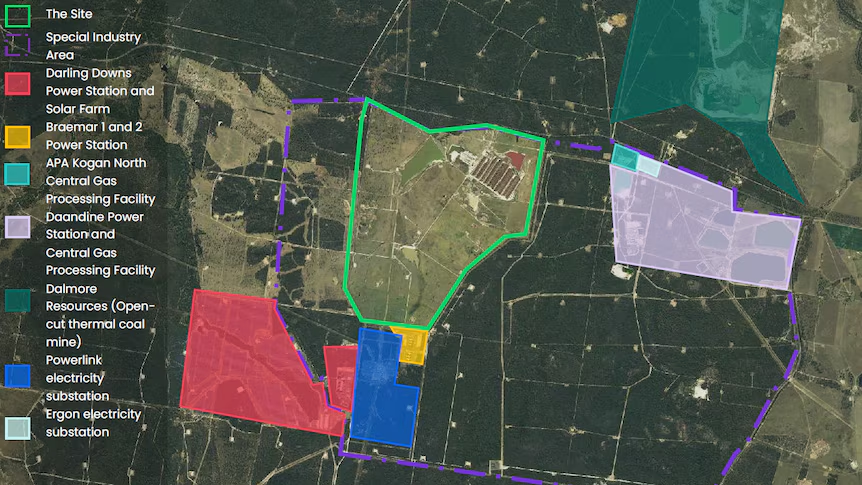
The site will be located on Dalby Kogan Road in the western Queensland suburb of Kogan.
The 725.5-hectare plot is 37km north-west of Dalby and approximately 250 kilometres north-west of Brisbane.
According to Zerra DC, the data centre is expected to provide around 1,400 jobs directly at the facility once fully operational.
It says those ongoing roles will lie in mechanical, electrical, controls, security and ICT information, as well as communications technology which covers computing, telecommunications, networks, software and related digital systems.
A report from the UK government found that while data centres require a lot of staff to build, the number of daily jobs created for operations is “relatively modest” and is likely only ever a few hundred.
The Virginia state government in the US found that a 23,226 square metres (sqm) data centre “may have approximately 50 full-time workers”.
The facility in Western Downs will utilise approximately 195,000sqm of total floor space once fully built and the sheer size is one reason for the greater need for staff, the developers said.
While the facility is being built, the developer says a further 1,500 on-site construction workers will be required, with indirect jobs also expected to arise both during construction and ongoing at the facility.
A hyperscale AI facility needs extremely high-capacity, redundant fibre. In a rural location, Anthropic may have to pay for dedicated fibre routes and additional redundancy rather than simply plugging into an already dense metropolitan network. That means some of the apparent savings from cheap rural land can be offset by infrastructure capex.
If the facility is primarily for inference, locating it far from Australia’s major population centres potentially adds network costs and latency. That isn’t necessarily fatal—AI inference can be distributed—but it makes the site less compelling if equivalent capacity can be obtained closer to Brisbane, Sydney or Melbourne.
The question should therefore not simply be whether a rural Queensland site can host an Anthropic data centre. It should be whether the location provides the complete infrastructure package required for a facility of this scale without compromising the resilience and affordability of essential services for the existing community.
Before such a project proceeds, there should be clear evidence of sufficient and independently verified telecommunications capacity, multiple physically diverse fibre routes, reliable water supplies that do not compete with town or agricultural requirements, drought and climate resilience, and a commitment from the developer to fund infrastructure upgrades attributable to the facility.