Queensland has rapidly become one of the hottest fronts in Australia’s data centre expansion, as global operators chase land, energy and connectivity to feed the exploding demand for AI computing power.
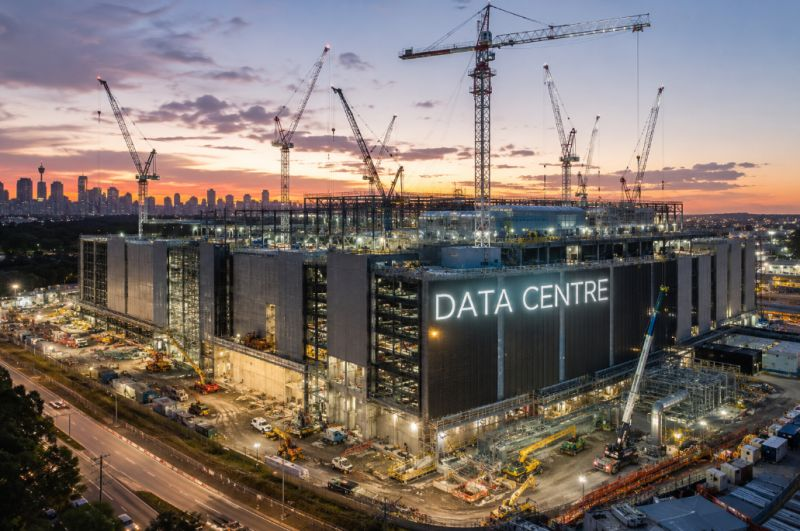
The scale of what’s being proposed is staggering. An international developer has put forward a $31.9 billion hyper-scale data centre project for the Western Downs region, which would rank as one of Australia’s largest facilities if built. The proposed Western Downs Digital Park is so large that, at full build-out across its four phases, it could draw around 2.16 gigawatts of peak capacity — comparable to the power draw of 1.5 million average Australian households — potentially lifting Queensland’s daily electricity use by as much as a quarter. The developer, Zerra DC, has said the facility would connect directly to a major substation rather than relying on the local distribution network, pointing to nearby gas, solar and wind generation as supporting infrastructure. The development application was only submitted last month, could take years to gain approval, and construction itself is expected to run four to six years.
This isn’t an isolated project. Quinbrook Infrastructure Partners is already progressing an AU$2.5 billion data centre campus in Queensland, having previously built out a battery storage component as part of the site. Meanwhile, regional and outback areas are also drawing interest — towns such as Cloncurry in the state’s north-west see themselves as well positioned for AI infrastructure, though that potential is being held back by the absence of a connection to the national electricity grid. Hopes are pinned on the CopperString transmission project to eventually unlock investment there, though the state government has so far only committed to a firm timeline for the eastern leg between Townsville and Hughenden.
The Queensland activity sits within a much larger national story. Private capital expenditure in the information, media and telecommunications sector rose by almost 90 per cent in the first quarter of 2026 alone, reaching nearly three times its level a year earlier, driven overwhelmingly by data centre construction. CommBank analysts estimate the sector will add around six percentage points to real business investment growth in 2026 and roughly five points in 2027, making it the dominant force in Australian business investment — even as the resulting boost to GDP remains comparatively modest, since much of the specialised equipment involved is imported.
Not everyone is convinced the momentum will hold indefinitely. University of Queensland economist Flavio Menezes has described predicting the duration of the investment boom as a “trillion-dollar question,” while acknowledging that computing power demand is unlikely to plateau within the next few years.
The rush also carries real trade-offs for host communities. Energy academics have warned that adding gigawatt-scale loads to the grid could test stability and affect consumer power costs, while environmental groups have raised concerns about water use and pushed for clearer guidelines on natural resource demands. Local mayors, by contrast, are emphasising economic opportunity and are already in discussions over community benefit agreements.
Queensland’s data centre pipeline is therefore emblematic of Australia’s broader AI infrastructure gold rush: enormous capital commitments, tight timelines, and an unresolved balancing act between economic upside and strain on energy and water systems.