The Scottish Government is to bring its agency Transport Scotland back into the core of government. The announcement was recently made as part of a major programme of public-sector reform by the ruling Scottish National Party. The move raises questions over how Scotland’s railways and freight strategy will be managed in the years ahead.
The commitment forms part of Scotland’s Programme for Government 2026-31, published on Tuesday 1 September, which promises to “substantially reduce” the number of public bodies in Scotland. Transport Scotland is currently an executive agency of the Scottish Government and acts as Scotland’s national transport agency.
The Government says bringing it back into the Scottish Government will help create a more integrated public sector and improve decision-making and accountability. There has not been any accompanying announcement regarding future freight strategy.
Wider transport restructuring
The Programme for Government makes clear that Transport Scotland will not be the only transport organisation affected. The Scottish Government says it will “review remaining transport bodies to identify opportunities for mergers.” The wider programme is explicitly focused on reducing duplication and consolidating functions of government agencies. The document does not set out a timetable for Transport Scotland’s transition, nor does it explain in detail which of its existing functions will move into which parts of the Scottish Government.

Questions remain over the future structure of the agency’s rail directorate and the way Scotland’s railway will be managed during a period of wider industry reform. Scotland’s railways are themselves entering a period of significant change, with the UK Government’s plans for nationalisation under their plans for Great British Railways (GBR) requiring new arrangements between Scottish Ministers and the UK Government.
Rail freight implications
The timing is particularly significant for rail, given the developing relationship between Scottish Ministers and Great British Railways. A proposed framework for a memorandum of understanding between the Scottish and UK governments envisages GBR working with Scottish Ministers on the delivery of an integrated railway in Scotland, including accountability, funding, capacity allocation and directions to GBR.
Transport Scotland has been central to the Scottish Government’s transport and rail policy, including the specification and funding of railway investment. At the same time, Scotland has an established ambition to increase rail freight. Scottish Ministers have set Network Rail a target for 8.7% net growth in rail freight during Control Period 7, covering 2024-29, with an expectation that growth closer to 10% could be achievable.
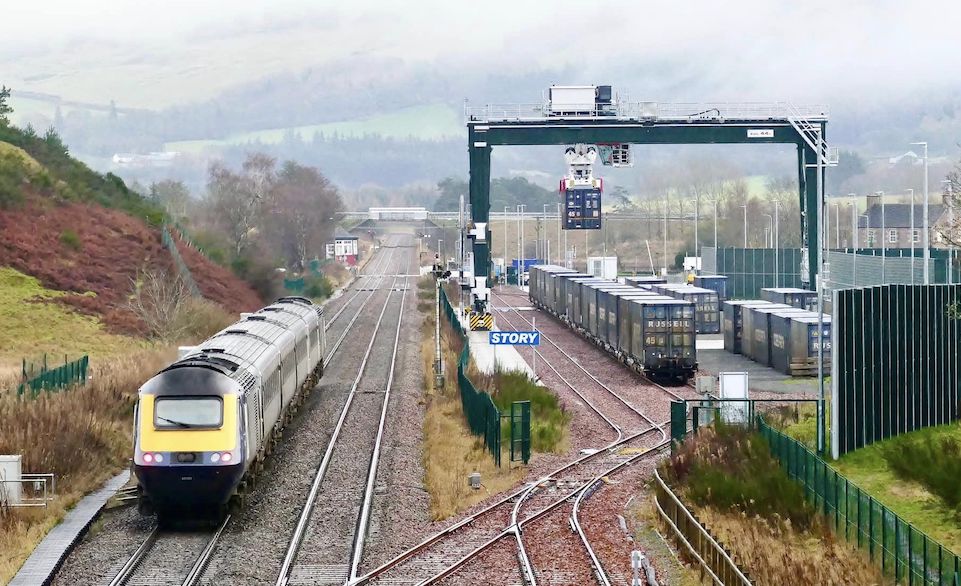
Working relationship
The Scottish Government’s climate policy also identifies modal shift from road to rail and water as a key transport objective. It says one freight train can remove up to 129 lorries from Scotland’s roads and confirms continued support for Freight Facilities Grants. The Programme for Government, however, contains no new rail-freight initiative or additional freight-specific investment commitment.
With Transport Scotland itself now being reorganised, questions will inevitably arise over who will drive delivery of Scotland’s existing rail-freight ambitions. The Government says the public-sector reforms are intended to produce a simpler system, with clearer accountability and more effective use of resources.
For the rail freight industry, the key issue will be whether bringing Transport Scotland into the Scottish Government will work, given the sometimes strained relationship between the two bodies, and whether it achieves existing objectives without disrupting the specialist transport expertise and industry relationships built up within the agency.