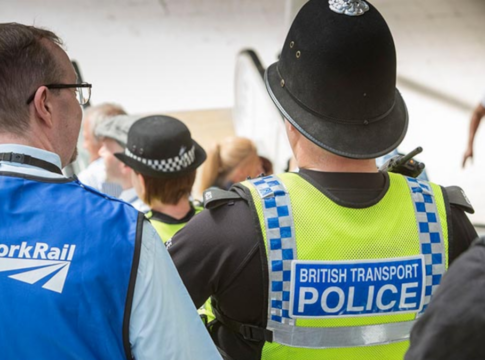
Passengers and frontline rail staff are set to receive more protection from persistent antisocial behaviour at train stations across the rail network, as early trials show encouraging results. Railway Behaviour Notices banning repeat offenders from stations are being rolled out across the rail network this summer, as a new early intervention measure to improve passenger and staff safety.
Backed by overwhelming public support, more than eight in 10passengers say they want people who abuse staff or other passengers to face railway bans.
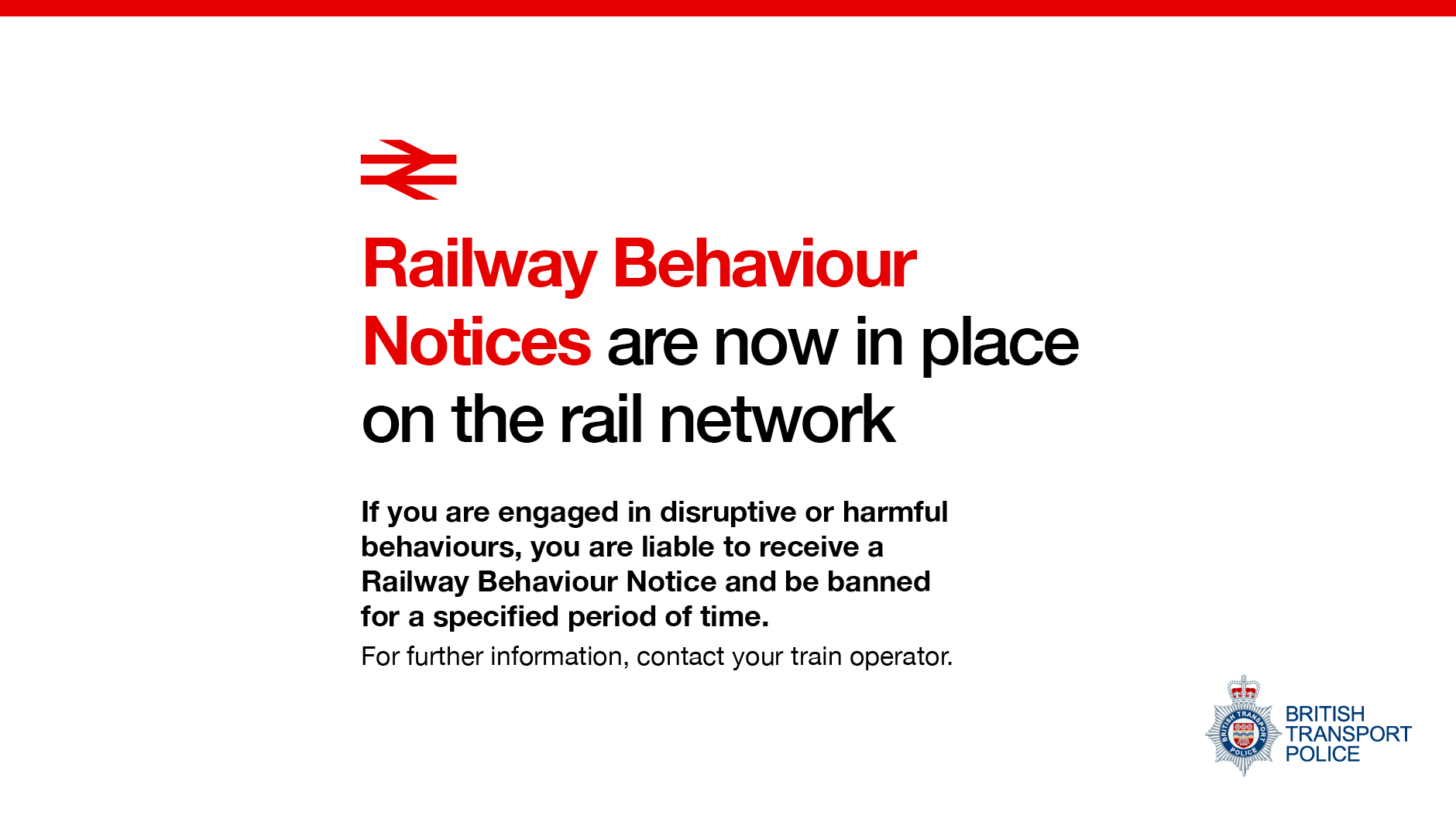
The notices, aimed at dissuading repeat offenders from accessing railway stations, can be issued by train operators or British Transport Police to individuals who repeatedly put others at risk. They remove a person’s permission to enter a specific station or station(s) for six to twelve months, acting as a first line of defence to stop harmful behaviour before it escalates into formal criminal proceedings.
Early trials show a clear reduction in repeat offending, with frontline rail staff reporting safer working conditions. In nationally representative polling of more than 2,000 frequent rail passengers:
- 86% support the rollout of Railway Behaviour Notices, with nearly 80% of rail users reporting that stronger action against abusive behaviour would make them more confident when travelling.
- Railway Behaviour Notices were ranked by passengers as one of the top three most effective safety measures, following increased visibility of British Transport Police and stronger penalties for abusive or aggressive behaviour.
The railway remains a safe place to travel with antisocial behaviour taking place on 1 in 80,000 passenger journeys, and serious violence offences account for 1 in a million passenger journeys made each year. The rail industry is not complacent and is committed to showing the small number of perpetrators that they are not welcome on the railways.
Jacqueline Starr, executive chair and chief executive officer of Rail Delivery Group, said: “Railway Behaviour Notices help create immediately safer conditions for customers and frontline colleagues by banning individuals from the network who have shown they cannot use the railway responsibly.
“In this shared public space, the vast majority of passengers do behave responsibly, and this is about protecting their right, and the right of staff, to travel and work in safety.
“Crucially, they help stop harmful behaviour early, preventing situations from escalating to the point of formal criminal proceedings.
“This is a major moment for the railway. Early trials have already shown a significant reduction in repeat incidents, giving passengers and rail staff a safer environment and better working conditions for frontline staff. Because whether you work for or travel via rail, there is no place for crime or abuse on our network.”
BTP Assistant Chief Constable Ian Drummond-Smith said: “Railway Behaviour Notices give train operators stronger powers to tackle repeat anti-social behaviour, helping stop crime in its tracks before it happens. We’re committed to working closely with our rail industry partners when these notices are issued.
“Every rail passenger has the right to a safe journey, and millions are made across Britain every day without incident. However, on the rare occasions that an incident occurs, we will always support rail staff and take robust action.
“Anyone who experiences or witnesses an offence on the railway is urged to report it to us by texting 61016, or by calling 999 in an emergency.”
Working to curb persistent abuse, assault, harassment, and disorderly behaviour at local stations, a warning letter followed by a railway Behaviour Notice can be issued to persistent troublemakers by train operators or Network Rail, which manage rail stations. For more serious incidents, a Behaviour Notice can be issued straight away.
For this purpose, the notices are proving to be an effective tool in addressing the issue of repeat offenders. In several cases, train operators have noted a marked reduction in incidents involving individuals who have received a Behaviour Notice, leading to improved working conditions for frontline staff and a safer environment for customers.
The challenge posed by antisocial behaviour is not unique to rail. In the Crime Survey for England and Wales more than a third of respondents (39%) said they personally witnessed or experienced antisocial behaviour in their area. Other frontline sectors such as hospitality and sports venues face similar issues. Despite the small number of individuals on the rail network who put others at risk, the rail industry is taking every available action to protect people from violence, harassment and intimidation.
Image credit: Rail Delivery Group