The Competition and Markets Authority (CMA) has published the findings of its market study into road and rail infrastructure and is recommending concrete actions to drive down costs and drive up innovation and productivity.
Following 11 months of in-depth analysis and engagement across government, procuring authorities and businesses, the CMA’s market study on public road and rail infrastructure highlights the cost of historic approaches, and the scale of the opportunity for reform.
The CMA is recommending government embraces a more strategic and coordinated approach to delivering road and rail infrastructure with a clear plan for the sector. Alongside recommending concrete actions in road and rail, the CMA believes that the lessons learned have broader applicability across public infrastructure procurement.
Sarah Cardell, chief executive of the CMA, said: “Our work on civil engineering shows that a short term and fragmented approach to procurement in road and rail is driving up costs, slowing delivery and holding back innovation.
“This is an opportunity for systemic change – but it requires strong central coordination, and a reframing of road and rail procurement as a lever for growth and innovation. The CMA will continue to play its part, bringing independent advice, analysis and practical solutions to drive economic growth.”
Around £19 billion of taxpayers’ money was spent on public road and railway infrastructure in 2023/24 (excluding High Speed 2). These markets have long underdelivered on productivity, innovation and the speed of delivery. The CMA’s market study identifies the key drivers – funding uncertainty, short-term decision making, complex regulation and capability gaps – and proposes concrete steps to address them.
External research, highlighted in the CMA’s report, shows UK and devolved governments could potentially save up to £5 billion a year by addressing the challenges in the market, while also reducing delivery times, increasing innovation and investment, and supporting UK firms to grow and compete.
Key recommendations from the CMA’s targeted package of reforms in public road and rail civil engineering include:
- Strategic ownership for driving change: the CMA recommends that HM Treasury takes strategic ownership for driving and overseeing the necessary system-wide changes to actively shape the market (recognising its overarching responsibility for infrastructure strategy across the public sector, and its ability to deploy the necessary convening powers and levers within the UK Government).
- A clear plan for the sector: the UK Government, in consultation with the Scottish and Welsh Governments and the Northern Ireland Executive, should publish a strategic sector plan for civil engineering in the road and rail sector and report annually on progress.
- Credible long-term pipelines: multi-year funding and clearer forward project pipelines to give firms the confidence to invest in skills, capacity and innovation.
- Procurement designed for long-term value: improving how projects are scoped, procured and delivered to promote competition, lower costs, support investment and incentivise innovation.
- Building public-sector capacity: tackling capacity and skills shortages in procuring authorities through strengthening capability, shared expertise and smarter joint procurement.
Taken together, these changes would strengthen competition in the sector, increasing productivity and opportunities for UK scaleups. They would also speed up delivery and help ensure public investment works harder for the economy. Applied more systemically, they could help public procurement become a major driver of growth.
The CMA stands ready to support the UK and devolved governments in implementing the recommendations. At the same time, the CMA’s broader work on public procurement across priority sectors of the industrial strategy continues, as do its efforts to tackle public sector bid rigging.
Recommendations have been made to the UK and devolved governments, with the CMA writing to key Cabinet members within the UK Government and devolved nations, as well as metro mayors.
The UK Government has committed to responding to CMA recommendations within 90 days.
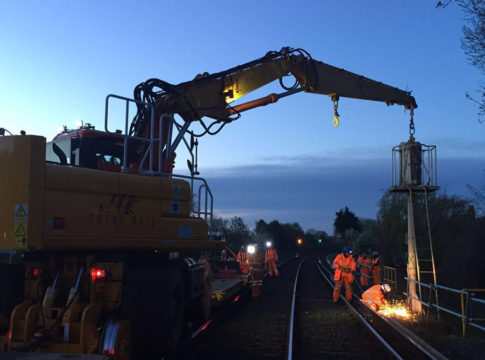
Image credit: Network Rail