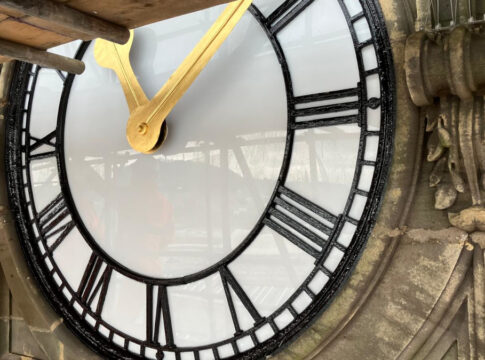
A painstaking restoration of the clocktower has been completed as part of the Scarborough station upgrade.
The £14 million project – preserving the grade II-listed building’s historical character – includes a new roof, drainage systems and restored stonework.
The waiting room and ticket office are also being revamped to improve passenger experience at the station, which has remained open throughout the year-long project.
A Railway Heritage Trust grant of £203,000 has enabled the clocktower to be restored at the same time, taking advantage of the scaffolding and site compound already being in place.
Each part of the four faces has been individually restored to its best – forming the crowning glory of the wider project.
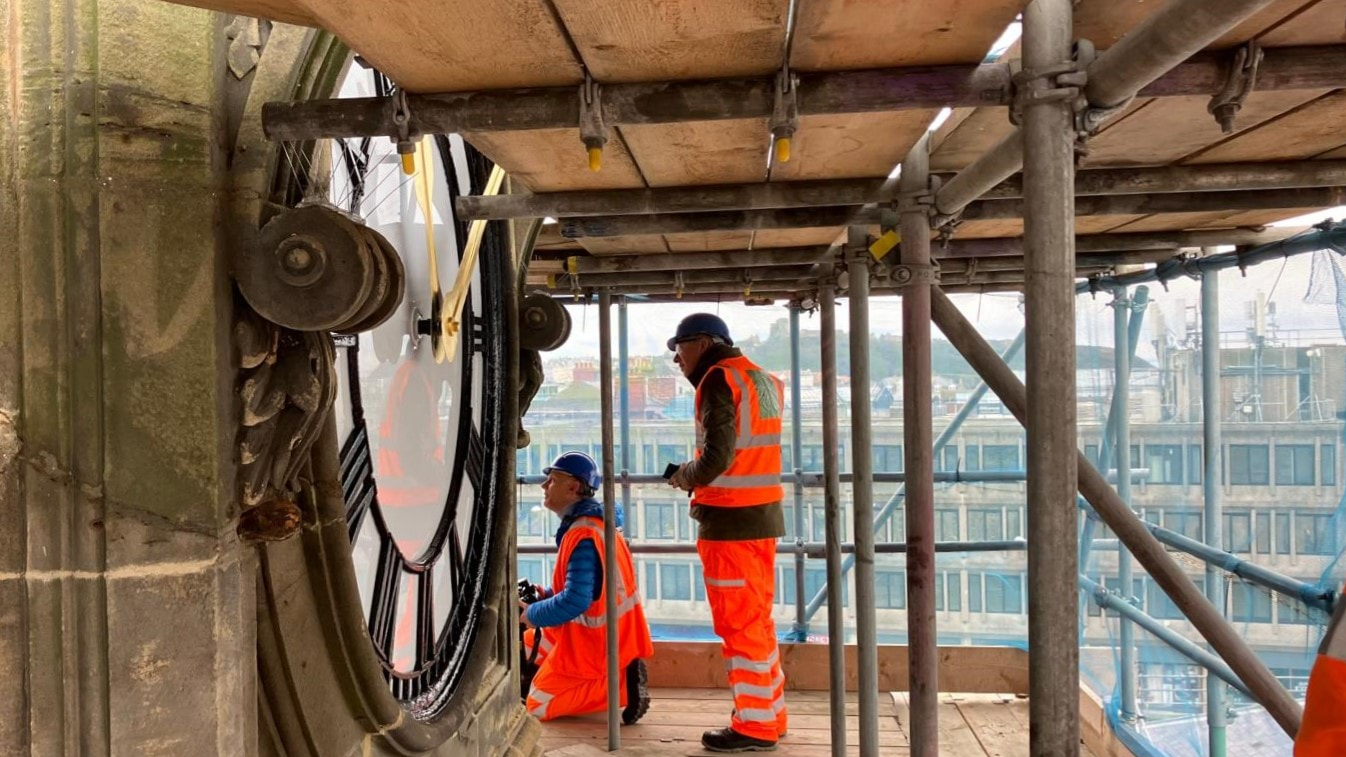
The project to deliver the grade II-listed station’s new roof, drainage systems and restored stonework will be completed as planned by the end of March.
However, workers will remain on site after this date due to the controlled removal of asbestos which has been found in the social club, ticket office and café areas of the station. This work is expected to take until the end of June, after which the site compound will be cleared.
The station’s social club and ticket office will operate as normal with no risk to the public. The café will temporarily close from 30 March for up to three weeks.
Ann Shannon, Network Rail scheme project manager, said: “Our project at Scarborough station is in its final stages, and thanks to the Railway Heritage Trust grant for the clocktower restoration, we’ve been able to deliver more benefits than originally planned.
“The main project is on track for completion as planned this month, but some of our colleagues will be working at the station for slightly longer because of the asbestos we’ve recently identified. We’re grateful for everyone’s patience and understanding while we address this safely and responsibly.”
Roof repairs were started after a glazing failure in 2021. The station was made safe and, after funding constraints were overcome, the full restoration began in spring 2025.
Scarborough’s coastal location has meant other considerations – hawks were employed to prevent seagulls nesting during the main roof work last summer, and specific types of tile, paint and timber are used because of the salt-heavy sea air.
Image credit: Network Rail