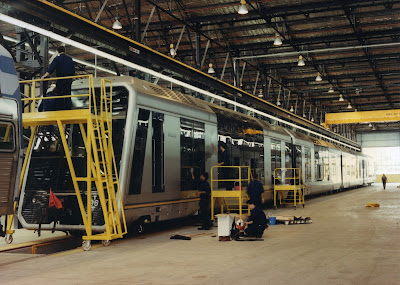
Nearly 40 years since the Tangara trains were built in Newcastle, the fleet will return to the region for much-needed maintenance.
A $447 million injection from the state government will see two new production lines established at Cardiff’s rail facility.
The program will extend the life of 55 eight-carriage trains by over a decade through a variety of maintenance works.
Works include the replacement of internal cladding, computer software, the installation of additional accessible emergency help points, emergency door release, passenger visual displays, upgrades to the passenger address system and CCTV.
Regional Transport Minister and Maitland MP Jenny Aitchison said it’s a positive step forward.
“This allows us to ensure that we have that reliability of the Tangaras that people have come to rely on over so many decades,” she said.
“This is really a vote of confidence in the Hunter and a way of building our capacity to ensure that we can deliver the trains for the future right here in the Hunter.
“We know that the Hunter has a proud history of building trains.
“This refurbishment work will help to redevelop and extend the skills of that workforce.”
Around 100 new jobs and 20 apprenticeships are expected to be created locally through the program.
The passenger train manufacturing workforce has not been in operation in the Hunter since 2013, with a national focus put on locomotives built offshore.
The two new production lines in the Hunter, in addition to the existing three lines at Auburn and Flemington, will increase the pace of train upgrades from 12 per year to 20.
A new Tanagra fleet is planned to be built through the program, set to begin procurement by 2027.
To date, four Tanagra trains are undergoing upgrades with the first train now in the network undergoing dynamic testing activities before it re-enters service.
“This is what rebuilding public transport capability in NSW looks like,” Minister Aitchison added.
“More skilled jobs in the Hunter, more apprentices and more work being done here in Australia, instead of offshore.”