Passengers are being reminded that a programme of major improvement work is taking place on the East Coast Main Line from this weekend (Saturday 7 March).
A range of railway upgrades are planned for various sites between York and Newcastle for four weekends: 7-8, 14-15, 21-22 and 28-29 March.
There will also be digital signalling testing on the southern part of the line in Hertfordshire on Sunday 15 March, meaning services between Peterborough and London King’s Cross are also affected.
For most passengers travelling through the north-east during the upgrades, trains will still be running, with an hourly service using a diversionary route to connect customers between York, Northallerton and Newcastle, via Sunderland.
Rail replacement services will connect customers travelling to or from Darlington and Durham with trains at either York or Newcastle. Passengers are advised to allow extra time to complete their journeys.
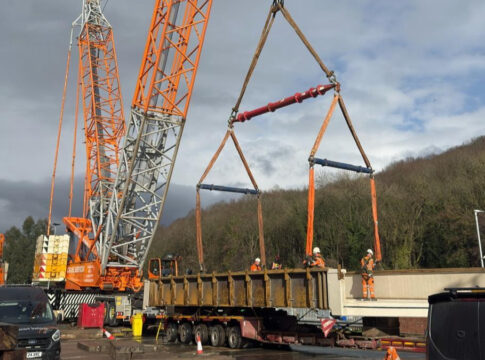
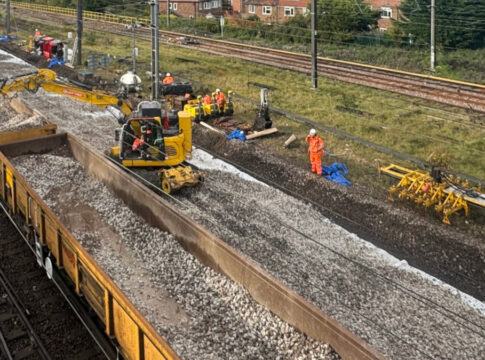
The work in the north-east includes the renewal of more than 3.8km of track, as well as new switches and crossings at three locations. Further progress will also be made on the £140 million Darlington station upgrade, which will also see overhead line equipment installed as the project nears completion.
The improvements taking place include:
- Cowton, between Northallerton and Darlington: 560 metres of new track and renewal of switches and crossings.
- Croft, south of Darlington: renewal of switches and crossings.
- Aycliffe, north of Darlington: 1.3km of rail renewal and removal of disused material.
- Northallerton: 485 metres of new track and renewal of switches and crossings.
- Low Fell, south of Newcastle: 1.6km of track renewal.
- installation of overhead line equipment and points as part of the Darlington station upgrade.
On Sunday 15 March, there will also be further testing of new equipment in Hertfordshire between Welwyn Garden City and Hitchin, under the £1.4 billion East Coast Digital Programme (ECDP).
The landmark ECDP scheme is set to introduce digitally signalled passenger trains on a section of main line between Welwyn and Hitchin from later this year, meaning more reliable, greener, and even safer journeys. The rigorous testing process checks the interaction between lineside equipment, onboard equipment and signalling control at York Rail Operating Centre.
Services will start and terminate at Peterborough on this day, with frequent coaches connecting passengers to Bedford and Thameslink services to and from the capital.
Gunnar Lindahl, joint operations director for Network Rail and LNER, said: “We’re carrying out a significant package of upgrades on the East Coast Main Line to keep trains running safely and reliably for the millions of passengers who depend on the route.
“The improvements, including renewing track and switches and crossings as well as progress with the Darlington station upgrade and East Coast Digital Programme, are important steps towards an even more modern, greener, safer and more reliable railway.
“We appreciate this work does mean changes to weekend services, and we’re grateful to passengers for their patience while we complete these upgrades.”
Daniel Mann, director of industry operations at Rail Delivery Group, said: “As vital improvement works take place on the East Coast Main Line ahead of the Easter holiday, we’re advising passengers travelling between York and Newcastle at the weekend to plan ahead and allow extra time for travel, with the latest journey information available on the National Rail website.
“Visual Disruption Map videos, offering a guide to planned service changes and alternative travel options, will also be available online and at stations.
“Our railway colleagues will be working hard to keep people moving, and we kindly ask everyone to treat them with kindness and respect as they help deliver a safe and reliable service.”
Passengers using rail replacement services are reminded to only bring luggage they can carry comfortably and be mindful of transfer times between train and bus/coach.
Image credit: Network Rail