DB Cargo UK has successfully trialled a tri-mode locomotive on an intermodal service in the North West of England. The Stadler locomotive, designated Class 93 in the UK, hauled a revenue-earning train from Liverpool to Glasgow. DB Cargo says it is exploring future options for its locomotive fleet.
The working, backed up by a regular all-diesel class 66, was organised in collaboration with specialist fleet owners Rail Operations Group and national infrastructure agency Network Rail. DB Cargo UK used 93006 to successfully haul a Peel Ports round-trip service from Royal Seaforth Dock in the Liverpool complex on Merseyside to Mossend at Bellshill near Glasgow on Tuesday, 10 February.
Performance out on the network
The Class 93 is the latest and most advanced development of Stadler’s successful Euro-dual locomotive family, or in this case, a Euro-trio. The new iteration delivers a mixed-traffic locomotive built on and improving the design and success of the Class 68 diesel and Class 88 electro-diesel already adopted into UK service. Examples of the Class 68 have recently been exhibiting their flexibility with a commission for Chiltern Railways express passenger services between London and Birmingham.
“The trial of the Class 93 was conducted as part of an ongoing review of our future fleet investment strategy, and we were impressed with its performance,” said Mark Sargant, DB Cargo UK’s Head of Operations. “We also took the opportunity to take along representatives from the train driver union ASLEF, to ascertain their views on its’ performance out on the network.”
Capable locomotive for the modern railway
The climb out from Seaforth Docks involves negotiating a challengingly graded tunnel under the Liverpool suburbs of Bootle and Walton, to eventually reach the West Coast Main Line. The consist of fully-laden intermodal containers presented no difficulties for the new locomotive. “We’re delighted with the continued performance of the Class 93 during these trials,” said Brian Ferguson, General Manager at Rail Operations Group, who brought the marque to the UK. “Handling loads of up to 1,500 tonnes, the locomotive delivered a strong performance throughout, including successful standing starts on challenging gradients.”
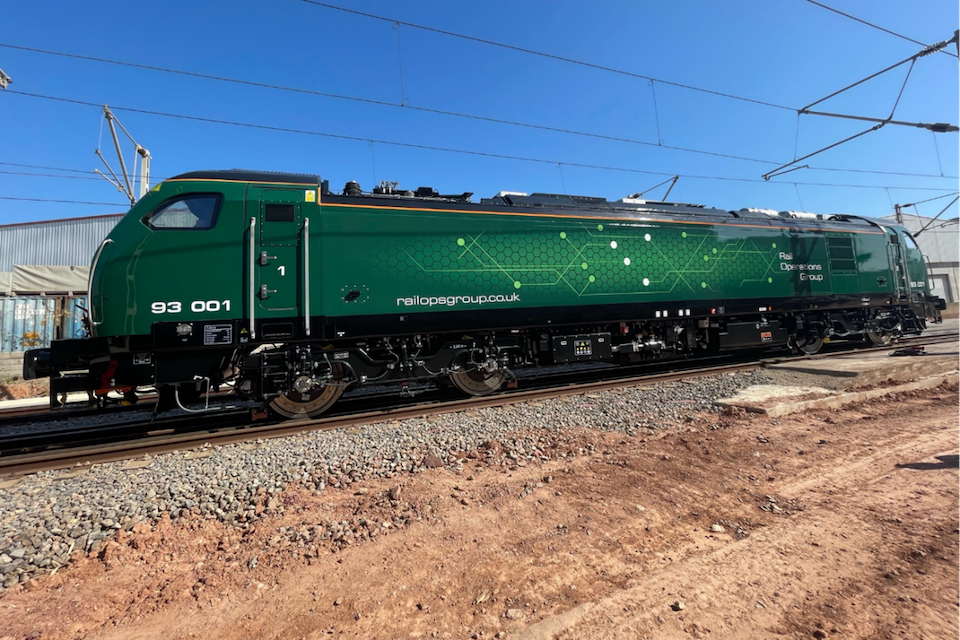
Stadler has built an order of ten units for Rail Operations Group, with options for more. “Each successful run builds further confidence in what is a truly versatile and capable locomotive for the modern railway. The results we’re seeing are a testament not only to the technology itself, but also to the expertise, planning and commitment of the teams delivering these operations,” added Fergusson.
Tri-power, quad-options
Britain’s freight operations are backstopped by a dominant fleet of Class 66 diesels. The EMD-built units continue to serve, but operators are looking to the next generation of motive power. The main consideration is that there is still a legacy of non-electrified lines in the UK – and that has particular implications for freight operations, since ‘last mile’ sections – like the lines into Royal Seaforth Dock – are unlikely to ever see wires erected. It’s a future for which tri-mode capability seems tailor made. Notably, Peel Ports, the operators at Liverpool’s dock complex, have been investing in Seaforth for intermodal and bulk handling capacity (see reporting on WorldCargoNews.com).

With three power sources, the Class 93 can effectively deliver four different modes of traction. Running in pure electric mode, they can draw on 25kV AC overhead lines with a power up to 4,000kW, with an extra 600kW of boost power from the on-board twin Lithium Titanate Oxide (LTO) traction battery packs. The units are also fitted with a “Stage V” compliant Caterpillar-built 900kW diesel engine, allowing them to operate on non-electrified lines. The battery packs provide 400kW of extra power to supplement the engine when the locomotives are running in diesel/battery or hybrid mode. The batteries can also work alone, enabling carbon-free operations without losing any tractive effort.
Examples of Rail Operations Group’s Class 93 are likely to be back at Liverpool soon. “Further trials and demonstrations are planned over the coming months as we continue to strengthen and develop our working relationship with DB Cargo UK,” added ROG’s Brian Ferguson.