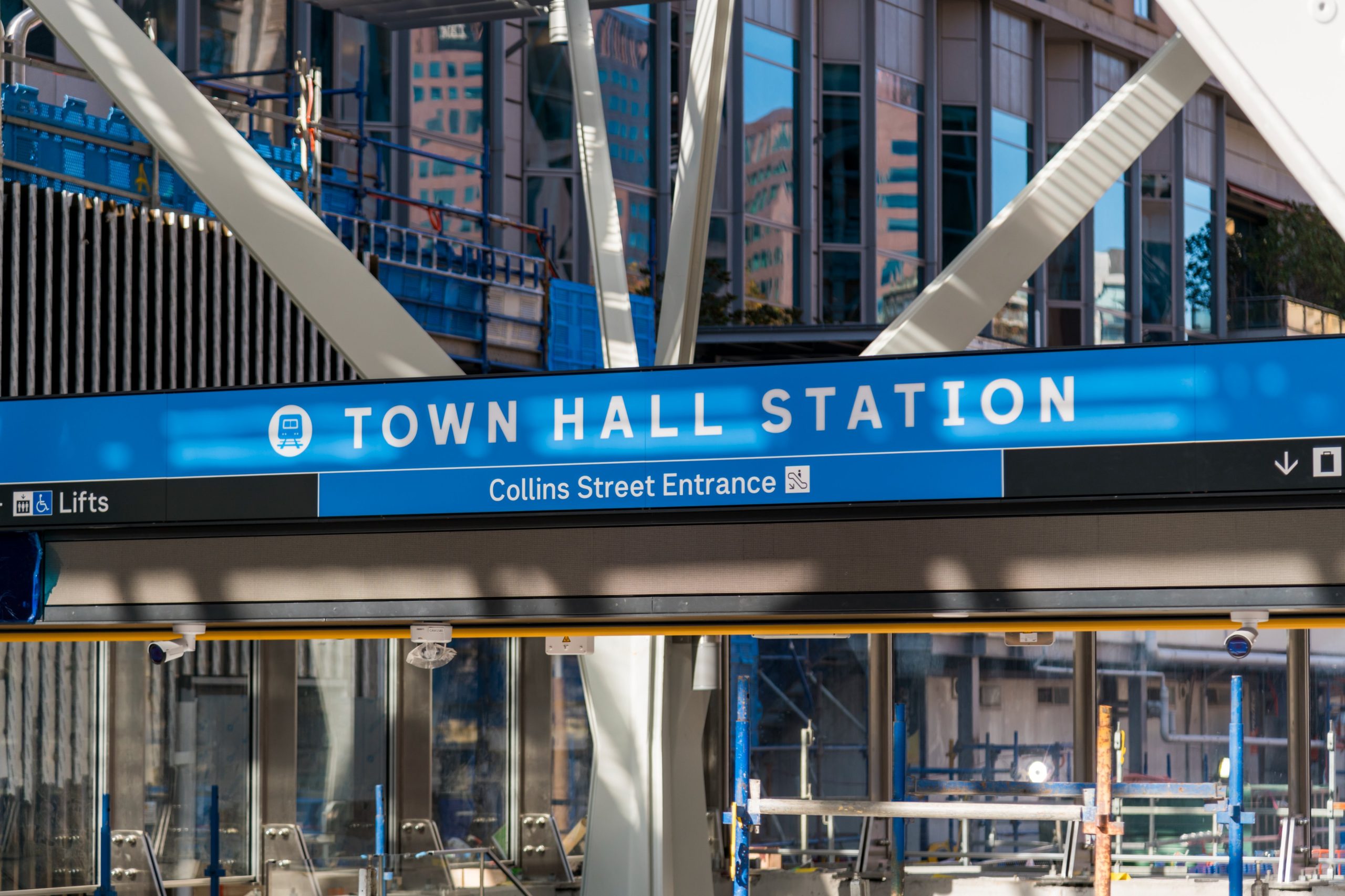
There were early winners and losers as commuters navigated the first morning peak on the Metro Tunnel timetable, adjusting on the go to new commuting patterns.
Most services ran on time, Metro Trains reported, although a train door fault forced one service to leave Arden station without stopping.
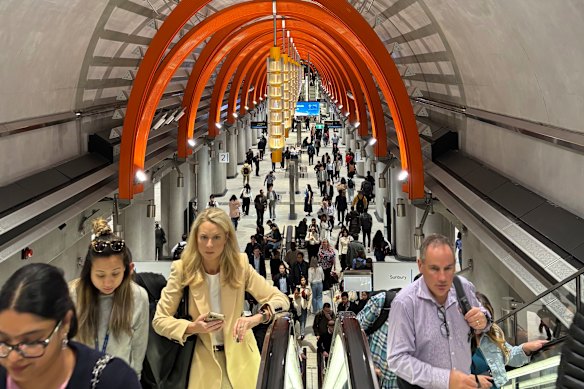
One traveller bound for Parkville from her home in Caulfield told The Age the more direct journey would shave 15 minutes off her commute, while others were less fortunate.
One harried commuter, heading for Collingwood from his home in Cranbourne, now faces a three-train journey, which adds an estimated 25 minutes to his morning travel.
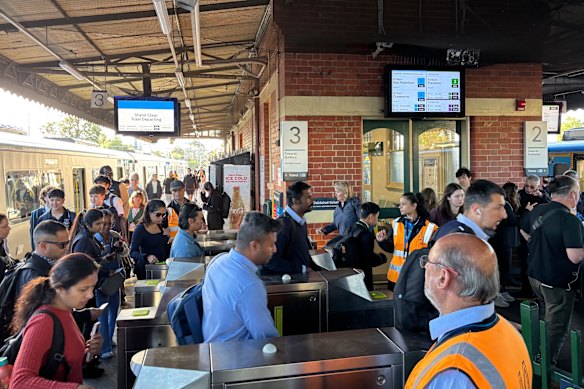
At Caulfield station on Monday morning, there was plenty of congestion and confusion as passengers darted between platforms, but a strong contingent of station staff provided guidance for commuters.
The crush at the platform gates caused a number of frustrated passengers to miss their trains, but the time penalty was modest, as city-bound trains pulled up with metronomic frequency every three to four minutes.
The launch of a full timetable through the Metro Tunnel this week has changed travel patterns that have been baked in for decades.
Passengers on the Sunbury, Cranbourne and Pakenham lines no longer travel through the City Loop, nor to busy inner-city stations Richmond, North Melbourne and South Yarra.
Announced in 2016 at a cost of $10.9 billion, building the Metro Tunnel and its five underground stations ultimately cost more than $15 billion, and the project marks the biggest upgrade to Melbourne’s public transport system since the City Loop was opened in 1981.
The Metro Tunnel opened to passengers in November, with some trains travelling through the new tunnels, but on a reduced timetable.
Trains on three lines will now travel through the nine-kilometre twin tunnel instead of the Loop, and will have to interchange to reach Loop stations Southern Cross, Parliament and Flagstaff.
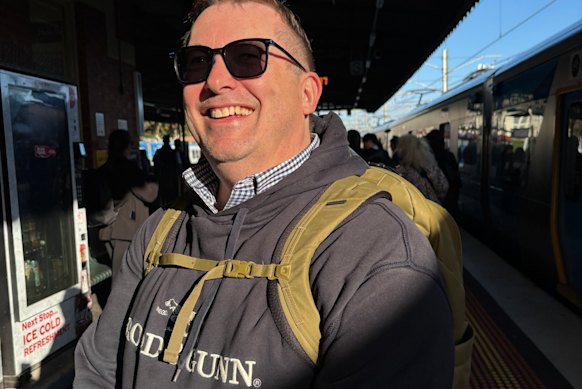
Among those adapting to the change was Andreas Groell, who stepped off at Caulfield, trying to find his way to South Yarra.
“I have to change trains. I wasn’t really aware of that, but I just realised that I have to get out and go over to the other platform,” he said.
Groell estimated the transfer would add five minutes to his morning trip, but said he was unfazed.
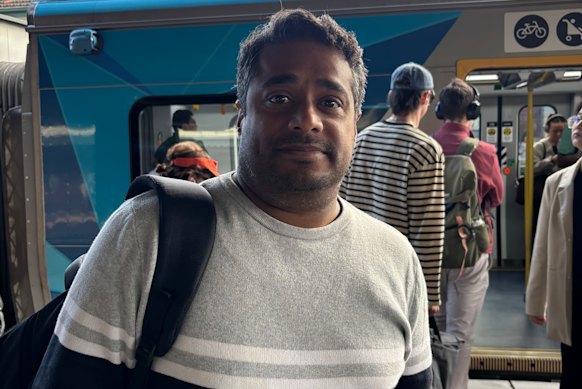
“I was under the impression I’m not actually affected by it. That’s all good,” he said.
But flustered traveller Manoj Mathew had just discovered he would pay a much heavier time penalty.
The Age


Looks like a win for the community today with the metro tunnel going live.
Day One a success although many had not taken the time to understand the changes. Day two a disaster.
As a commuter coming from the south east to Richmond it was horrible. changing train to the frankston line was chaos. Way too much congestion and train times not working well with connecting legs. When we got back to Caulfield in the afternoon. I have never seen a train more empty arriving at caulfield in peak hour.
Great feedback thanks for sharing. Are you saying the train was too packed or are you saying boarding of the Frankston train was too chaotic?
What train was arriving so empty at Caulfield?