Russell RailRoad has highlighted the inherent resilience of rail freight. Trains largely maintained operations through recent snowbound conditions across Scotland and parts of England. They also restarted services on the West Coast Main Line following infrastructure works in Cumbria.
Now in its fifth year of operation, the Russell Group rail freight business is well established. The recent period of disruption allowed the company to demonstrate the role of rail in providing dependable, lower-carbon logistics, even when severe weather and engineering constraints affect the wider transport network.
Rail freight resilience under pressure
Glasgow-based Russell RailRoad continued to operate as much of its network as possible during the recent spell of severe winter weather. The cold snap brought heavy snow and low temperatures to much of the British Isles earlier this month. While some restrictions were unavoidable, the company prioritised key intermodal flows.
For the operator and others like them, the sub-zero episode underlined the wider resilience of rail freight. The comparison with road-only logistics during extreme weather was exemplified by repeated closures of the A9. The main highway through the spine of Scotland was abnormally difficult. Also, the engineering closure of the West Coast Main Line required careful planning, flexible rostering, and close coordination with terminals and operating partners, which helped limit disruption for customers with time-critical supply chains.
West Coast Main Line services return
Services on the West Coast Main Line have now resumed following the replacement of Clifton Bridge in Cumbria, restoring a vital north–south freight artery. The reopening reconnects Scotland with the Midlands and southern England, strengthening network reliability for intermodal traffic and all the other services on Europe’s busiest mixed traffic route.
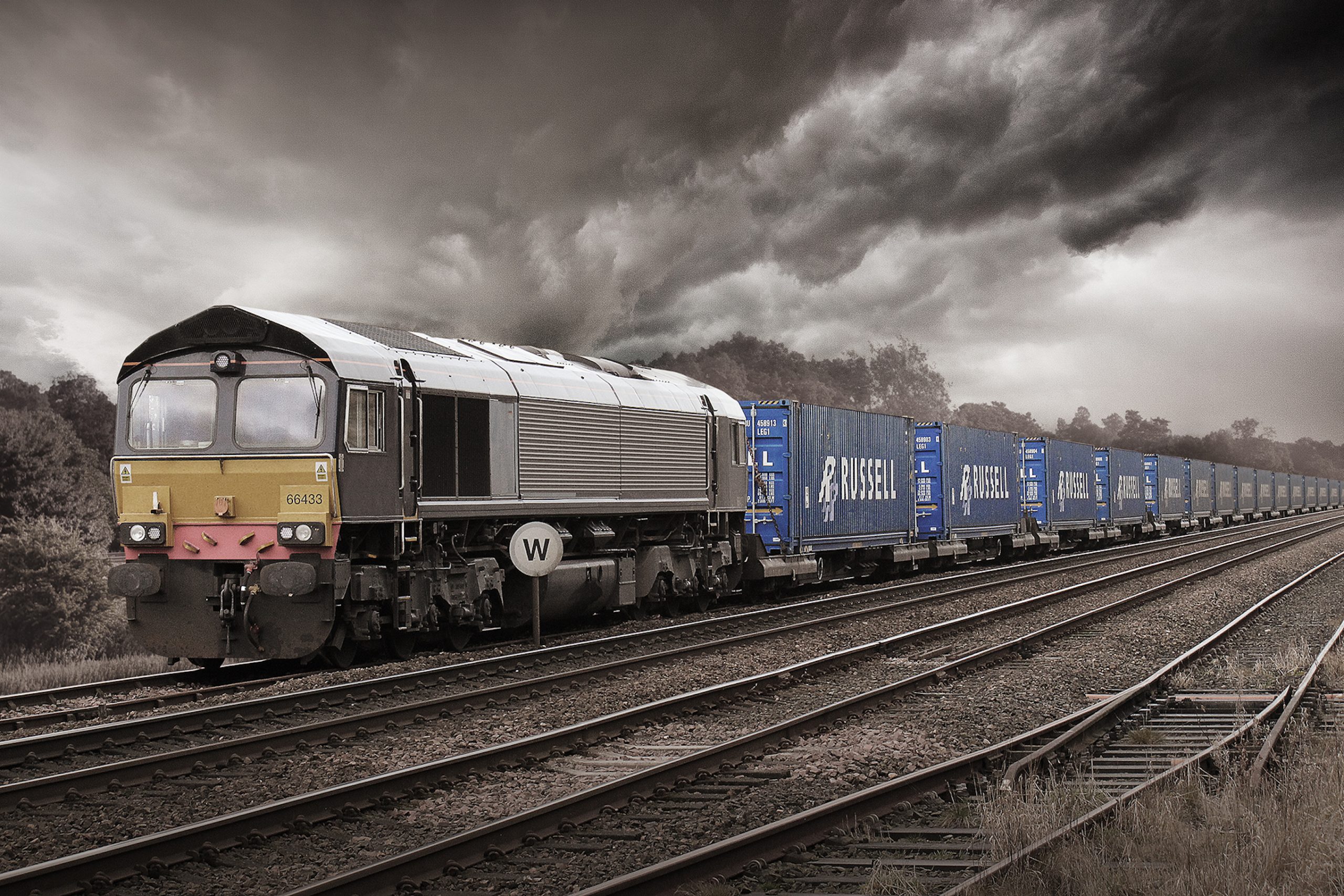
The company highlights the strategic role of its Coatbridge terminal in Scotland and its Daventry hub in the English Midlands. The latter sits within what’s often called the Logistics Golden Triangle. Both terminals were instrumental in maintaining continuity during the recent disruption. Coatbridge acts as a key Scottish rail freight gateway, in what might be an equivalent logistics “Tartan Triangle”. Meanwhile, Daventry Intermodal Rail Freight Terminal (DIRFT) continues to play a central role in UK intermodal connectivity.
Working in partnership with Direct Rail Services, Russell RailRoad operates services linking these locations with destinations around Great Britain. The familiar supermarket workings to the Scottish Highlands, sometimes called the Tesco Trains, are among the best known. The company says these collaborations demonstrate how established terminals and long-standing partnerships can help rail freight deliver resilient, sustainable logistics, even under challenging conditions.