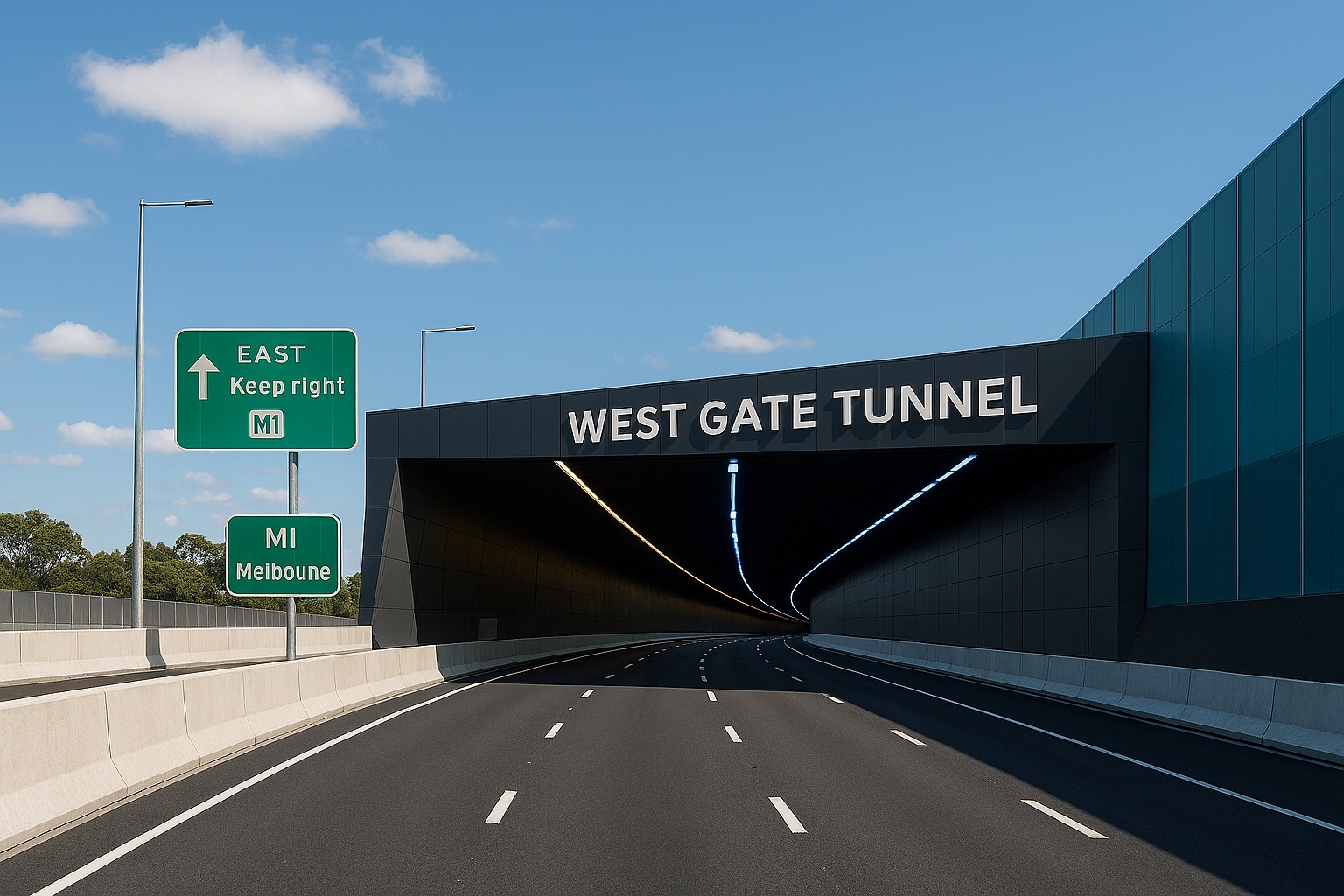
When the West Gate Tunnel finally opened, the city braced for chaos. For years, the newspapers had been filled with warnings—traffic snarls shifting from one suburb to another, trucks rumbling through quiet streets, the hum of engines replacing the chatter of birds. But when the ribbon was cut and the first cars rolled through, something unexpected happened.
It was… quiet.
Mara noticed it first on her morning walk. She lived in a weatherboard house on a street that had once been a conveyor belt of trucks, each one rattling her windows and shaking the teacups in their cabinet. Now, the air was still enough for her to hear the creak of her own front gate. The magpies sang without competing against diesel growls. She could smell the faint sweetness of wattle instead of exhaust.
At first, she thought it was a fluke. Maybe the novelty of the tunnel had drawn drivers away for a week or two. But the days stretched into weeks, and the weeks into months, and still the traffic never returned. The tunnel had swallowed it whole.
The city’s planners scratched their heads. They had expected a shift, not a disappearance. The data showed fewer vehicles than anyone had predicted—like thousands of cars had simply vanished. Some said it was the tolls, others whispered about changing work habits, but Mara had her own theory.
She began walking further each day, tracing the old truck routes. The roads felt different now—lighter, as if the asphalt itself had been relieved of a burden. She imagined the tunnel not as a hollow tube of concrete, but as a living thing, a great lung beneath the river, inhaling the city’s noise and exhaling peace.
One evening, curiosity pulled her to the tunnel’s entrance. She stood at the edge of the slip road, watching the headlights disappear into its mouth. There was something hypnotic about the way the cars were drawn in, their sound fading almost instantly. She thought she heard a low, steady hum—not mechanical, but almost like breathing.
A truck driver pulled up beside her, window down.
“Strange, isn’t it?” he said. “Feels like once you go in, the world gets… quieter.”
She nodded, unsure if he meant inside the tunnel or after you left it.
That night, Mara dreamed of the tunnel stretching far beyond the city, its walls lined with roots and stone, carrying not just vehicles but the weight of years of noise, stress, and hurry. In the dream, she walked through it barefoot, and with every step, the air grew cleaner, the light softer, until she emerged into a place she didn’t recognize—somewhere green, somewhere still.
When she woke, the city outside her window was silent except for the wind in the trees. She didn’t know if the tunnel had truly changed the city, or if it had simply revealed what had been possible all along.
Either way, she thought, the West Gate Tunnel wasn’t just a road.
It was a reminder that sometimes, the best thing a city can do is learn how to breathe again.