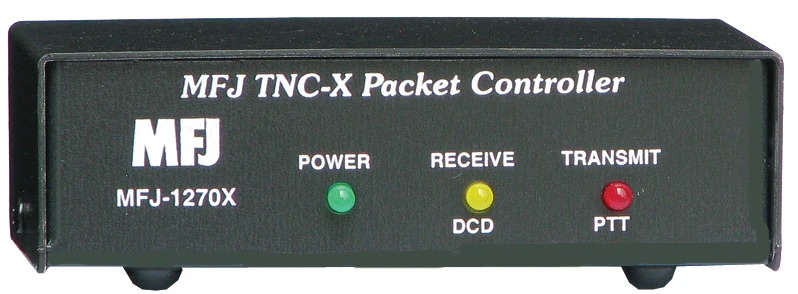
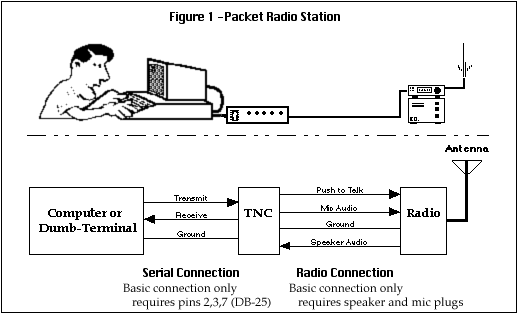
If you have a modern radio with a USB output and a computer with an internal soundcard that is all you need for setting up a packet station, once you download the software.
You didn’t mention what band you are intending to operate on, but most HF rigs today have USB outputs. If you are running UHF or VHF bands you may need an audio cable from the radio to the computer mic input.
The problem with most packet stations is setting the levels for the audio – that requires some time but once adjusted for reliability you should be OK. AX.25 was originally a computer data communication protocol, that used the telephone network to transfer packets from system to system. Packet radio came along later and it is basically the same idea but using radio instead of telephone wires.
How old is packet data communications? Think ARPANET, FTP, and no PCs – this was the data communication method for transfer of information from mainframe to mainframe, or from midrange computers like the DEC PDP 11 series platforms. Back then we used typewriter consoles – and later dumb terminals – to establish the route and define the files to be transferred. Typewriter consoles had a 128 character line limit per line, and if you made one mistake you had to start over from the beginning.
TNC radio refers to a Terminal Node Controller, a device or software that enables digital communication (like packet radio, APRS) for amateur radio operators, acting as a modem and processor to convert data into audio tones for radio transmission and back again. TNCs allow PCs or GPS devices to connect to radios for email, file transfer, tracking, and network access, with modern options including hardware like Mobilinkd or software like Direwolf, which run on computers.
Terminals did away with that since you could correct typos on the fly before hitting enter or send. There were also punch cards in the mix so if you transferred data to the same destination on a routine basis you just created a deck of punched cards with the commands and other information that you could read in to the system to initiate the file transfer – which AX.25 and other protocols broke up into uniform blocks of data for reassembly at the remote system’s location. That was just the beginning of the cycle – the received data usually was the result of processing raw input at the host system, but not necessarily. Some systems did the processing at the receiving end of the line, which did all the calculations. This allowed the input computer to be a lower capability processing power wise and it allowed for multiple input streams to be combined at a central mainframe system which had the computing power to take massive amounts of data and process it into the final usable form (in those days output was either on tape, print or punch cards – disk storage was too expensive to hold massive amounts of data, but you could store the end results on these media types for later use in quarterly or yearly reports.
Of course that applies to business and government computing, and not so much to radio but you get the idea. I don’t know if anyone records packet radio but it wouldn’t be difficult to do so, especially if there is a routine set of information that is periodically transmitted.
I got my information from experience operating mainframe systems from the 1970’s through the 2010’s when I was a mainframe guy. Around the late 90’s mainframe started drying up – meaning the jobs started to disappear in favor of client-server systems so I went back to school and became a certified A+ technician, servicing computers/peripherals/networks just in time for the 2K bug (that never materialized). I ended up back as a mainframe consultant because 1. mainframes did not go away for bulk data processing in short timespan cycles, and 2. a lot of the mainframe knowledge was gone – retired or moved into another field of endeavor. This made for a great deal for those of us who could still work with the large systems.
I got into amateur radio after decades of shortwave listening – and my military experience as a Morse intercept operator (listening to the bad guys chatter), and I was surprised to find these old mainframe communications techniques being employed in amateur radio. I had no idea this was applicable to radio or that there would be so much interest in it. Amateur radio is full of surprises that you discover as you learn more about the application of it as a problem solving technique. The best thing I find is the willingness of Elmers to share their knowledge. If you are just starting out, I encourage you to find a local club to join because that is where you will find experienced people to help you on your personal quest for radio know how.