The value of rail freight was conspicuous by its absence in Wednesday’s UK Budget. The Chancellor, Rachel Reeves, delivered her second Budget to the British Parliament (on Wednesday, 26 November). It will certainly be remembered for leaks and taxes, rather than trains and freight. There were only a few words relevant to the sector – none of them directly aimed at improving the lot of freight operators.
Some urban rail regeneration and a continuation of existing projects. Vote-catching projects were reannounced. One of them – a passenger fare freeze – was so ‘oven-ready’ it was still hot from the joint announcement with the Transport Secretary on Sunday. The real impact for rail was secondary, insofar as the measures chosen by the Chancellor will affect the businesses that provide rail with its revenue. If there is anything for the freight sector, it is certainly still down the line.
Rail freight gets the usual prominence: none
The rail fares freeze figured high in the Chancellor’s hour-long speech, but that measure was already on the statute book – as reported previously by our sister service RailTech.com. That earlier announcement might have been made as a softener to the Budget’s position of a tax on electric cars. Neither move was aimed at freight operations (not forgetting that containers don’t vote, voters do).

“Today’s Budget contained limited new measures affecting the railway industry and rail businesses,” understated Darren Caplan, the Chief Executive of the Railway Industry Association (RIA), which represents the sector’s supply chain. “Our members – many of whom have experienced difficult times this year commercially – will welcome the Government’s recognition of the value of rail investment to boosting the UK’s growth and productivity.”
The Office for Budget Irresponsibility
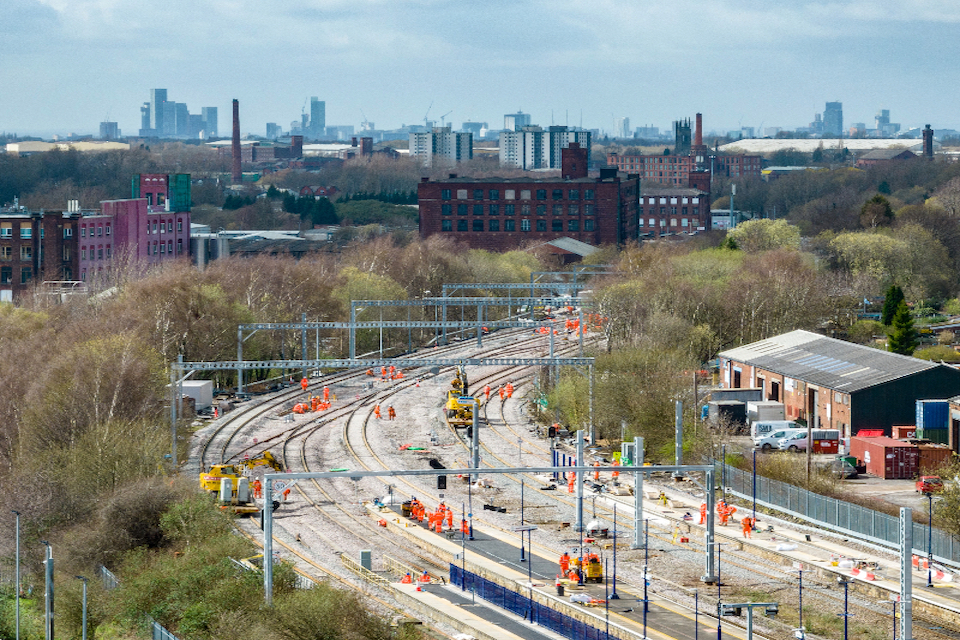
Anticipation of the Chancellor’s speech had already impacted on every aspect of the economy. Uncertainty has led recruiters to refrain from recruiting, businesses to hold off from investing, and consumers to refrain from spending. There was some good news for rail, even if it wasn’t actually new news for rail. “The government is committed to improving infrastructure and rail connectivity across the North of England, including the £11 billion [€12.4bn] Transpennine Route Upgrade currently being delivered,” said Reeves’s Budget statement.
There had been much leaking of the Budget measures, but that turned into a flood on Wednesday morning. In an unprecedented breach of protocol, the government’s own watchdog, the Office for Budget Responsibility, accidentally published its detailed critique of the entire Budget in the hour before Rachel Reeves delivered her speech. This error could become a far more serious matter. If this seems trivial for the rail and logistics sectors, be aware that British governments have fallen for far lesser breaches. A new government may well have a very different attitude to trade and industrial development.
Give fewer leaks and more clarity, please
Optimist and perennial chief executive of the RIA, Darren Caplan, concluded on an upbeat note. “We would like to have seen in this Budget more of the government’s plans to encourage innovative funding models in rail,” he said. “Whether private or ‘third party’ investment, more direction on its long-term strategy for rail, we urge the Government to give more clarity on these issues, to both boost jobs, GVA and Treasury revenues to the benefit of UK plc, and also to ensure the rail supply sector can play its part to efficiently and cost-effectively deliver world-class UK transport infrastructure in the future.”
Almost nothing announced in the Budget will take effect until the next financial year (2026/2027) or beyond. That’s a necessary delay since the Budget speech is merely the start of the parliamentary process. However, that is unlikely to mean anything more than a formality, not least because the government holds a very large majority in the parliament.
Rachel Reeves’s job may not be on the line over the general disappointment about the tax burden, now at an all-time high of 38% of GDP. That figure was already known – it was leaked in the Office for Budget Responsibility’s critique. If there is a job on the line right now, it’s that organisation’s chief executive. “Richard Hughes – it’s someone called Rachel on the phone for you…”