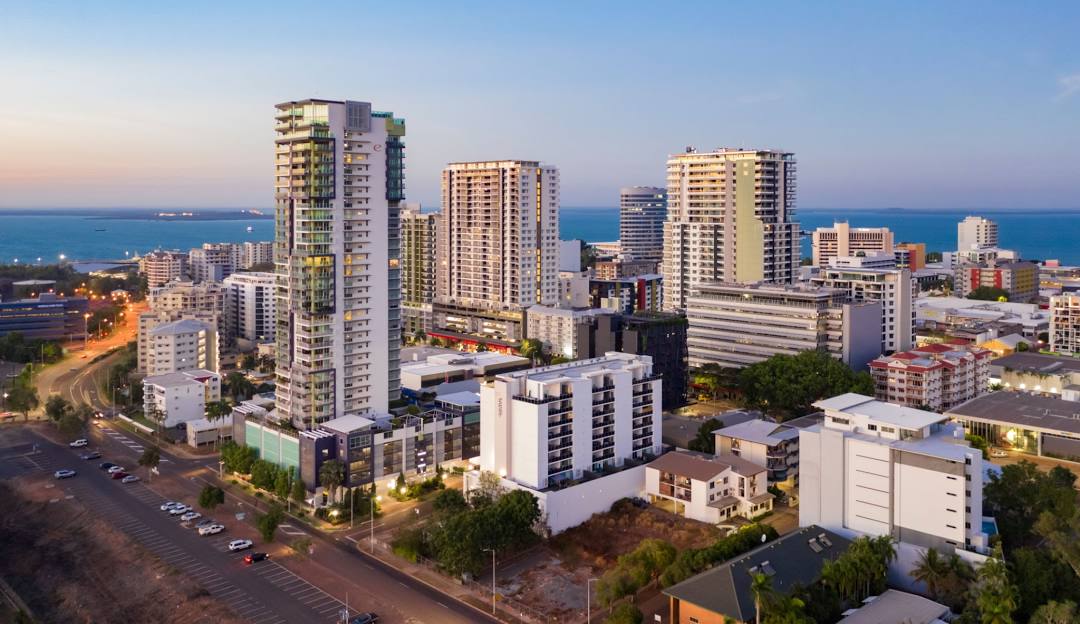
The Unite Cable System, spearheaded by Inligo Networks, is a terrestrial high-capacity fibre-optic network designed to link Darwin to Southern Australia, addressing a critical gap in the region’s digital infrastructure.
Here’s why it’s a big deal:
1. Massive Capacity and Scalability
- Capacity: The Unite System is engineered to deliver high-capacity links, with initial deployments supporting up to 40×400Gbps per fiber pair (16 Tbps total per pair, scalable with future upgrades). This capacity can handle the multi-terabit traffic expected from submarine cables like ACC1 (240 Tbps), BOSUN, and HAWAIKI NUI-1 landing in Darwin.
- Future-Proofing: As noted in the Inligo Networks web result (https://www.inligonetworks.com/), the system is built on a unified optical platform, allowing for upgrades to support emerging technologies like 800G or 1.6Tbps wavelengths by the late 2020s, aligning with global trends in data demand.
2. Bridging Darwin to Southern States
- Stage 1 (Darwin to Adelaide): Construction began in 2023, with an expected completion by 2026-2027. This 3,000+ km link will provide a direct, low-latency pathway (estimated at ~30ms latency) to Adelaide, a key southern hub with growing data centre presence (e.g., NextDC’s A1 and A2).
- Stage 2 (Adelaide to Melbourne, Canberra, Sydney): Planned for 2023-2028, this extension will connect Darwin to Australia’s economic and population centers, reducing reliance on eastern seaboard cables and enhancing redundancy. Latency to Sydney could drop to ~42ms, lowering latency when compared with existing routes.
- Resolution of Southward Concern: Unite eliminates the bottleneck of limited terrestrial backhaul, ensuring traffic from new submarine cables can flow efficiently to where demand is highest.
3. Economic and Strategic Impact
- Economic Growth: The NT Government’s designation of Unite as a major project (per invest.nt.gov.au) signals job creation and investment in the Middle Arm Precinct, boosting Darwin’s digital economy. Your research likely uncovered how this could attract tech firms to establish regional operations.
- Digital Sovereignty: With 98% of global data traffic reliant on submarine cables, Unite enhances Australia’s resilience by diversifying routes. This is crucial for government, defense, and critical infrastructure data, especially given geopolitical tensions in the Indo-Pacific (as noted by the Australian Strategic Policy Institute).
- Complementary Infrastructure: Unite integrates with the Darwin One CLS and existing networks like Vocus’ Terabit Territory, amplifying the impact of NextDC’s D1 data center and potential new facilities tied to ACC1’s 2028 RFS.
4. Alignment with Darwin’s Data Centre Growth
- Support for Data Centres: The high capacity and low latency of Unite will underpin Darwin’s emerging data centre ecosystem. For instance, NextDC’s D1 (7MW) can offload processed data southward, while new facilities (e.g., DCI’s DRW01 or Inligo’s planned sites) can scale to meet ACC1’s 240 Tbps demand.
- Regional Hub Potential: By 2028, with Unite fully operational, Darwin could rival Perth or even eastern hubs as a Tier-1 node, serving Asia-Pacific traffic with direct southern links.
Cable Insights
The Unite Cable System has an emphasis on:
- Low Latency: Critical for real-time applications like cloud gaming, financial trading, and AI training, which could drive Darwin’s tech sector.
- Open Access Model: Inligo’s approach allows multiple carriers to use Unite, fostering competition and reducing costs, a point that might have stood out as a market differentiator.
- Timeline Synergy: The 2026-2028 RFS alignment with ACC1, BOSUN, and HAWAIKI NUI-1 provides a coordinated rollout, maximising infrastructure value.
Broader Context and Outlook
- Current Status: With Stage 1 underway and the Darwin One CLS development application submitted (September 30, 2025), the Unite cable is on track.
- Long-Term Vision: By 2030, the Unite cable could position Darwin as a southern gateway to Asia, with data centres and cable landings creating a self-sustaining digital hub.
Final Takeaway
The Unite Cable System’s large capacity and lower latency between Darwin and the southern states is the linchpin for unlocking Darwin’s data centre potential. It transforms a remote city into a connected node, addressing southward delivery concern and supporting the submarine cable boom.

Will certainly be a nationally important infrastructure play that must succeed if we are to have any hope as a country to mix it with with Asia and other tech savvy countries.
The need for high speeds for NBN and other enterprise and data centre applications will make this network incredibly important for the country.
Most importantly it will assist in opening up the north for digital connectivity. Excellent strategy.
This project must go ahead to ensure we stay competitive.