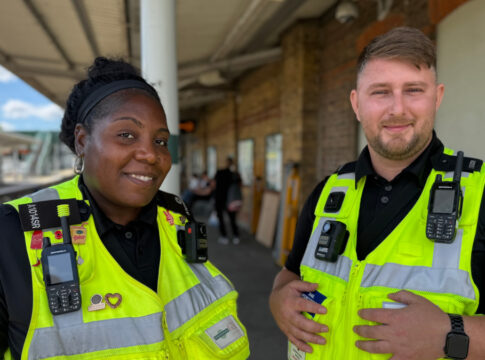
British Transport Police (BTP), the specialist force that protects the network in England, Scotland and Wales, issued an urgent warning on Thursday night. The warning came in response to planned protest activity on the railway network yesterday evening. The critical nature of the railway as a means of communication and commerce has made it a target down the years, and this week seems no different, say RailFreight.com UK Editor, Simon Walton.
Railway security has never been solely about terrorism or organised protest. Vandalism, metal theft, and reckless trespass have dogged the network for generations. From the widespread theft of signalling cable in the 1980s and 1990s, through to reckless acts of stone-throwing at trains, the UK railways have seen disruption from those with criminal intent and from those who seem to treat the railway as an arena for adolescent daredevilry – or insanity, depending on how politely such behaviour is regarded.
Cargo and customer chaos
Serious incidents abound in the historical record. Trespass has caused accidents stretching back into Victorian times, while theft of materials such as copper cabling and overhead line equipment has long been a costly menace, disrupting all traffic. More recently, protest has become a growing element of railway disruption, with direct action movements sometimes choosing high-profile stations or freight hubs – as potential flashpoints, precisely because of the chaos such interruptions could cause nationwide, not to mention defaced trains daubed with puerile gang tags.
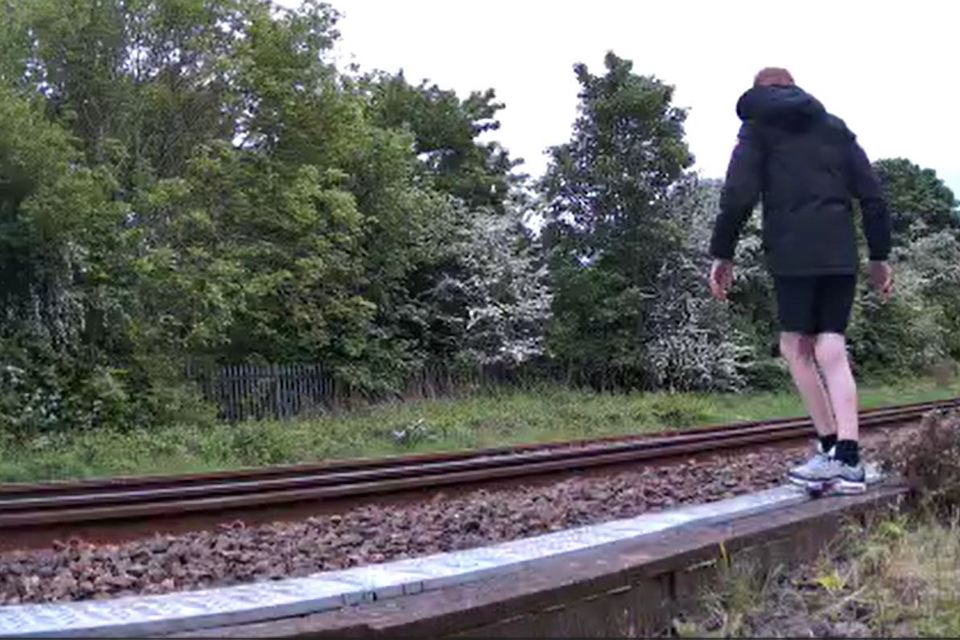
On Thursday, BTP officers became aware of information on social media suggesting protestors may be looking to target the railway network on Thursday evening. The protest plans were in response to Israel detaining activists on the Global Sumud Flotilla in the early hours of Thursday morning. The flotilla itself is an unofficial aid convoy, heading for Gaza and raised in protest to what its organisers call the act of genocide being exercised by Israel on the region’s population.
Britain was already on high alert for terrorist attacks, following a fatal attack on a synagogue in Manchester on Thursday morning. Although unconnected with the anticipated protests on Thursday evening, the highly charged situation persuaded the BTP to issue an almost unprecedented nationwide warning.
Criminal motivation versus police determination
BTP and the infrastructure agency Network Rail, working in tandem, have built up layers of protective measures to combat crime and trespass. From enhanced fencing and trackside surveillance to intelligence-led patrols and close collaboration with freight operators, the effort is unrelenting. Unfortunately, the criminals are equally motivated. Specialist units have also been deployed at known crime hotspots, including scrap yards and logistics hubs, where stolen materials often surface. The introduction of smart technology – from drones to ground sensors – has been a quiet but important deterrent, although the owners of freshly vandalised rolling stock may disagree.

The railway has also long been a theatre of protest. The lunacy of attempting to block access to the Port of Rotterdam in the Netherlands by environmental activists stands as one example of the lengths to which campaigners will go. UK equivalents have targeted stations and depots before, with the intent of drawing headlines rather than achieving any practical outcome. Compared with other parts of Europe, criminal activity on the UK railways remains exceptionally high, but it is worth remembering that worse examples exist abroad. In California, for example, freight container theft from trains has been rampant in recent years, and in South Africa, the wholesale theft of overhead wires has crippled entire sections of the network.
Several protests were understood to have been organised to take place at stations across the UK railway network. The protests were scheduled for Thursday evening. Via online channels, the organising group asked for activists to “block the tracks”.
It was this direct trespass development that forced the hand of the British Transport Police. The BTP stepped up patrols at undisclosed key stations across the network from the afternoon. That suggested that the police had more information than they were prepared to release to the public, for obvious reasons of public order. In a statement, BTP said they worked closely with rail industry partners, including Network Rail, to try and keep disruption to a minimum.

“This is a direct appeal to anyone considering protesting on the railway network. I urge you to think again,” said Assistant Chief Constable Sean O’Callaghan on Thursday evening. “The railway is an incredibly dangerous environment. Stepping onto railway tracks could very easily result in serious injury or death.”
Everyone has the right to protest is a key tenet of British society. However, Sean O’Callaghan put that in perspective, and reminded any protestor that stepping onto the railway tracks could find that their liberty is revoked. “Anyone wishing to do so should not be thinking about putting their lives, or anyone else’s, at risk by doing so,” he said. “I’d like to also take this opportunity to remind protestors that trespassing is a criminal offence, and anyone responsible for unlawfully disrupting the network can expect to be arrested for obstructing the railway, a very serious offence which could lead to imprisonment.”