The latest stage of the Transpennine Route Upgrade (TRU) is complete, with electric trains now running between Church Fenton and York on the East Coast Main Line. The £11 billion (13 billion euros) programme promises faster journeys, better reliability, and major regeneration — but freight barely gets a mention.
That’s despite the scheme offering significant potential for freight growth, including more electrified paths, better timetabling options, and extra network capacity. The omission will disappoint industry stakeholders who have long lobbied for further infrastructure enhancements to futureproof the route for heavier, longer freight trains.
Passenger headlines dominate
The Department for Transport (DfT) says the newly electrified section will cut York–Manchester journey times by ten minutes and Manchester–Leeds from 50 to 42 minutes. Six fast services an hour will run once the work is complete.
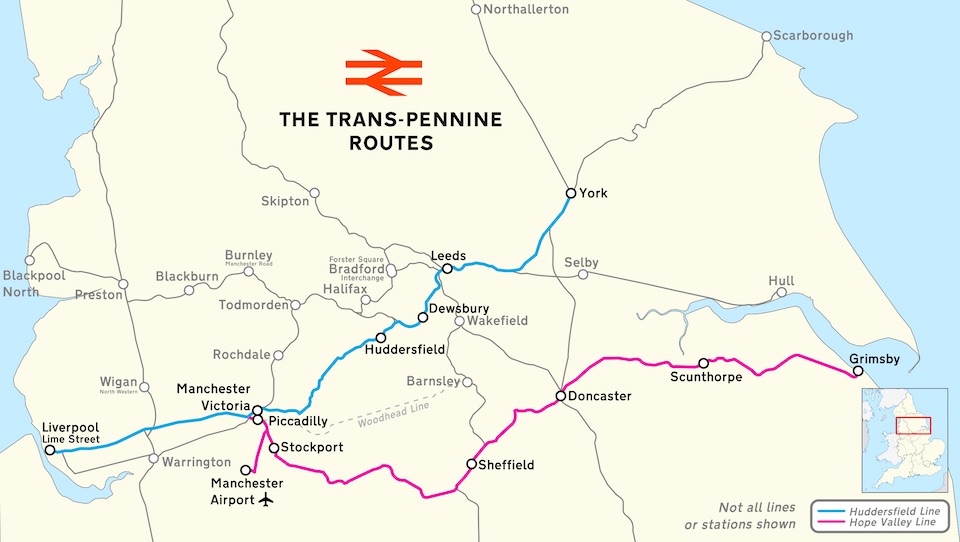
“Today is a moment of celebration for a project that will transform train travel for millions of passengers across the North,” said UK Transport Secretary Heidi Alexander, who then went on to politicise the project. “We are delivering on our [Labour Party] Plan for Change by upgrading rail links across the North – slashing journey times between Manchester, Huddersfield, Leeds and York.”
Freight benefits go largely unspoken
Network Rail notes the programme will “enable more rail freight” once finished, with full-route electrification by early 2030 expected to remove over 1,000 lorries from the road daily. However, in press statements from both the Department for Transport and Network Rail, freight is barely mentioned compared to the extensive passenger narrative.

That omission comes despite calls from the freight sector for passing loops, longer sidings, and higher capacity structures. Industry voices say these upgrades are essential if TRU is to handle projected freight growth in the coming decades.
Jobs, homes, and regeneration
DfT says the scheme will create over 5,000 jobs, support 6,500 new homes, and unlock commercial space in cities along the route. York Central (a vast urban regeneration scheme) and Ravensthorpe station redevelopment and relocation are intended to drive wider economic benefits. Eighty-five per cent of the TRU workforce lives within 40 miles of the line, keeping much of the investment in local communities. “This upgrade is about opportunity… kickstarting economic growth in the areas that need it most,” added Alexander.
The Church Fenton–York works follow electrification between Manchester Victoria and Stalybridge last year. By summer 2027, 40 per cent of the route will be wired. “We have reached a key milestone as 25% of the route is now electrified,” said James Richardson, TRU Managing Director. “Enabling greener, faster, and more reliable journeys, we remain committed to delivering this transformative programme on time and on budget.”