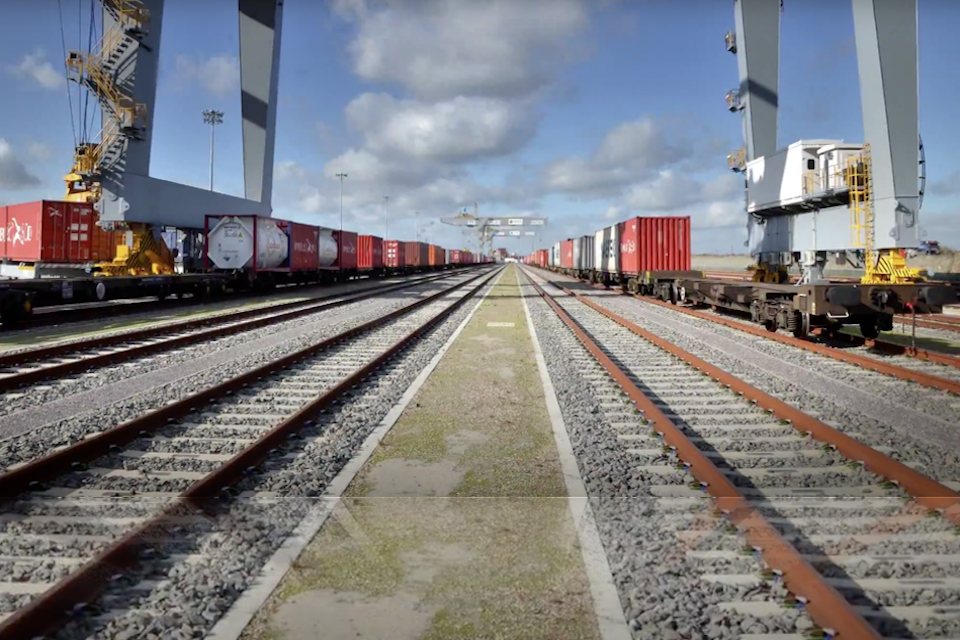
Freightliner has doubled up at London Gateway to meet demand for cargo movement. The operator has introduced a second daily intermodal train service from DP World London Gateway, doubling the number of rail services it operates from the port to inland terminals. The expansion follows increased demand resulting from changes in shipping patterns.
A rethink of shipping routes, known as trades in the business, has seen a significant relocation of cargo volumes linked to the newly formed Gemini Cooperation. London Gateway operators, DP World, have been on an expansion drive at the port on the Thames, and have welcomed additional port calls. That’s been good news for rail freight operator Freightliner, which has risen to the challenge.
Operational challenge
The Gemini Cooperation is a new vessel-sharing alliance between global shipping giants Maersk and Hapag-Lloyd. The tie-up between the two global shipping lines began operations earlier this year and has been extensively reported by our sister service, WorldCargo News. As part of the Gemini Cooperation, the two shipping carriers are restructuring their port calls and inland transport arrangements, leading to a redistribution of cargo volumes across world ports, including a shift of some services calling at Felixstowe to London Gateway.

Freightliner, which operates the UK’s largest maritime intermodal logistics network, mobilised additional resources in less than five months to meet the requirement. “Freightliner mobilised and were able to solve this enormous operational challenge in under five months – providing several key benefits for all our customers,” a company spokesperson said.
Seemless change
The changes include a revised and optimised train plan, faster train paths to improve efficiency, and an increase in the number of electric locomotives used across Freightliner’s network. While London Gateway’s rail infrastructure is not currently electrified, Freightliner is deploying electric traction where possible on wider routes to support lower-carbon freight movements.
“It is testament to the staff, the network, our assets and skills within Freightliner that we have managed to shift operations from Felixstowe to London Gateway in such a short period of time – working collaboratively with several key stakeholders to ensure a seamless change for our customers,” the spokesperson added.
Aggressive growth
Freightliner’s national network connects all major UK deep-sea ports with inland rail terminals, alongside its operations in the bulk materials and heavy haulage sectors. Despite the shift of some services to London Gateway, the Port of Felixstowe remains the UK’s busiest rail freight terminal and continues to handle significant intermodal volumes.
Industry observers expect strong demand to support ongoing rail service development at Felixstowe, even as the owners aggressively court new services at London Gateway. The UK Government has expressed a number of commitments to a net-zero economy, including encouragement to grow rail freight operations by at least 75% by 2050.