It is not necessarily underperforming, but rail freight in Wales is not quite all it used to be. So Network Rail, the UK infrastructure agency, has been prompting the services available. They’re working to encourage new customers to try out rail. That would help reach UK government-mandated targets to increase rail freight operations by 75 per cent by 2050.
The Wales and Western region of Network Rail has been talking up the benefits of rail freight in Wales. They’ve been concentrating their efforts on promoting the wide variety of goods that are transported by rail. They want to emphasise that while the history of rail freight in Wales may be all about coal traffic, the future is much more diverse.
Supermarkets stocked up by rail freight
“Not everyone uses the railway as a passenger,” said Jess Lippett, senior regional freight manager for Wales and Western.”We all use the railway when it comes to freight. We’ve got containers bringing a huge amount of different supermarket goods into container terminals in Cardiff; for example, so people would quickly notice if the goods were no longer available to buy. I think a lot of that is hidden sometimes.
Other parts of the country depend on rail freight to keep the supermarket shelves stocked. The famous “Tesco Trains” that move from the supermarket chain’s Daventry hub are welcomed in far away Inverness, in the Scottish Highlands. However, the less celebrated flows into South Wales are often overlooked.
Crossing the border to get across Wales
Network Rail has been investing in extra capacity and resilience on several lines serving Wales. These include the Wales and Borders route, which links the major settlements of South Wales, including Cardiff, Newport and Swansea, with the north of the country.
Ironically, the major junction for Welsh services lies in the neighbouring English county of Shropshire, at Shrewsbury, where traffic can advance north to Wrexham and over the border again to Birkenhead, Liverpool and the West Coast Main Line.
Huge task to replace coal
Whether anything like the recent “Demystifying Rail Freight” workshop will be replicated in Wales remains to be seen. However, Network Rail says that significant tangible investment has been made to the rail freight infrastructure in Wales. The agency cites recent examples of resurgent traffic around Machen quarry, near Caerphilly. “Recent growth has been exponential,” said a spokesperson. However, replacing the traffic lost since the cessation of coal mining is still a huge task.
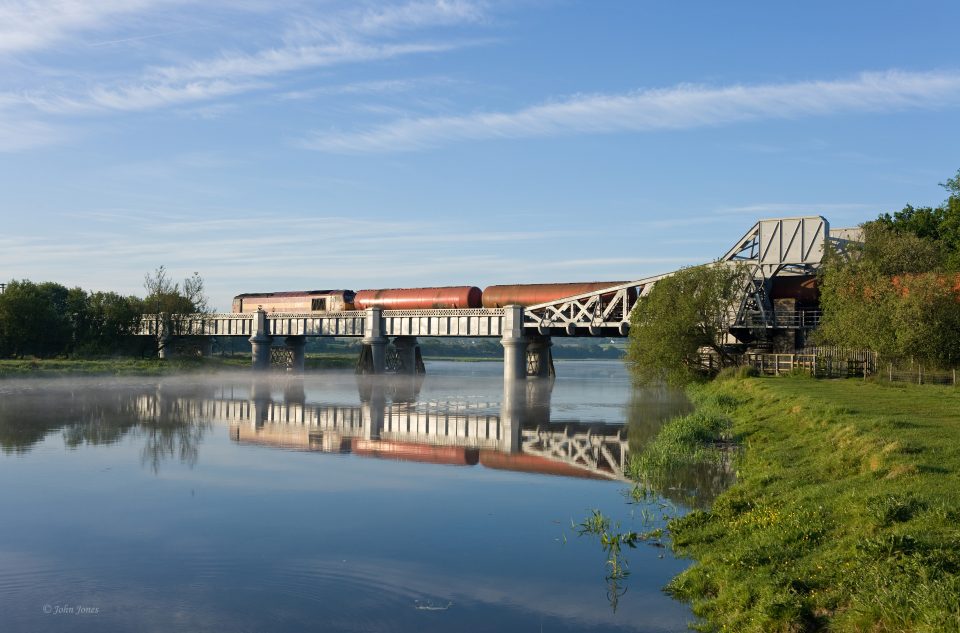
Heavy industry still has a foothold in parts of Wales, and rail freight is serving those operations. Tata Steel, with sites at Port Talbot and Llanwern, Newport, is Network Rail’s biggest commercial freight partner in Wales. The Welsh railways handle up to 100 loaded trains each week. The impending switch from blast furnaces to arc furnaces may even be beneficial to rail – since much more scrap steel feedstock will be required. Network Rail is also eager to point out that other heavy industrial flows also exist. “From petroleum at Milford Haven and timber at Aberystwyth, to Welsh slate at Llandudno, the freight portfolio in Wales and Borders is diverse,” says NR.
On the political agenda
As recently as January, the issue of declining rail freight in Wales was on the agenda. Jo Stevens, Secretary of State for Wales in the UK government, considers rail to be her “number one priority” for the forthcoming UK Spending Review – an announcement of which is expected from Westminster in “late Spring”. That could be as far away as the end of June, and the briefing is that it will more likely be a ‘we are not spending review’. Nevertheless, Jo Stevens is urging the UK government to contribute to rail projects in Wales.
That optimism is shared by Network Rail. “Wales and Borders benefit from freight,” says Jess Lippett. “Rail freight is a more cost-effective and sustainable way of transporting goods. It’s important that we build strong relationships, not only with the freight operators but with the freight end users, and that means being flexible to their individual needs and requirements.”