
Hutchison, the operators of Felixstowe, are in sale talks. They could divest themselves of a portfolio of properties around the globe, including the Port of Felixstowe in England. If the deal goes through, which economic commentors agree is likely, it would mean that Britain’s busiest container port, and its busiest rail freight terminal, would change hands.
There could be implications for rail freight operations at Felixstowe. Ownership may be about to transfer from the Hong Kong headquartered Hutchison, to the Geneva based Mediterranean Shipping Company (MSC). Felixstowe accounts for almost half of all maritime container traffic in the UK and is a globally important port. Its extensive rail freight operations are the subject of much commentary. What might new owners have in mind?
At least another ten trains
The sale announcement came as a surprise to the shipping industry. The story was broken by our sister service, WorldCargo News, which has more extensive coverage of the global extent of the deal. The complex consortium, which includes MSC, appears motivated by global issues. The Trump administration in America has raised concerns about Chinese influence in the Panama Canal. That the current owners of Felixstowe are ultimately Chinese is coincidental, but has implications for the sale. The prospective buyers have nevertheless expressed onfidence in the Felixstowe management.
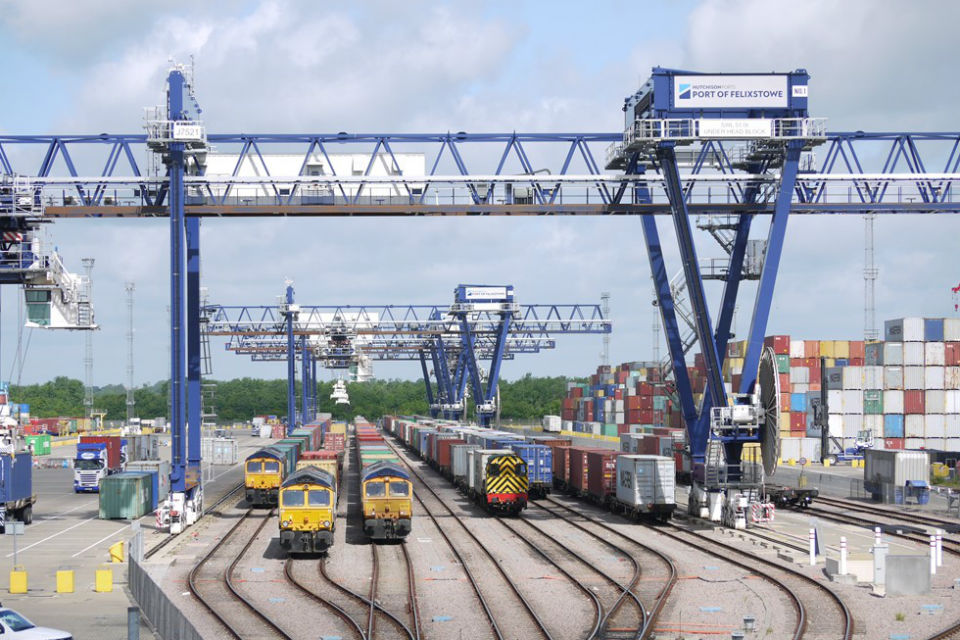
Hutchison has been an advocate of rail freight from Felixstowe. Over 35 intermodal trains are dispatched daily – with the number only restrained by capacity on the lines out of the port, and the critical railway hub at Ely. Rail capacity into Felixstowe is a long-standing issue on the national network. According to research from the representative Rail Freight Group, at least another ten trains a day could be handled by the port, but there is, as yet, not enough onward capacity. At present, the UK government appears more eager to upgrade the main road route (the A14 highway), despite its stated intentions of increasing rail freight significantly by 2050.
UK rail freight interests
MSC already has a place in the rail freight market in the UK. Its rail subsidiary, Medlog, is the owner of Maritime Transport. Maritime trains and trucks are a common sight on the rails and roads of Britain. Their commitment to rail freight is well established. The company has a ten-year agreement with DB Cargo UK, which runs until 2029. That commitment is solid enough for a fleet of seven class 66 diesel locomotives to be liveried for Maritime. For their part, Medlog features rail in their slick commercial presentations.
The distinctive Maritime blue clashes with the yellow of MSC containers, but that colour combination could be more prevalent in future. The Maritime operation is extensive in the UK, which suggests that UK observers will not see Medlog hauled trains on UK tracks – although no one is ruling out direct services from the Continent via the Channel Tunnel.
Capacity enhancements needed
The British International Freight Association has given a cautious welcome to the news. “MSC is a carrier that operates independently of any shipping alliance,” they told RailFreight.com. “This takeover significantly strengthens their terminal business both globally and in the UK. However, it does mean that important infrastructure upgrades to the Ely [and] Haughley rail junctions and strategic roads network become ever more important.”

From MSC, there are more certain words over what is, for them, a massive purchase. “We have a very high regard toward the Hutchison Ports management team,” said Diego Aponte, the president of the MSC Group. “If this transaction closes, we look forward to welcoming them into our larger family.”