The global rail freight market will see substantial growth of trackers installed on rolling stock in the coming years, according to market researcher Berg Insight.…
Category: Technology
Lumo to introduce next-generation Starlink Wi-Fi across East Coast fleet
 Open access rail operator Lumo is set to introduce next-generation Starlink Wi-Fi technology across its 100% electric East Coast Main Line trains this Autumn, marking a significant step forward in onboard connectivity for customers travelling between London King’s Cross, Stevenage, Newcastle, Morpeth, Edinburgh Falkirk, and Glasgow. Starlink provides high-speed, low-latency satellite internet designed to deliver […]
ORR sets action plan for safe adoption of AI
 The Office of Rail and Road’s (ORR) Safe AI Innovation Action Plan, published today (29 May), sets out how ORR will enable the safe adoption of AI within UK rail and England’s strategic road network. One of ORR’s first actions will be to clarify safety risks and regulatory expectations for AI use. This will be […]
NASA Releases Technology Priorities to Energize Space Industry
NASA released the 2026 Civil Space Shortfall Ranking list on Wednesday, which integrates more than 400 responses from stakeholders including industry organizations, government agencies, and academia. Shortfalls refer to technology areas requiring further development to meet future exploration, science, and other mission needs. The goal of this document is to rank the space community’s most pervasive shortfalls to […]
Northern City Line celebrates one year of digital signalling
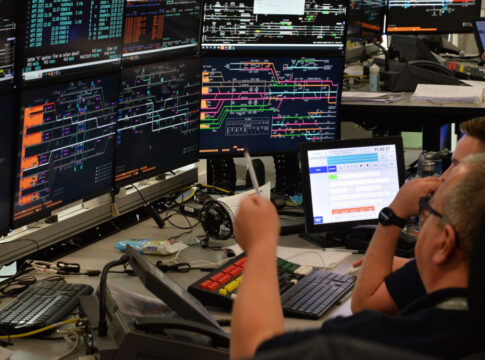 The Northern City Line (NCL), between Finsbury Park and Moorgate in the City of London, today (Tuesday 19 May) celebrates one year since its physical lineside signals were removed. The NCL became Britain’s first ‘no signals’ commuter railway in May 2025, and since then almost 70,000 train services have been operated by Great Northern using […]
Hello Universe: NASA’s Next-Gen Space Processor Undergoes Testing
NASA’s High Performance Spaceflight Computing project aims to dramatically improve the computing power of spacecraft. Missions need processors that can withstand the harsh space environment, so they use chips developed years ago that are hardy and reliable. But upgraded chips are needed to enable the development of autonomous spacecraft, accelerate the rate of scientific discovery […]
NASA, Industry Advance High Performance Spaceflight Computing
For decades, NASA has advanced on-board spacecraft computer processors that coordinate and execute the functions needed to support mission success. Space computing originated in the 1960s with the Apollo Guidance Computers, which were pivotal for guidance, navigation, and control computations during NASA’s first Moon missions. For decades, radiation-hardened processors have been the backbone of the […]