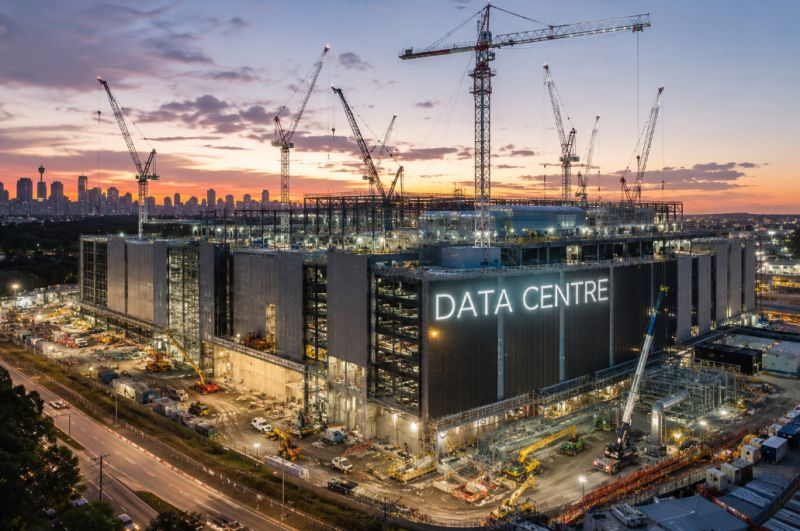
The proposed $3.7 billion AirTrunk data centre at Loxford, near Kurri Kurri, has attracted 671 objections from a total of 759 public submissions, with residents raising concerns about electricity demand, industrial noise, water security, bushfire risk and the long-term impact on their community.
The proposed development of a major hyperscale data centre on the former Hydro Aluminium smelter site at Loxford has become the subject of substantial community opposition, with approximately 88.4 per cent of public submissions opposing the project.
The public exhibition period for the development application closed on 11 November 2026. Figures recorded on the NSW Planning Portal show that 671 of the 759 submissions objected to the proposal, 77 supported it and a further 11 provided comments.
The proposal, lodged by data centre developer AirTrunk, involves a facility with a proposed capacity of approximately 540 megawatts and an estimated investment of $3.7 billion.
The scale of opposition is significant. It also comes alongside a formal objection from Cessnock City Council, which unanimously resolved in October to oppose the development.
The project is classified as State Significant Development, meaning the final determination rests with the NSW Government rather than the local council.
The current planning status
As at 17 November 2026, the application has progressed beyond its public exhibition period and is now at the Response to Submissions stage.
On 12 November, the NSW Department of Planning, Housing and Infrastructure wrote to the applicant requesting a formal response addressing the issues raised in public submissions and agency advice.
The applicant has been asked to provide its submissions report within two months of that correspondence, approximately 12 January 2027.
The report will be an important part of the assessment process. It will need to explain how the developer proposes to address the concerns raised by residents, council and relevant government agencies.
The project has not been approved, and no final determination date has been announced.
What are the main grounds of objection?
An examination of the objections identifies several recurring themes. The most prominent relate to the project’s extraordinary electricity requirements, the potential for ongoing industrial noise, water consumption and environmental and fire safety issues.
The following figures were reported by The Connection Point after a keyword examination of the 671 published objections:
- Electricity, energy, power or grid concerns: mentioned in 405 objections.
- Noise concerns: mentioned in 389 objections.
- Water concerns: mentioned in 281 objections.
- Fire concerns: mentioned in 138 objections.
These categories overlap. An individual submission may raise several issues, and the figures indicate mentions rather than the number of people who identified each issue as their principal reason for objecting.
1. Electricity demand and the impact on the regional power network
Electricity demand is one of the most significant issues raised by objectors.
The proposed data centre is designed for a capacity of approximately 540 megawatts, representing a very substantial electricity requirement for a single development.
Residents and council have questioned whether the existing electricity network can accommodate this demand, whether substantial infrastructure upgrades will be necessary and who will ultimately bear the cost.
There are also concerns about the implications for electricity affordability, network reliability and the availability of power for existing households and businesses.
An important development in this regard is the advice provided by Ausgrid to the planning department.
Ausgrid confirmed that formal connection discussions with the developer are underway. However, it specifically stated that its correspondence does not constitute connection approval, confirmation of available network capacity or acceptance of the final connection design.
Detailed design, network impact assessments, protection requirements, easements and possible network augmentation requirements remain matters for consideration.
This means that a fundamental question about the project’s electricity supply arrangements has not yet been resolved.
Cessnock City Council has also sought further information about the project’s electricity requirements and the implications for regional infrastructure.
2. Noise pollution and proximity to residential properties
Noise is another major source of community concern.
The proposed facility includes approximately 312 cooling units, which are central to maintaining the operating temperature of the computer equipment.
Residents are particularly concerned about the cumulative noise generated by industrial cooling equipment operating continuously, including the potential for low-frequency noise to affect nearby homes.
The residents’ group RADIKKAL (Residents Against Datacentres In Kurri Kurri And Loxford) has highlighted the proximity of residences to the proposed cooling infrastructure, arguing that some homes are approximately 600 metres away.
The developer’s position is that its environmental impact assessment demonstrates that noise levels can comply with applicable standards through proposed mitigation measures.
AirTrunk has also stated that operational noise will be managed through monitoring and controls, with routine generator testing restricted to daytime.
However, objectors are seeking greater independent scrutiny of the noise modelling, particularly the potential impact of low-frequency noise over extended periods.
An independent assessment of noise impacts at the nearest residential properties is one of the requests made by RADIKKAL.
3. Water consumption and water security
Water is another recurring issue, appearing in 281 of the objections according to The Connection Point’s keyword analysis.
The concern is understandable given the scale of the proposed facility and the potential water requirements associated with cooling, cleaning, fire protection and other operational activities.
AirTrunk says it intends to use an air-cooled system and that the facility will not draw on the community’s potable water supply for cooling.
However, residents have raised questions about the reliability of these assurances, future operational requirements and the possibility of changes to the cooling system over the life of the development.
Hunter Water’s advice to the planning department is particularly relevant.
Its assessment relies on the developer’s current proposal that potable water will not be used for cooling. It has indicated that a future change to that arrangement would need to be brought back for further assessment.
The distinction is important: the current design may reduce water consumption, but the planning assessment needs to establish what water will be required for all aspects of the facility’s operation and how any future changes will be controlled.
4. Bushfire risk and emergency management
Fire safety has also emerged as an important objection theme, with 138 submissions mentioning fire-related concerns.
Large data centres contain extensive electrical infrastructure, transformers, batteries and backup power systems. Their emergency response requirements can be more complex than those associated with conventional commercial buildings.
The proposed facility includes diesel backup generators and battery storage.
Residents have questioned the potential fire risks, emergency access arrangements, the adequacy of firefighting resources and the proximity of the development to surrounding bushland.
Fire and Rescue NSW has advised that data centres present particular challenges for firefighting.
It has recommended that a detailed fire safety study be prepared before construction and reviewed to its satisfaction. An emergency management plan will also be required before the facility is commissioned.
The NSW Development Coordination Authority has supported the proposed bushfire measures but has also sought further assessment of biodiversity and habitat impacts.
These requirements demonstrate that fire and emergency management remain important matters for the planning process.
5. Environmental impacts and biodiversity
Concerns have also been raised about the environmental consequences of developing the former industrial site.
Although the land has a history of industrial use, objectors are concerned about the impact of a large, continuously operating facility on surrounding vegetation, wildlife and ecological values.
The Development Coordination Authority has requested further biodiversity information, including revised mapping of habitat relevant to threatened bird species such as the Regent Honeyeater and Swift Parrot.
It has also raised concerns about potential noise and lighting impacts on the Kurri Sands biodiversity stewardship site immediately west of the proposed development.
The authority has requested further consideration of whether the development could interfere with ecological management activities, including controlled ecological burning.
These are important matters because the effects of continuous lighting, noise and industrial activity may extend beyond the boundaries of the development site.
6. Traffic, construction and local amenity
Traffic and construction impacts have also featured in objections and in Cessnock City Council’s formal concerns.
Residents have questioned the implications of construction traffic, heavy vehicles, site access and the effect of the development on the surrounding road network.
While the developer argues that the facility will have relatively limited operational freight and vehicle movements compared with many industrial developments, construction will involve a substantial development program.
The council has requested further information about local impacts and infrastructure requirements.
7. Employment benefits and the value to the local community
Another important area of disagreement concerns whether the economic benefits of the development justify its potential impacts.
AirTrunk has promoted the project as a major regional investment, forecasting more than 350 ongoing jobs and additional employment during construction.
The developer has also proposed a community benefits package valued at more than $37 million, including funding towards local sporting and community facilities and a community energy program.
However, some residents have questioned the number and nature of the permanent jobs, the extent to which local people will benefit and whether the promised community contributions adequately compensate for the project’s infrastructure and environmental impacts.
Cessnock City Council has also sought greater clarity around employment projections and the use of valuable industrial land.
The debate is therefore not simply about whether the development will generate investment. It is about the distribution of benefits and costs and whether the wider community will be better off over the long term.
Cessnock City Council’s formal opposition
The council’s position is particularly significant because it represents the elected local government authority for the area.
At its meeting on 21 October 2026, Cessnock City Council resolved unanimously to formally oppose the State Significant Development application.
Its concerns include noise impacts, electricity demand, employment projections and the use of industrial land.
The council has also questioned the adequacy of the information provided to demonstrate that the project can be accommodated without unacceptable impacts on local infrastructure and residents.
The council’s submission makes clear that it considers further information and assessment necessary.
It has also raised the broader question of whether Australia needs a stronger national planning and regulatory framework for major data centre developments.
Nevertheless, council’s objection is not a veto. The final planning decision remains with the NSW Government.
Government agency advice raises further questions
The public objections are not the only matters requiring attention.
Advice received from government agencies has identified several outstanding technical issues.
Ausgrid: Connection discussions are underway, but there is no confirmation of available network capacity or approval of the proposed connection.
Hunter Water: Its advice relies on the current air-cooling arrangement and the absence of potable water use for cooling.
NSW Environment Protection Authority: The EPA has raised a question about the relationship between the proposed development and the neighbouring Kurri Kurri Power Station, including whether there could be implications for its existing environmental licence.
Fire and Rescue NSW: A fire safety study and emergency management arrangements are required.
Development Coordination Authority: Further biodiversity mapping and assessment of potential impacts on the adjacent Kurri Sands stewardship site have been requested.
The Department of Planning has also indicated that further agency responses were outstanding when it wrote to the applicant on 12 November, including advice from Transport for NSW and the relevant flood assessment team.
Taken together, these issues show that a number of important technical questions remain to be resolved.
What happens next?
The next major milestone is AirTrunk’s Response to Submissions report.
This document should explain how the developer intends to respond to the 671 objections and the technical concerns raised by government agencies.
It will be particularly important to examine:
- Whether the electricity connection can be demonstrated to be technically and commercially feasible without unacceptable impacts on the regional network.
- Whether the noise assessment adequately addresses low-frequency noise and cumulative impacts at nearby homes.
- Whether the proposed cooling arrangements provide sufficient certainty about water consumption over the life of the development.
- Whether biodiversity and bushfire risks can be satisfactorily managed.
- Whether the employment and community benefit commitments are sufficiently detailed and enforceable.
- Whether the project is compatible with the surrounding community and the longer-term planning objectives for the area.
RADIKKAL is calling for the application to be referred to the Independent Planning Commission for a public hearing and is seeking an independent low-frequency noise assessment.
The group argues that the number of objections is sufficient to warrant referral. Whether the application meets the applicable referral requirements and whether a hearing is ultimately held will need to be determined through the planning process.
A significant test for regional planning
The proposed Kurri Kurri data centre raises questions that extend beyond the immediate development site.
Data centres are increasingly important to Australia’s digital economy, particularly as demand for artificial intelligence, cloud computing and digital storage grows.
However, facilities of this scale also create substantial demands on electricity infrastructure and raise questions about water, environmental impacts, land use and the long-term relationship between major technology developments and the communities in which they are located.
The 671 objections demonstrate that a substantial section of the community has serious concerns about the proposal.
The opposition does not automatically mean the development will be refused. Nor does the number of submissions, by itself, establish that every concern is justified.
However, the planning authority will need to consider the substance of the objections, the technical advice from government agencies and the adequacy of the developer’s responses.
Ultimately, the question for the NSW Government is whether the economic and technological benefits of this $3.7 billion investment outweigh the potential environmental, infrastructure and social costs for Kurri Kurri and the wider Hunter region.
For local residents, the response to submissions will be a critical opportunity to establish whether their concerns have been genuinely addressed or simply acknowledged.
The project remains undecided. The next stage of the assessment will be crucial.