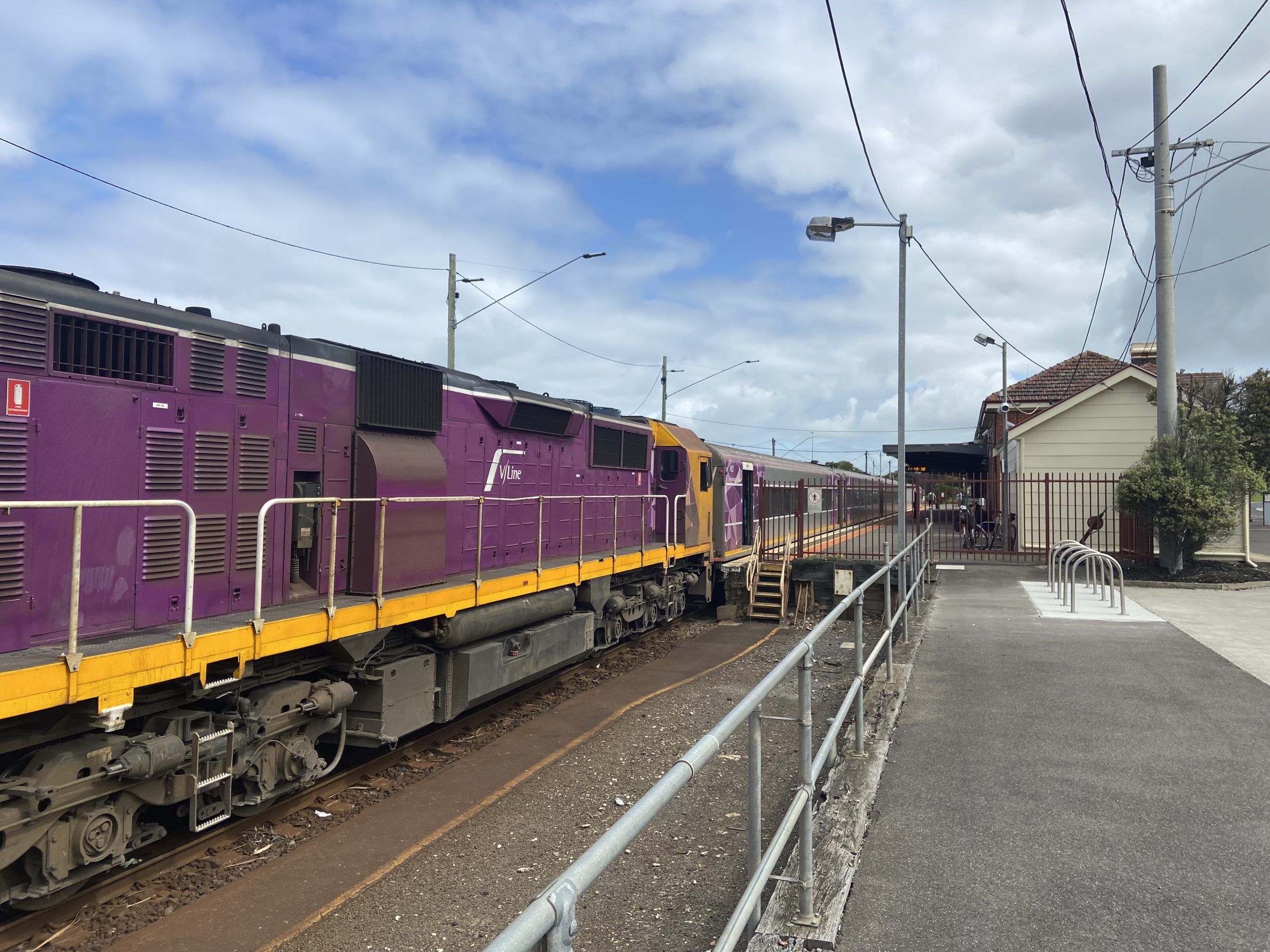
How long must passengers on the Swan Hill line put up with cancelled trains, repeated disruptions and a lack of reliable alternatives?
Passengers travelling between Melbourne and Swan Hill are entitled to ask some serious questions of V/Line and the Victorian Government.
Time and time again, passengers are faced with the prospect of cancelled services because of train faults. While mechanical failures can happen in any rail network, the real question is what happens next.
Why does a fault with one train so often appear to mean the cancellation of an entire passenger service? Why aren’t replacement train sets being deployed to keep passengers moving, particularly when other suitable trains may be available elsewhere in the fleet?
For passengers, the distinction between a mechanical fault and a failure to provide a service is largely irrelevant. They simply want to get where they are going.
Is there a backup plan for Swan Hill?
Train faults are an unfortunate reality of operating a regional rail network. However, a properly managed passenger service should have contingency arrangements to minimise disruption when something goes wrong.
When a train becomes unavailable, passengers reasonably expect V/Line to investigate whether another suitable train set can be brought into service.
If replacement rolling stock is available, why isn’t it being used?
If it isn’t available, why not? Is the fleet stretched too thin? Are maintenance arrangements inadequate? Is there insufficient spare capacity to protect long-distance regional services?
These are legitimate questions that V/Line should answer publicly.
Passengers should not automatically have to accept that a mechanical problem means their scheduled train simply disappears from the timetable.
Swan Hill is not a second-class destination
The Swan Hill line is an important transport connection for communities throughout regional Victoria.
For many residents, rail services are essential for travelling to Melbourne for medical appointments, specialist treatment, work, education, family commitments and other important reasons.
Unlike people living in metropolitan Melbourne, regional passengers cannot simply catch another train a few minutes later.
When a service is cancelled, the consequences can be significant. Passengers may face lengthy waits, disrupted appointments, additional travel expenses and uncertainty about whether they will reach their destination at all.
For elderly passengers, people with disabilities and those without access to a private vehicle, these disruptions can be particularly difficult.
Regional Victorians pay their fares and contribute to the same public transport system as everyone else. They should receive a service they can depend on.
V/Line’s own performance figures raise questions
V/Line publishes monthly performance figures measuring reliability and punctuality.
Its September 2026 figures for the combined Swan Hill and Echuca long-distance corridor reported:
- 99.7 per cent reliability – the proportion of scheduled services delivered.
- 78.7 per cent punctuality – the proportion of long-distance services arriving within V/Line’s published punctuality threshold.
The punctuality result is particularly concerning, although these figures cover both Swan Hill and Echuca services rather than Swan Hill alone.
They also demonstrate why simply counting whether a train operated does not tell the whole story about passengers’ experiences.
V/Line needs to provide more detailed information about individual cancellations, train faults, replacement arrangements and the impact on passengers.
Where is the accountability?
V/Line and the Victorian Government need to explain what contingency arrangements are in place for the Swan Hill line.
Passengers deserve answers to some straightforward questions:
- How many suitable replacement train sets are available across the V/Line fleet?
- When a train allocated to the Swan Hill service develops a mechanical fault, what steps are taken to source a replacement?
- Under what circumstances is a replacement train set considered unavailable or unsuitable?
- How many Swan Hill services have been cancelled because of rolling stock faults over the past 12 months?
- Why are passengers sometimes left without a train service rather than being provided with replacement rolling stock?
- What investment is being made to improve fleet reliability and ensure regional services can continue when a train develops a fault?
These are not unreasonable demands. They are basic questions about the delivery of a publicly funded transport service.
Regional passengers deserve more than apologies
Passengers have heard the apologies. They have received the disruption notifications. They have had to rearrange their plans and find alternative ways to travel.
But apologies do not get people to their destinations.
V/Line must demonstrate that it has a practical plan to keep the Swan Hill service operating when mechanical problems occur. That means better contingency planning, appropriate spare fleet capacity, timely communication and genuine accountability.
If there are suitable replacement train sets available, passengers deserve an explanation as to why they are not being deployed.
If there aren’t, the government needs to explain why a major regional passenger service does not have sufficient backup capacity.
The people of Swan Hill and the surrounding communities should not have to continually wonder whether their next train will actually arrive.
A reliable public transport service should not be a matter of luck. It should be an expectation.
It is time V/Line and the Victorian Government treated the Swan Hill line, and the passengers who depend on it, with the priority they deserve.
